by Helen | Oct 31, 2023 | Croatia, Travel
When we book hotel accommodation, top of the list of our priorities is always to find somewhere on the quirky, more unusual and individual side, rather than a chain. Sometimes, circumstances mean the chain option is the most convenient – late night check in, for instance, or somewhere close to an airport for a very early flight. But generally, chain hotels are not on our radar.
But a couple of years ago, we started to see a very unusual building going up, right on the sea front, between Rijeka and Opatija, in the north of Croatia, on Kvarner Bay. Turns out it was a brand new Hilton Hotel – the Hilton Rijeka Costabella Beach Resort and Spa. The building itself was enough to pique our interest and get us thinking we’d like to try this hotel. When you drive past it, along the coast road, you see the corridors on each floor, through floor to ceiling glass walls, making it clear that ALL of the rooms and suites have views on the other side – as in, out to sea. The design of the hotel is super sleek – glass, sexy curves, white panels, lush landscaping. We loved its design and OK, it’s part of a chain, but we think that the Hilton chain probably gets it right.
We recently found ourselves coming back through Rijeka, from Zagreb, having taken friends back to the airport. Summer was coming to an end, so we decided to check out the prices for the Hilton and maybe grab a last bit of warm weather and relaxation. Via booking.com, we booked a King Room with a balcony and sea view, for €219 – quite pricey for a Sunday evening, but wow. When we arrived and checked in – and experienced what the hotel had to offer – we realised that actually this was a very good price indeed.

The hotel entrance is large, light and opulent. A huge chandelier of glass baubles hangs down from an atrium, complemented by the many hanging glass baubles in tones of gold and copper and honey. Floor to ceiling windows and glass doors curve around the space, which also includes a bar area and the main reception, and there is access to a wrap around sun terrace, where meals, including breakfast, are served. Check-in was a very slick and professional – staff training here is obviously very high up on the agenda. Informative and polite and efficient, without being over the top.
As we already knew, our room had a balcony and a sea view – because, by design, they all have – but we were pretty blown away by just how amazing the view was. Having had rooms previously, with a “sea view”, but in reality nothing more than a sliver in the distance, this was stunning. A completely uninterrupted panoramic sea view – the sea being less than a 100 metres away.


Our King Room was one of the least expensive categories in the hotel – rooms range from King through to suites and duplex seafront villas – but we felt in no way short-changed, or that we had been allocated an inferior accommodation. The room itself was huge, with a very large bed, a mini kitchen with a fridge and tea/coffee making facilities and a cupboard – often overlooked in hotel rooms, but always welcome, as everyone always has a packet of crisps or two, they want to stash away. Don’t they? A desk and chairs, and a small chaise lounge at the foot of the bed, provided for ample seating and a large area, just inside the door was equipped with shelving, a luggage store and a large wardrobe. Hues of blue, mirroring the sea view outside, added beautiful accents to the room – especially the glass lamp shades at each side of the bed.

The bathroom was large – a sumptuous walk-in shower, large sink and vanity unit, excellent lighting (again, sometimes an after thought in hotel bathrooms) and delectable Crabtree & Evelyn products. The room was also off-the-scale gleaming, so again, another massive plus point as the house-keeping team are clearly a very tight ship who maintain extremely high standards. And, we saw this throughout the hotel, not just in our room.

However, without a doubt, the star of the show with this hotel, is the view that is afforded. Some rooms have better views than others, simply because top floor suites, for instance, have wrap around windows and balconies and the bungalows and villas are right on the seafront. Ours, though, wasn’t that bad a view either…


Breakfast at this hotel is definitely a grand affair. Again, on our visit, the attention to detail in terms of hygiene, is really notable. Crockery and cutlery are cleared away swiftly and tables and chairs cleaned down. The areas where food is served are meticulous and constantly cleaned down. The range of breakfast products is astonishing and I think that one sitting is definitely not sufficient to experience everything on offer. As well as food stations stacked (and regularly replenished) with fresh breads, croissants, eggs, salads, salmon, pastries, cakes, fruits, yogurts, hams and cheeses – plus, a huge prosciutto leg for guests to carve – there are various hot food counters, with chefs baking, making and grilling in front of you. Omelettes, fried eggs, pancakes, sausages, potato products, mushrooms, bacon. You order, they make. Drinks are plentiful – juices (freshly pressed as well as in regularly refilled carafes), tea, coffee and wines, if you fancy a morning tipple. Everything is well spaced out, so there’s no sense of queuing or waiting for people to fill their plates and move on. Tables, too, are well spaced out, giving the feeling of privacy. Indoor tables are beautifully laid and set out, and had we had to eat indoors, this would have been fine, but we secured a table out on the terrace, overlooking the bay. Monday morning bliss! Plus, breakfast is served until the civilised hour of 11am and so everything was very relaxed. Just perfect.

The external areas of the hotel are just exquisite. Billowing white cabana beds on a platform, sitting out in the bay. An infinity pool, clearly the place to be for posed photographs. We spent a good hour on our balcony, with a bottle of vino, watching a couple in the pool. He must have taken hundreds of photos of her, in various poses, in the pool, accompanied by much hair swishing and extension of arms and arching of back – before the ritual checking of the photos and the retaking if deemed probably unfit for Instagram. And, these weren’t the only couple! Very tasteful villa/bungalows, underneath the hotel room balconies – and all with green roofs, so when these have taken hold (the hotel is less than a couple of years old), the view down will be beautiful.


As well as the infinity pool, there is an indoor pool and a gym, and areas specifically for children. There are also lots of sun beds and hanging egg chairs, in various locations, around the site, close to the sea, and towels can be hired from the hotel. Check out is up until midday, which was really appreciated as we didn’t need to rush off, but after check out you can store your luggage and still use the communal hotel facilities all day. Parking is on-site – although not free, it is reasonable and there is an underground car park, as well as parking bays directly outside the reception area.

There are a number of number of restaurants on site, including the Michelin starred Nebo. We booked an 8pm table at the Jedro Restaurant, located on the beach, but this was the only tiny blip in our stay. There was no record of our reservation and even though it was still early – although probably right at the end of the season – the restaurant did have a feeling of being on the cusp of closing for the evening. However, we were warmly accommodated and offered the full menu, including the selection of fresh fish which was still available and brought to our table for inspection. Despite being the only couple dining – another couple had finished and left soon after we arrived – it wasn’t an issue, as none of the staff made us feel us rushed or hurried, and we did have an amazing table, right on the beach as the lapped just below us. I’d definitely recommend this restaurant and I guess in the summer, booking is essential as its fantastic.

From the moment we arrived to the moment we left, we were super impressed. It is a hotel chain, and you can’t away from that, but it’s a class act. And definitely somewhere worth investigating if you want a short stay – I don’t think we could do more than a couple of nights as we’d start to feel cooped up – which is really easy, really comfortable and with stand out facilities.
PS This is not a sponsored post in any way. We found our room on booking.com, paid the advertised price and paid the full price for our evening meal.

by Helen | Oct 26, 2023 | Interiors
We’ve spent so long focusing on other areas of the house, and in particular this summer, the garden, that we’ve neglected a couple of rooms. One being the upstairs bathroom. We rarely use it these days, preferring the walk in shower in the downstairs renovated bathroom. But the bathroom upstairs has just really needed a bit of TLC to get it back on its feet, and we decided that this could be a quick big tick on the to-do list, as it didn’t involve ripping anything out or completely redecorating.
It was refurbished a couple of years back, when the tiny bath was taken out and a full sized one fitted in its place. A new, bigger capacity boiler, made this possible as the previous boiler barely filled more than few centimetres, even in the tiny bath. The cheapo sink and sanitary ware were also replaced, and walls and floor and woodwork painted. We used a vintage wooden ladder across the painted beams to suspend faux foliage, reducing the feeling height, so everything really has been in place for it to be a nice room. We just needed to add a few finishing touches to make it more comfortable and therefore more useable. And, we think it’s now a bathroom that we’ll get a whole lot more use out of, over the coming winter months.
What we’ve done has cost very little, as it’s largely been an exercise in accessorising, but it has made a huge difference. Firstly – and we can’t believe this has actually take us so long! – we put up a shower rail. We’ve always had a shower head extension, but felt that a shower curtain would make the room make feel smaller, so have never had one. Therefore making the shower head completely redundant as water just went everywhere. A single rail, suspended from the beams, has made all the difference, as contrary to what we thought, having a curtain doesn’t make any difference, as when it’s not in use, it’s hung over a big silver hook on the wall behind the bath.

For relatively little expense, the towels were also replaced – what we had were clashing with the bolder shower curtain and these fluffy IKEA bath sheets and hand towels were just the perfect match. The wooden ladder rail was brought back into the bathroom and towels now sit neatly, right beside the sink, as the gap between sink & wall is just right for the rail. Another IKEA bargain – at just €4 – was the little sage green storage rack, with two very strong suction pads. Perfect for shampoos and conditioners and right beside the shower, so no more fumbling about to find them. Sage green candles and reed diffusers just add a little bit of luxury, as well as a big silver lantern under the sink – providing a gorgeous glow when relaxing in the bath. Perhaps the best thing about this bathroom, is that it’s tucked away, at the top of the house and so is completely private as it’s too high to be overlooked. We do have a roller blind at the recessed window, just in case any visitors want real privacy, but we’re OK with the fact that absolutely no-one can see in, so most of the time it’s rolled up. In the summer, it’s great to lie in the bath and only see the tops of the trees and the sky – and now it’s darker much earlier, if conditions are right, you can shower or bathe and just have the stars for company.


by Helen | Oct 25, 2023 | Italy, Travel
Trieste is now a city we’re getting to know well, as it’s so close to home. Now that Croatia has joined the Schengen Zone, travelling through the small corridor of Slovenia between us and Italy, means no more border stops and so we can be in Trieste in just over half an hour. This makes supermarket shopping, for instance, more of a joy than a chore – especially as Italian supermarkets are so, so good. But sometimes we want to stay a bit longer and so we’re also getting to know some lovely accommodation – and, as we tend to stay over out of season, we can sometimes stay in places we wouldn’t normally consider because of price. One such place is the stunning Seven Historial Suites, right in the city centre, a couple of blocks away from the Grand canal. Yes, Trieste also has one of these. James Joyce, cast in bronze, and one of Trieste’s most famous expats, stands overlooking the canal. And he doesn’t do that in Venice.


The hotel is housed inside one of the imposing city’s stately commercial buildings in the graceful 18th-century grid of the Borgo Teresiana, an example of Habsburg town planning. (Most of these statuesque buildings are commercial on the ground floor, with the upper floors being either residential or hotels). The entrance, at ground level is discreet, but once inside, the absolute splendour of the building reveals itself. A grand sweeping staircase, chandeliers, dark wood, muted lighting, frescoes, tiled floors and beams. Very theatrical, very over the top, very beautiful – and totally Italian. A beautiful communal library area also added to the feeling of luxury and opulence.

Our apartment – living room/kitchen, large bedroom and bathroom was spacious and with everything we needed for a short stay. The kitchen was really equipped, and it was nice to have a full size under the counter fridge, to store wine, rather than the hotel sized mini fridges, where bottles just roll out when you open the door. The living room was comfortable with a big squishy sofa and chairs and a table – and lots of eclectic additions to add interest.

The bedroom was spacious, with a vaulted ceiling and a very large, very comfortable bed, with beautiful linen. Slippers and dressing gowns and big, fluffy towels added to a feeling of opulence, as did the complimentary Acqua di Parma toiletries. And these weren’t your usual dinky sized bottles – they were substantial tubes of bath and shower gel cream, body cream and shampoo and conditioner.

A very nice touch on arrival was a complimentary bottle of prosecco. Always appreciated.

Trieste is a city full of hotels and apartments, some so grand they are eye-watering prices. But I think we found a happy medium with The Seven Historical Suites – not cheap as chips (although, to be fair, they’re not that cheap these days), but definitely affordable as a treat. And, especially out of season. Top tip, right there.

by Helen | Oct 24, 2023 | Slovenia, Travel
Autumn is our favourite time of year to visit Lake Bled in Slovenia. It’s only just over a couple of hours from our home in Istria, and if coupled with a break in Ljubljana, it makes the perfect out of season get away. The little town of Bled, on the shores of the lake, started to become famous in the nineteenth century, when visitors started coming to benefit from the good climate and thermal springs, discovered by Arnold Rikli, a Swiss hydrologist, who founded the Institute of Natural Healing. However, people had been coming to Bled since the Middle Ages, as the church on the island in the middle of the Lake – The Church of Mary the Queen (also known as the Pilgrimage Church of the Assumption of Mary, or Our Lady of the Lake) – was an important pilgrimage place.
It’s a picture perfect town nestled at the entrance to the Julian Alps and very close Slovenia’s beautiful Triglav Park. It’s small, so is easy to get around on foot – although apart from enjoying the many restaurants along the lake shores, most people do seem to head off around the lake and the surrounding sights, of which there are many. As well as the iconic lake in the middle of the island, Bled Castle stands high up on a towering cliff – an impressive sight in its own right. There are plenty of hotels if staying over is on your agenda, and many are situated lakeside, so the views are amazing.
Obviously, autumn is when things are a lot quieter and the weather isn’t anywhere as warm as in the heady summer months – but the lack of tourists, for us, is a good thing. No crowds, no queues in restaurants, much less expensive accommodation, a quieter experience on the lake and around the trails and walking paths. And, of course, the autumnal colours and atmospheric mists…


A highlight of any trip to Lake Bled, is a ride on a traditional pletna boat to the church on Slovenia’s only island. After disembarking from the gondola, you are free to roam the small island for 30 minutes.Climbing the 99 steps to the church is really the only thing to do on this tiny island – as well as taking in the sights of the church and its surroundings – so half an hour is really about all you’d need to spend on it. Make sure your phone is well charged as there are plenty of instagramable spots on the island and when crossing on the pletna.
We’ve been to Bled a few times now, but have only stayed over on once occasion, at the very grand looking Villa Preseren, dating back to the nineteenth century, right on the shores of the lake. There’s no doubt this hotel has the most amazing views – and a pretty fabulous restaurant – but when we stayed, our room (albeit with a big balcony and lake view) seemed a little bit tired. This didn’t spoil our stay in any way, as I doubt much could dampen a trip to this beautiful part of Slovenia. And, one of the the best things about the location of Bled is that it’s less than an hour away from the capital, Ljubljana, so it’s very easy to combine a trip and see both places, even in one day. The advantages of doing a roadtrip in a very small country, with excellent roads and not too much traffic.

by Helen | Oct 23, 2023 | Lifestyle
If you are a fan of curry, then this is a perfect recipe. I found this on Instagram, and just had to give it a go as I couldn’t believe that a curry – or, soup, as the recipe calls it – could be anywhere near tasty with so few ingredients. How wrong was I?
It genuinely is possibly the easiest meal we have EVER made, even taking into account the recent mashed potato soup. Even though the original recipe calls it a soup, it really is more like a substantial veggie curry, without all of the prep. And, there are only five ingredients. Four, if you discount the water…
- red lentils
- spinach – we used tinned spinach as we had no fresh or frozen
- curry powder
- halloumi
- water & black pepper
method
1. Simmer one cup of red lentils in two cups of water for about an hour, with a big tbsp of curry powder & pepper. Chilli flakes could probably also be added for an extra kick;
2. When the lentils are cooked and creamy in consistency, start to pan fry halloumi cubes, turning until golden brown on all sides;
3. Add the spinach to the lentils, stirring in & simmering for a couple of minutes. (The tinned spinach actually added a bit more creaminess to the mixture);
4. Serve the curry and add the halloumi cubes on top – we served with pitta breads

This was a meal in itself and really tasty, served with pitta breads. It could be bulked up with rice or more substantial naan breads, and it could definitely be served as a curried soup if more water was added, but it’s perfect either as a main dish, or a side dish. We took our time over the cooking of this, but it could be knocked up very quickly if you were short on time, or save on time by doubling/tripling the ingredients, batch cook and freeze. Great for those autumnal nights when you want something quick, easy and warming.


by Helen | Oct 21, 2023 | Interiors
When we lived in West Didsbury, we renovated our three bedroom terraced house, knocking down internal walls, and eventually creating a very contemporary, open plan home, which included a large L-shaped concrete bench, with storage underneath.


When we bought our house in Istria and set about renovating it, one of the things we were sure about, was that we wanted another concrete table, to sit in The Well Room, under the windows, just where the cabinet, with our West Didsbury mosaic sits, in the photo below.

The builder who was working with us on the house, in between other jobs which we regularly threw at him, got on with the job of creating our concrete table, in The Well Room, which was also, at the time, doubling as a kitchen. As a new kitchen was also being built at the same time.

We did toy with the idea of not having the plinth underneath, and leaving the table “suspended”, but as one of the other jobs was to expose the well chamber and cover it in safety glass (and illuminate the chamber), we felt that the combination of a table hanging over a 10 metre drop, might freak some people out, so we decided to go along the Health & Safety route. Polished up, the beautiful grey concrete table top did look very smart…

We had a period of time, pre-Covid, when we hosted Workaway guests. Kaiti and David, from Ohio, worked on few projects with us, and when David told us he had worked with resin before, our interest was piqued when he said he could do this treatment on the concrete table. It wasn’t a cheap job, as resin is expensive, but we liked the sound of how it could look. And, to be fair, I did love the finish, with its hard, hard sheen – just maybe not the way it changed the colour from a gorgeous light grey, to a mottled bronze. I think if we had thought about this more carefully, we’d have invested the time and money in having it polished to perfection, but hey, you live and learn. The plinth was painted dark navy, to match the floor, and a brushed gold trim was fitted, to complement the new look of the top. At the time, all seemed to fit together, as we were introducing dark navy colours and gold accents.

As we’ve started to re-transform the house, the table has started to bug me. It’s not really what I envisaged and even covering it up with runners etc wasn’t working. We investigated having the resin removed – prohibitively expensive. Then investigated painting it – after much googling and speaking to specialist paint supplier, we discounted this as we didn’t think we’d ever get the finish we wanted. So, the decision was made to have it taken out and rebuilt in the garden, where the finish wouldn’t bother me as much. But, as often happens, you just sometimes have a light bulb moment and decide to try something – if it didn’t work we’d already decided it was going outside.
So, what was this light bulb moment? White undercoat and a few coats of white matte paint, rollered on carefully…

An unbelievable result! Hard wearing and durable, there’s no way this beaut is now being consigned to the garden. With new wooden benches either side, and now set against a white floor and newly painted white walls and white woodwork, the concrete table has had a new lease of life…


by Helen | Oct 20, 2023 | Lifestyle
Yep, you saw that right. We really did use a packet of IKEA frozen mash in a recent soup recipe. And, believe you me, it was a bit of a game-changer. Our freezer often has a few packets of this particular brand of mash – containing apparently 82% potato – because of we run out of potatoes, which we eat a lot of, we can’t just nip across the road to the shop to stock up. So, we do need to think ahead, and these are ideal for those moments when we’re caught short.
Only we weren’t caught short the evening. We’d just returned from a trip over to Trieste and had done a big supermarket shop, so had loads of potatoes – but we were also shattered and wanted something quite simple, but tasty and nutritious to eat. We’d also been to IKEA and as well as various bits and bobs, we’d also thrown some mashed potato into the trolley and there it was, when we got back, just sitting on the counter in the kitchen. Usually, we’d do sausages and mash, but soup seemed to be what we both wanted, and so decided to try something a little different.

The mash was defrosted in a large pan over a low heat, with a large knob of butter – it’s best to keep an eye on it and keep stirring so it doesn’t stick to the bottom of the pan. Once it was quite creamy in consistency, vegetable stock was added, along with black pepper, and then a roughly chopped head of broccoli. This was heated for about 50 minutes, on a medium to low heat, until the broccoli was cooked and a bit mushy. To mush it up a bit more, but still keep some consistency, the mixture was mashed with a potato masher. A block of blue cheese – roquefort was used as it’s got a strong, salty taste – was then crumbled into the soup and simmered for about 10 minutes. While it was simmering, a dish of pine nuts was toasted in the oven and these were sprinkled over the soup.
So, the verdict?
Suffice to say, you probably wouldn’t notice that frozen potatoes had been used instead of fresh. In fact, the soup had a really creamy consistency – even before the cheese was added – which you don’t normally get with fresh potatoes. No additional salt was added, as I figured there’d be enough salt in the frozen mash and veggie stock cubes, and the cheese definitely had a salty taste. Served with warmed up focaccia bread (frozen, again, as we’d bought a few when friends were here and didn’t eat them all), this was an absolutely delicious broccoli, cheese and potato soup – and we’ll be giving the frozen mash a few more soup outings over the winter.

by Helen | Oct 19, 2023 | France, Travel
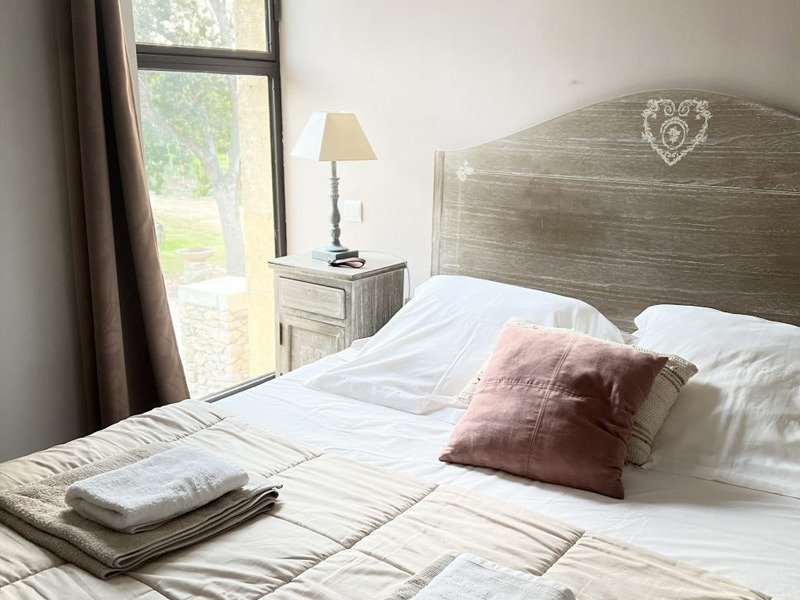
Finding Le Mas D’Eymard, when we recently visited southern France, was a real stroke of luck. We didn’t know the area well, but having driven over from Istria, across northern Italy, we wanted somewhere quite relaxing in Arles. This chambre d’hote, which is also a working farm, is actually about 4kms outside of Arles, and if relaxation was what we wanted, we got it in spades here.

Although not far at all from the very cosmopolitan, small city of Arles, it feels a world away from city life. Accessed over a narrow stone bridge, from a road which is really a country lane, you arrive in a real haven of peace and quiet, with honey coloured stone buildings and farm buildings, with courtyards and gardens and a beautiful swimming pool. The actual chambre d’hote is nestled behind a huge hedge of bamboos, which opens up onto a gravelled courtyard, where breakfast is served. The old farm building has been extensively renovated and now houses five rooms, named after famous Van Gogh paintings – La Terrasse, La Meule, La Chambre, Le Pont and Les Oliviers. We were allocated La Terrasse and it was perfect, after a long drive.
Quite compact, it had everything we needed, including a super comfy bed, with the most wonderful bed linen. The room was decorated in a very French style – lots of vintage, eclectic furnishings, lots of chalk paint and plenty of style and attention to detail. The window overlooked the courtyard. meaning we had a very beautiful view, across the tree tops, where we could soak up an absolutely stunning sunset.
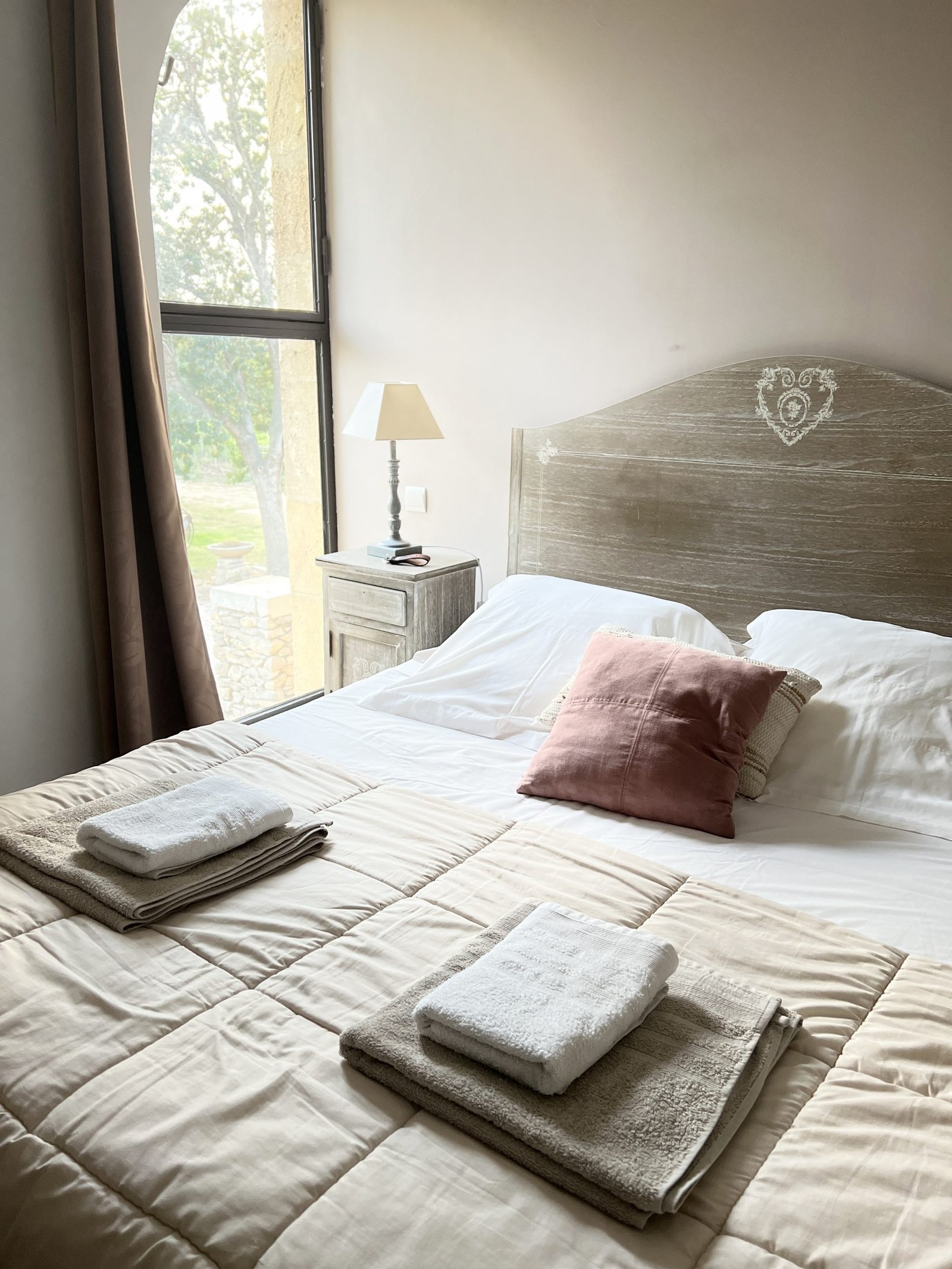
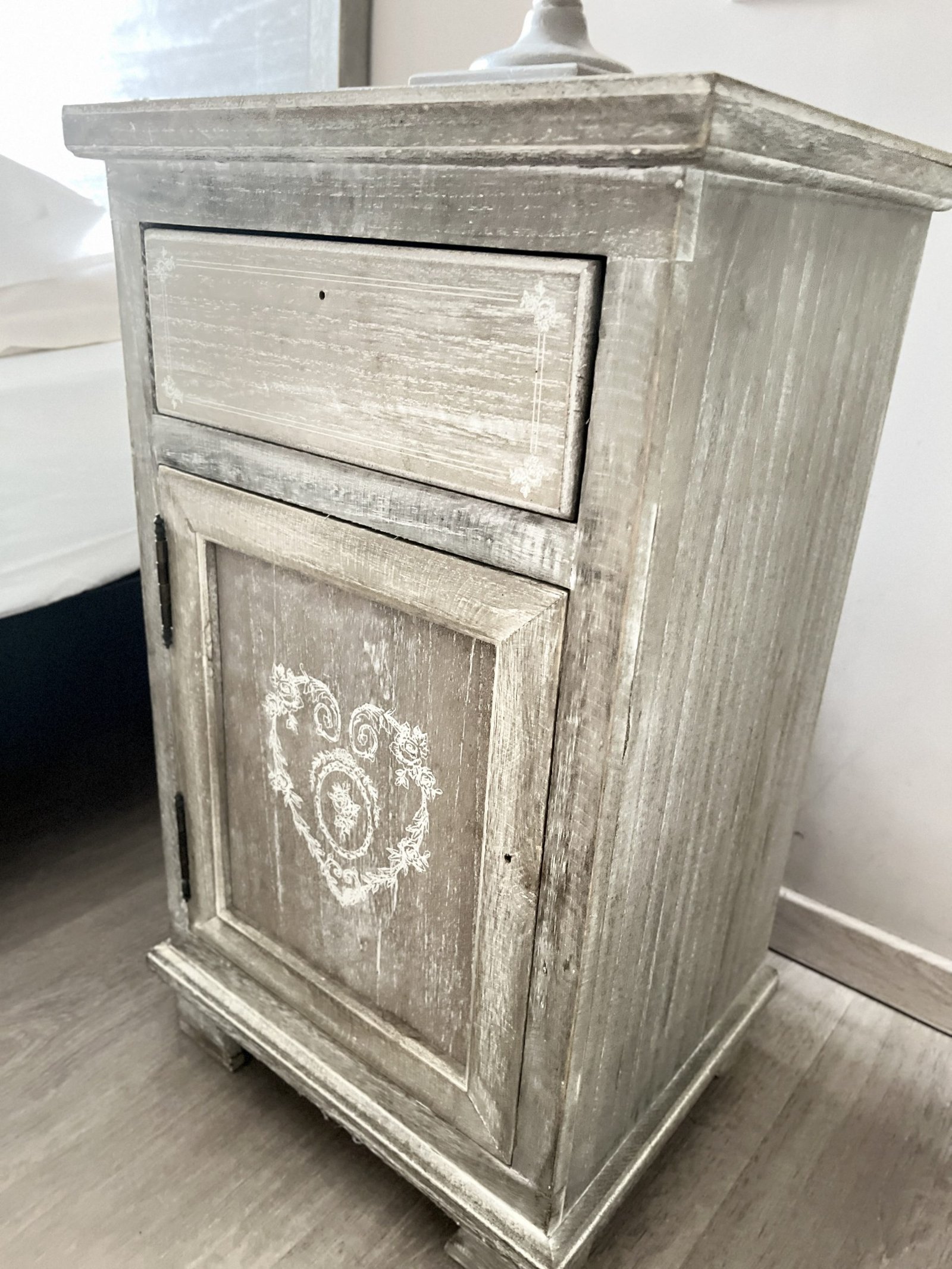
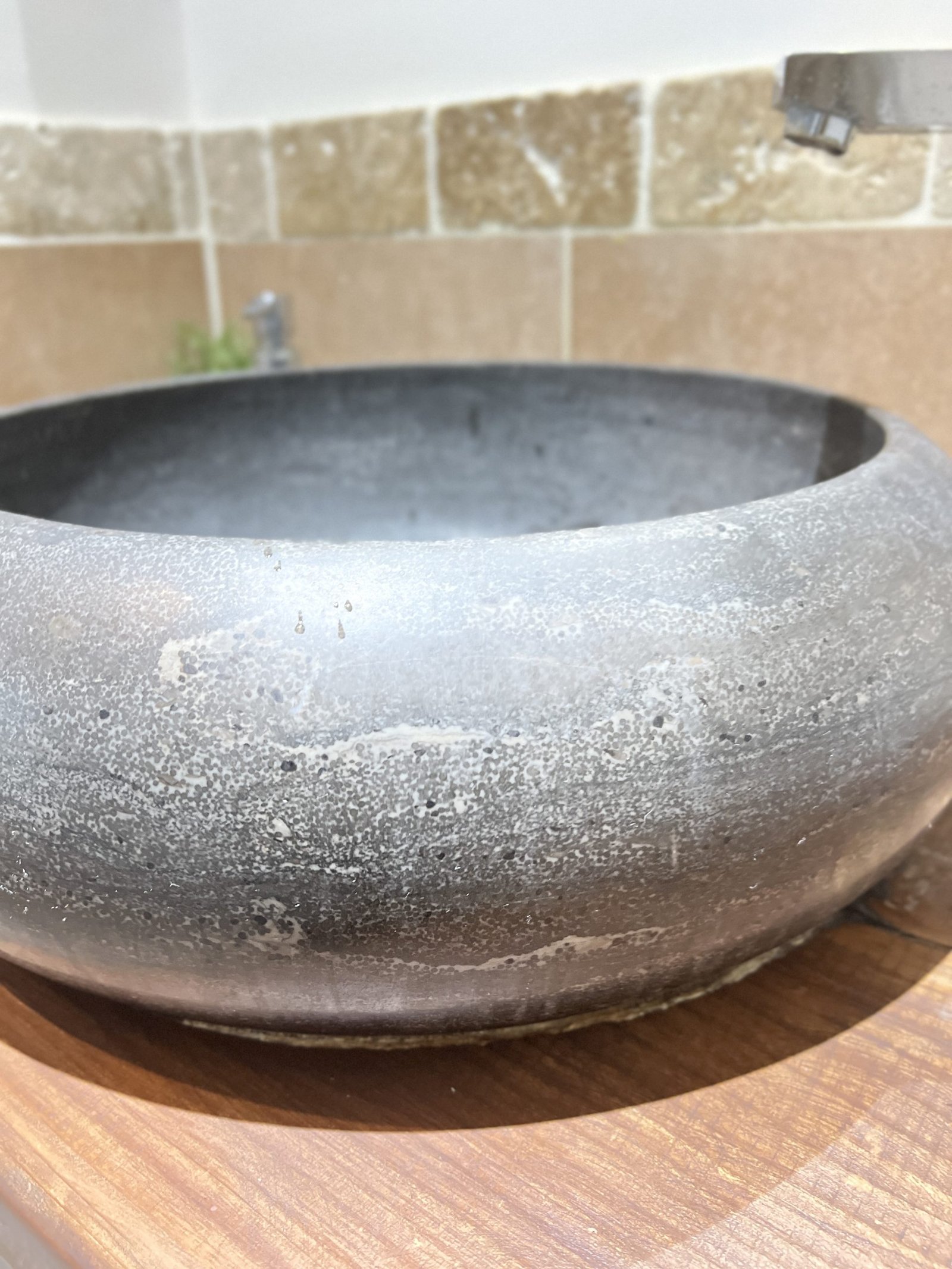
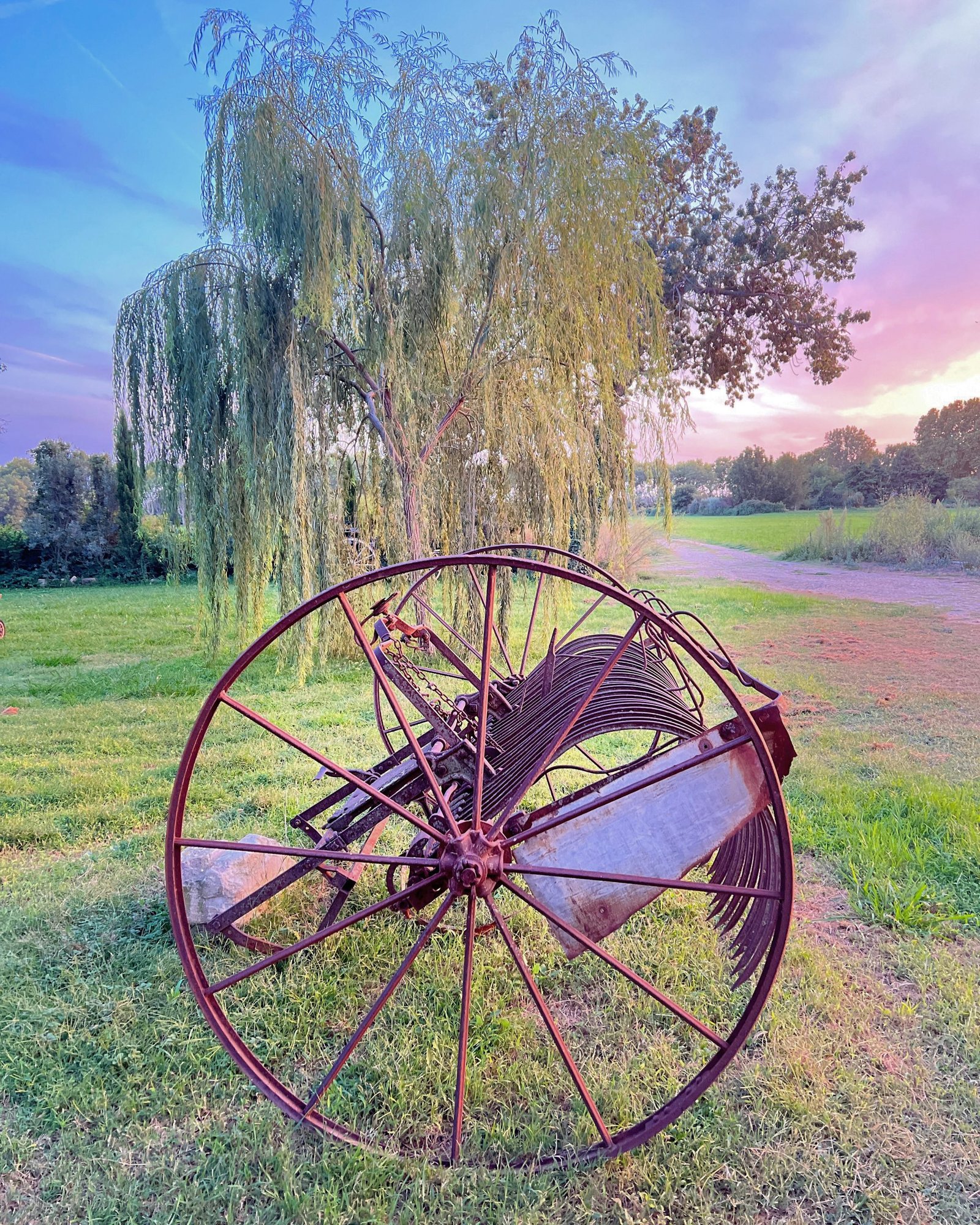
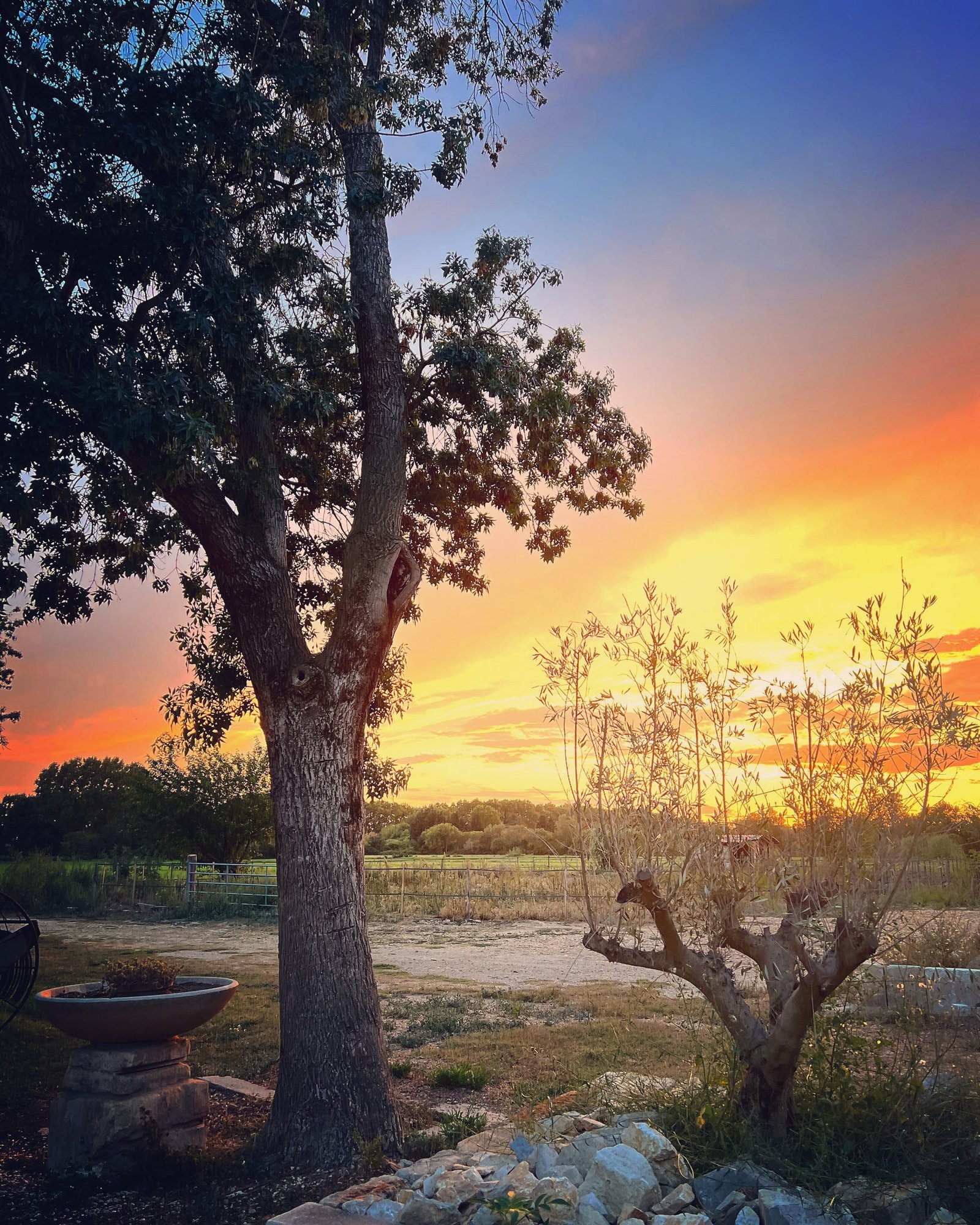
One thing to be aware of is that there no option for an evening meal, so a trip back to Arles would be necessary if you wanted a restaurant. I’m sure a taxi could be arranged, but we didn’t ask, as once we’d arrived we didn’t particularly want to head out again, and having visited a hypermarket,we had sufficient wine & snacks to get us through the evening. There is a small village, closer than Arles, that you drive through to get the accommodation, and we did spot a couple of boulangeries which were still open early evening, so if you are desperate, this could be the answer. A longish walk or a shortish drive away.
Breakfast (included in our rate) the next morning was a lovely, typical French affair – croissants, jams and preserves, French bread, coffee and juice, as well as optional scrambled eggs, ham and cheese. As this was included in the price, we also had this and we’d suggest anyone else does the same, as then the breakfast becomes quite substantial.
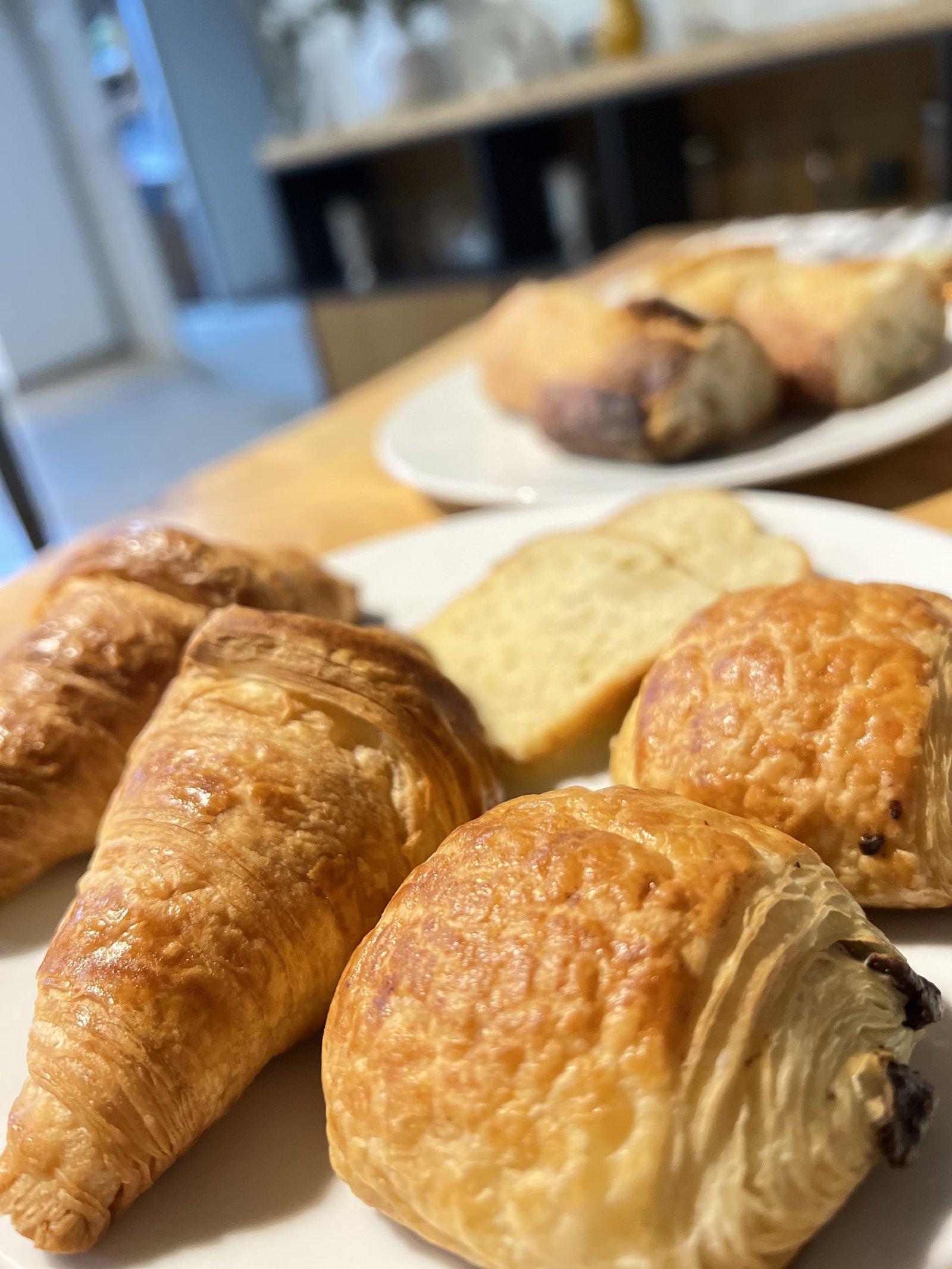
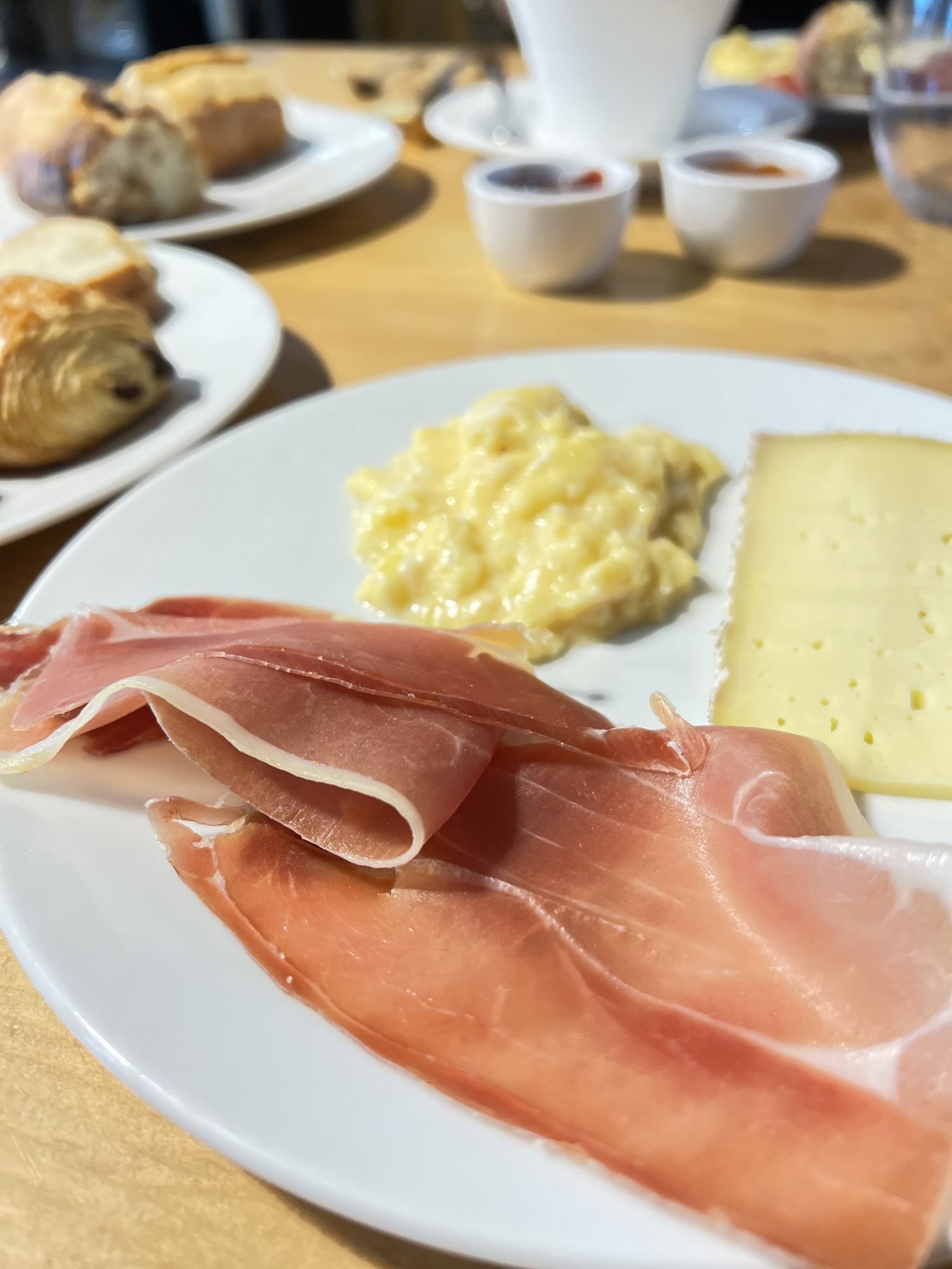
Even though it was mid September, it was still very warm and sunny and people were taking breakfast outside on the very pretty gravelled terrace. We did start there, but there were also a lot of wasps and mosquitoes, so we chose to eat indoors, in the beautifully furnished dining/living room area, which also had an open kitchen. Perhaps the tiniest criticism we would have, is that the family dog is allowed to walk around, even in the dining area. He was very well behaved, and this is fine if you don’t mind dogs, but we’re not huge fans, so probably would have preferred him to be kept away from where we (and other guests) were eating breakfast. A small point, as he was absolutely no bother and left as soon as the owner called him away, but just something to be aware of.
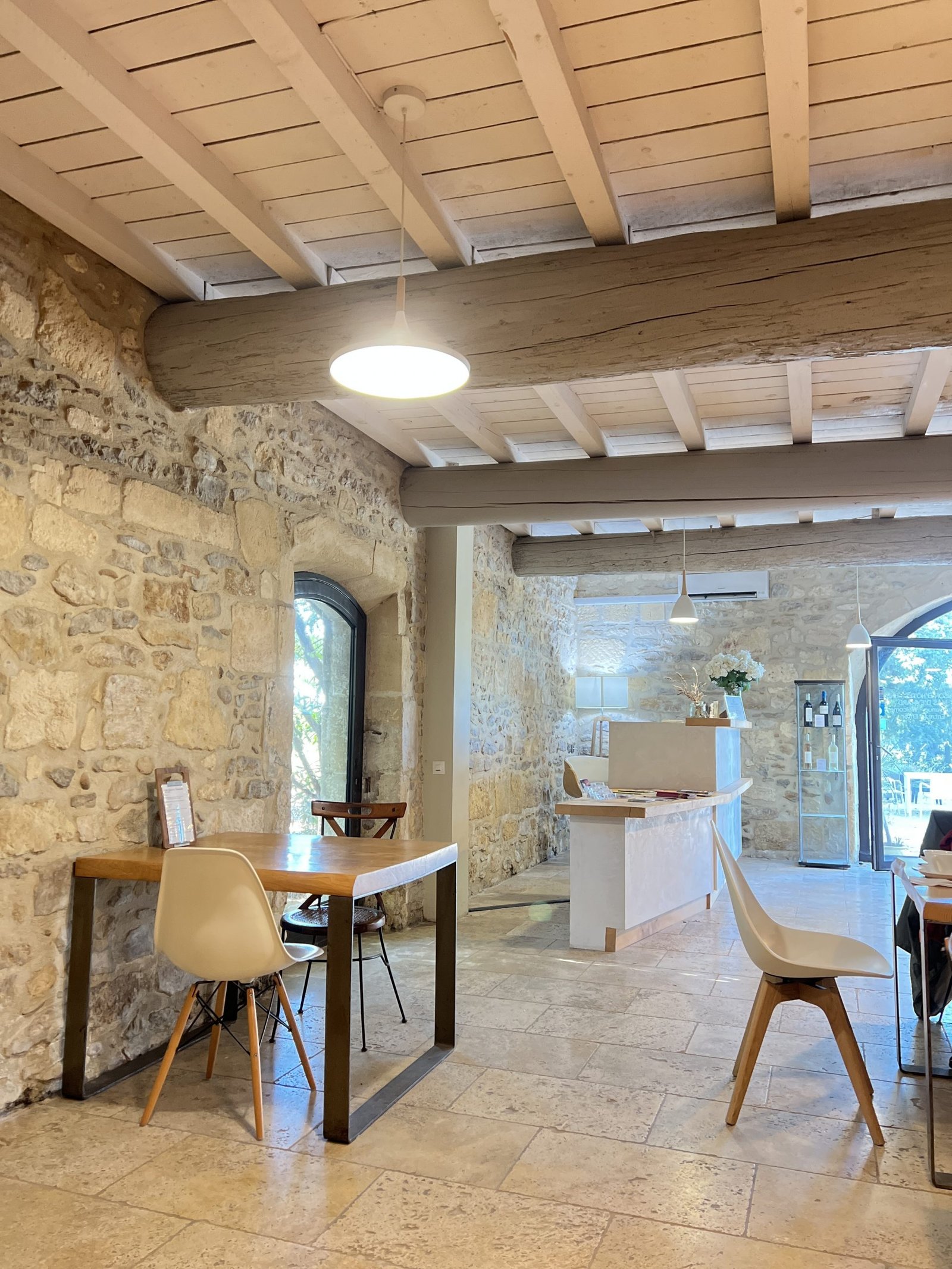
After breakfast, we took the opportunity to explore the grounds before leaving – and it’s clear that this is a rural paradise, with a swimming pool and sunbathing area. There’s lots of evidence of it being a home and a working farm, too but the owners have put a lot of thought into the renovation of the guest accommodation areas.
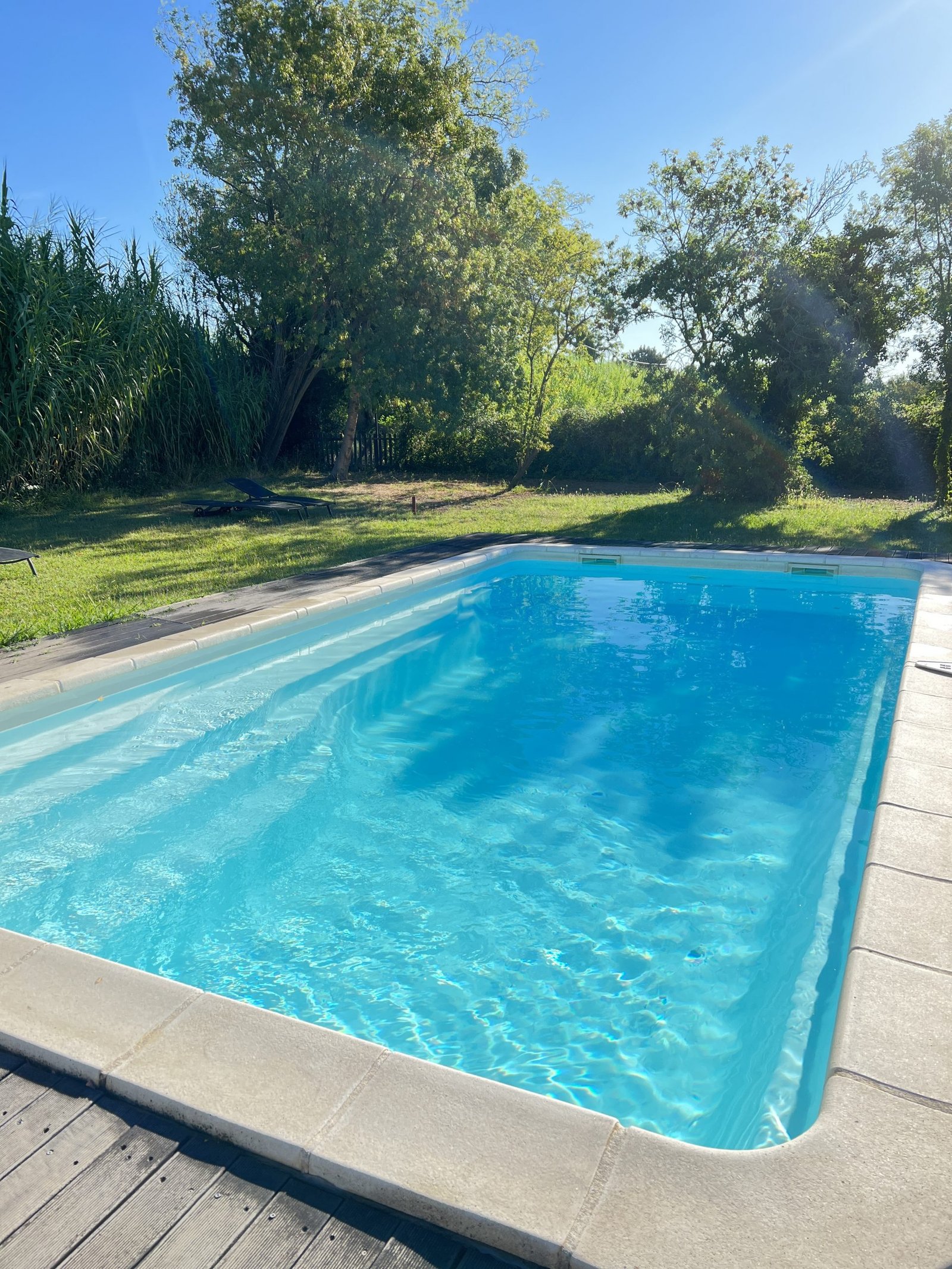
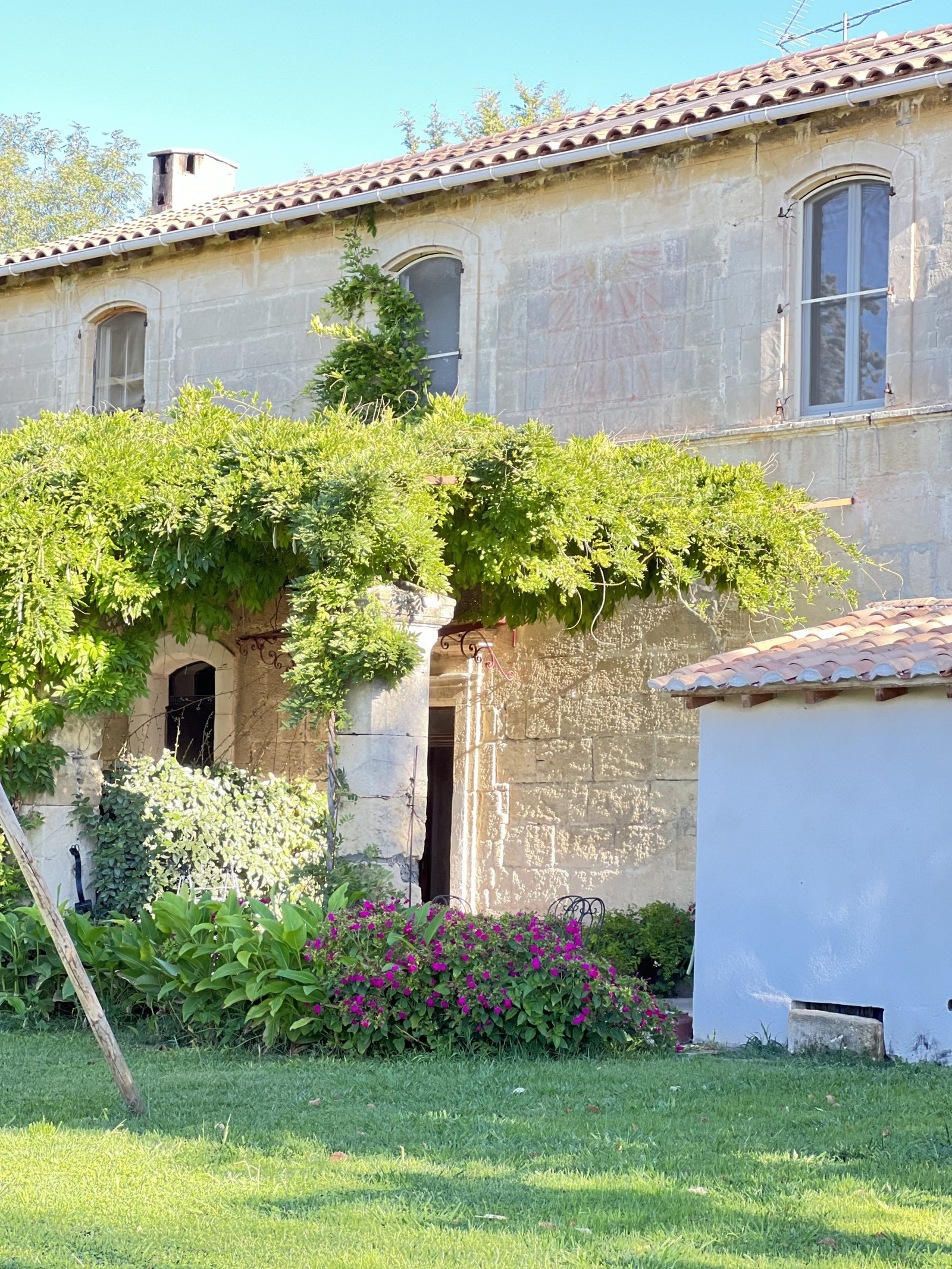
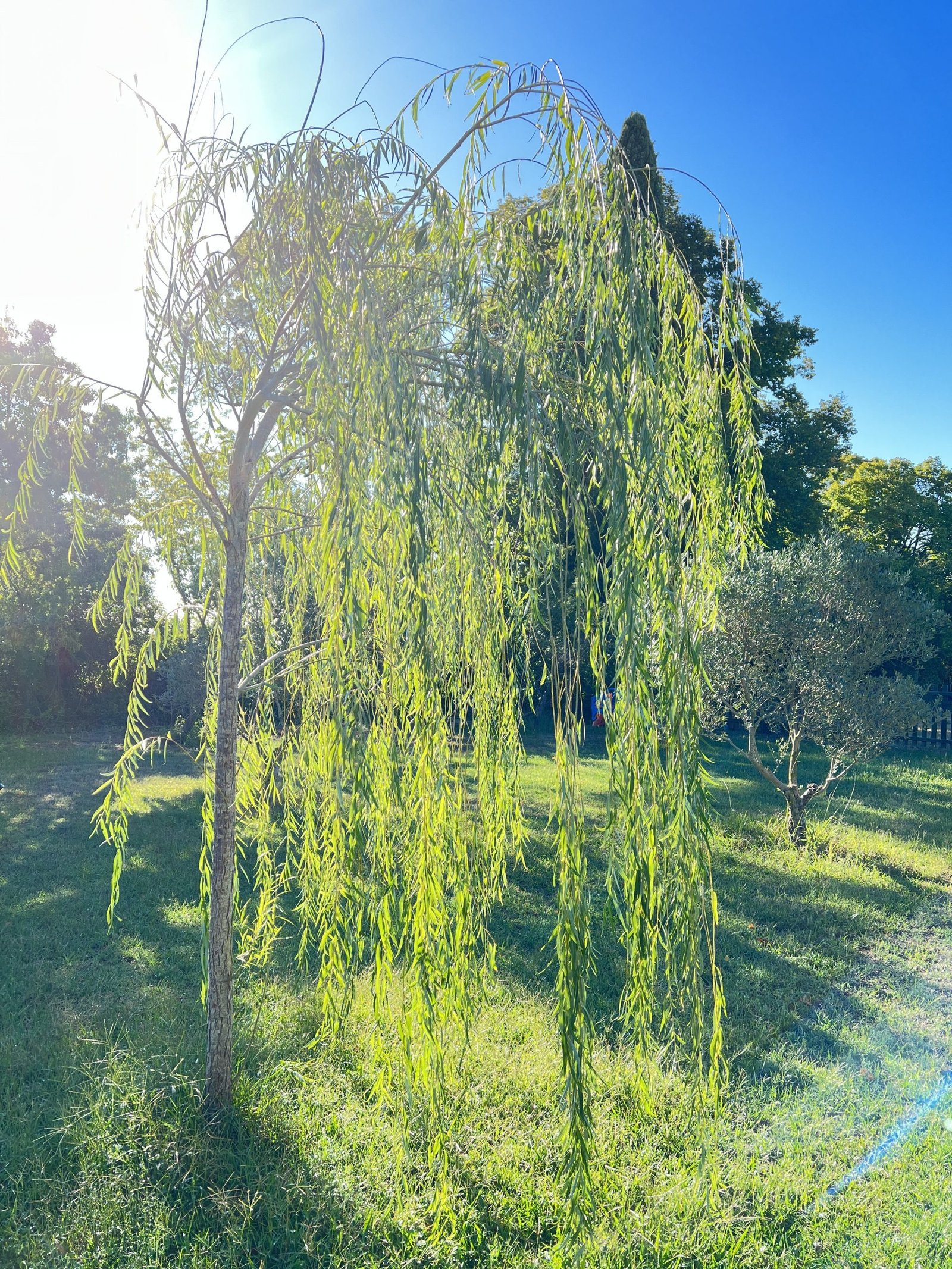
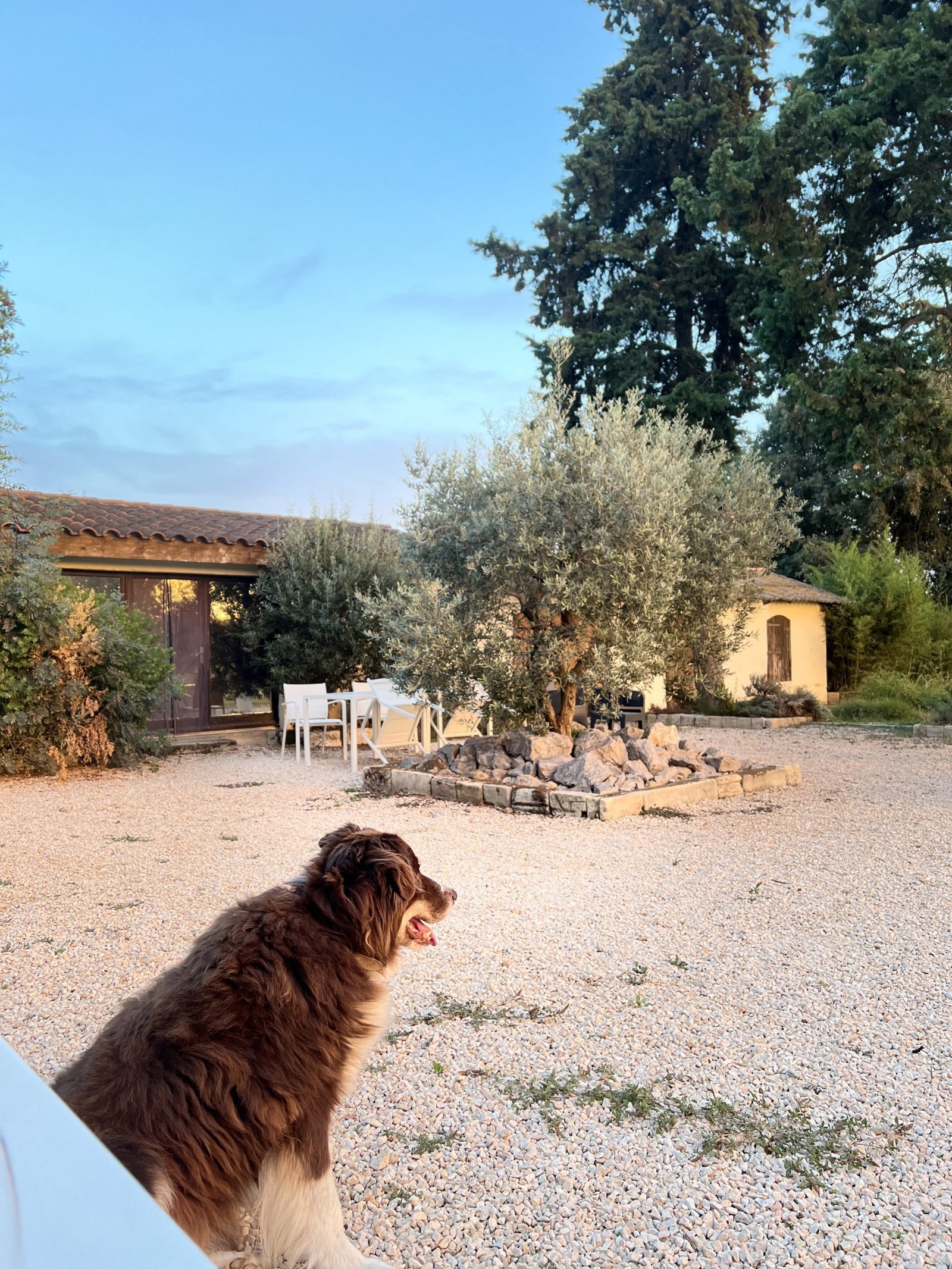
All in all, we had a really lovely stay at this chambre d’hote, and its location and peacefulness was just what we needed after a long drive. I think if we’d booked in for a week, we might have had to have taken the option of taxi drives into Arles, but one night was absolutely perfect. And meant that the next morning, we were raring to go and hit the road again, on our French roadtrip around the Languedoc region.

by Helen | Oct 12, 2023 | Lifestyle
Stilton cheese and brussel sprouts, combined, to form the filling for a quiche. I mean, what’s not to love? We adapted this recipe slightly – the original recipe called for the sprouts to be halved and steamed, but we wanted them to be shredded, so did things a little differently, and combining them with the onions and garlic initially. And, because we often cheat when we cook, we didn’t make our own pastry. Sorry pastry purists. Anyway, here’s our take on Thomasina Mier’s recipe.
what you’ll need
- 400g brussels sprouts, peeled and shredded
- 2 large onions, peeled and sliced
- 2 tbsp olive oil
- 2 garlic cloves, peeled and minced
- A few thyme sprigs, leaves picked
- 350ml double cream
- 1 egg, plus 3 egg yolks
- 100g cheddar, finely grated
- Nutmeg
- Pack of Stilton cheese
- Ready made shortcrust pastry
what you’ll need to do
- Heat the oven to 200C (180C fan)/390F/gas 6;
- Peel and quite finely chop/shred the sprouts and slice the onions and garlic;
- Sweat the onions in the oil on a medium heat for five minutes, then add the sprouts, garlic and thyme and cook for a further 10-15 minutes, until softened;
- Roll the pastry into a buttered quiche tin, allowing extra pastry for an overhang later, pressing it into shape with your fingers. Prick with a fork, cover with grease-proof paper and baking beans, and bake for 15 minutes. Remove the paper and beans, brush the base with the remaining egg white and return to the oven for five to 10 minutes, until golden brown, then turn down the oven to 180C (160C fan)/350F/gas 4;
- In a large bowl, whisk the cream, egg, yolks, cheddar and a generous grating of nutmeg. Break in half-walnut-sized chunks of stilton and season lightly, remembering that the Stilton will be salty already. Tip the sprouts, onions and garlic mixture straight from the pan into the baked tart case, pour over the cream mixture and add a final grating of nutmeg. Bake for 25-30 minutes, until puffed up, golden and just set.
- Serve, with what ever takes your fancy – we did home made sea salt oven chips and peas and it was absolutely delicious…


Perhaps making your own pastry might make this even more delicious, but to be absolutely honest, supermarket pastry, for me, is a shortcut worth doing. This quiche was creamy delicious with that unmistakable tang of brussels sprouts. Which if you don’t like, this definitely isn’t the quiche for you!

by Helen | Oct 11, 2023 | Renovation
When we bought our house in Istria in 2016, it looked very different to how it does today. It was kind of quarter renovated. The roof was new. The guttering was new. Windows had been fitted. And that was just about it. But, we saw the potential – even seeing ahead, to how the actual entrance to the house could look. Which, at the time admittedly, as awful as it was, wasn’t number one priority. But, recent works have meant that I’ve looked back to 2016 and reminded myself of what we – and visitors – were greeted with…

To be fair, once we moved in, this SHOCKING entrance to the house was power washed very quickly, immediately making things look slightly better. But, with a full on house renovation, everything else took priority and it was a good while before we even thought about what to do with here, apart from add a few potted plants, in the early days.

The biggest improvement came, when we had the well, which originally sat inside the house, relocated to the platform outside the front door – but it still took us quite a while longer to do anything further.

There was a big gap between the well and the front wall of the house, which wasn’t really that dangerous – it wasn’t too high and we kept away from the edge, but it definitely didn’t look great. So, we came up with a solution and fixed a wooden palette in place, which had the advantage of planters being able to be hung from it, so immediately making the entrance look a lot cheerier.

The concrete patio, in front of the house, and steps were painted in an attempt to make them look better. However, in hindsight, it was a costly error as it took an awful lot of specialist outdoor paint and within a year it had started to peel and crack. We also painted without addressing first the real issue – the terrible state of the steps. These had been poorly made and were definitely in an unfinished state, something we should have dealt with, but we didn’t, until very recently, because at the time we couldn’t find anyone to do the work, and we certainly couldn’t re-concrete them ourselves.

However, having finally found a reputable, and quite frankly brilliant, builder we added this small(ish) task to his list. And what a transformation. As well as the whole of the garden area being covered in white pea-gravel, and the side access road covered in larger white stones, the steps now look very smart, especially as the paint has been reapplied correctly. The window shutters, which were way past their best despite our best DIY efforts, have been removed. They were so dilapidated that we couldn’t even close some of them, so the decision was made to just get rid. We did have new shutters costed but as they were rarely closed – we prefer light flooding in – we decided against having them made. Why we didn’t tackle this a long time ago is a mystery, but we’ve tackled it now, and what a massive difference it has all made to the entrance of the house, with relatively little effort on our part and all done not too expensively, either…


Obviously, the painted wooden palette has been long gone and so we also requested that a wall be built between the well and the house wall and painted the same colour as the steps and the small balcony outside the front door, and we left the builder to it, thinking “it’s just a wall”. But look at this beautiful join. The way the wall just melts into the well. Now, that is attention to detail.


So, another job ticked off the House List. And it’s ironic really isn’t it, that when you just start to get your house exactly as you’ve always wanted, your head and heart shift, and you’re planning to be on the move again…