by Helen | Sep 9, 2025 | Spain, Travel
Recently, we were lucky to be able to escape the chaos of our renovation and have a night in Estepona, where we met an old Manchester friend, who was out visiting family. We’d only drive around Estepona before, and had only really seen any of it, on programmes like “A Place in the Sun”, so I assumed it was a resort town, much like Fuengirola or Torremolinos, and so not a huge amount to set it apart. Well, how wrong was I?
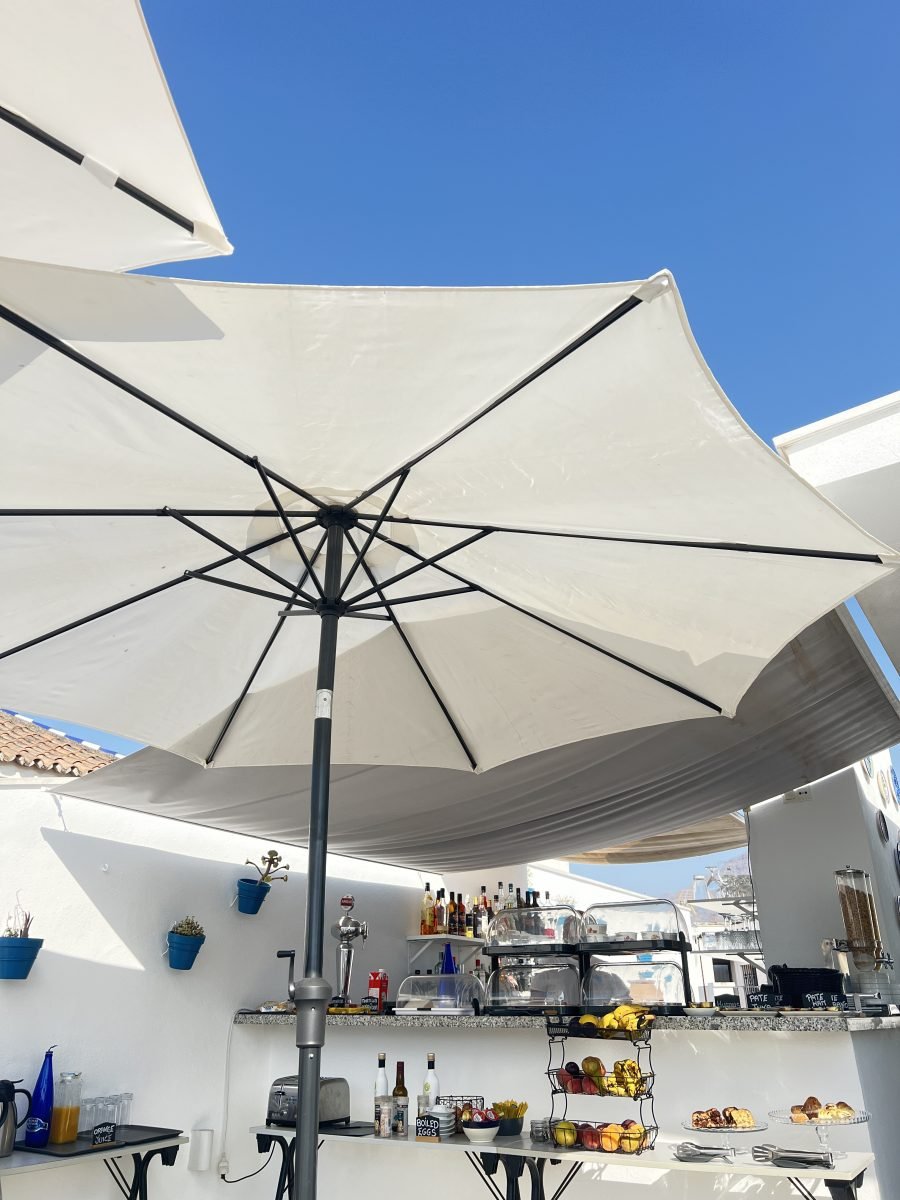
I saw a post on Instagram, showing a beautiful old town, which we did know existed, but which we assumed would be up in the hills above the newer, coastal part of town – not a street back, from a lovely beach. We’d booked a night in a little hotel called The Old Town Boutique Hotel, situated as we discovered, on the very pretty Calle Caridad, right in the heart of the old town, a three minute walk from the sea. There was only one room left because it was a last minute booking, and we were allocated what was described as a Comfort Room – and very comfy it was too, with a large walk-in shower and a really good size bed, with beautiful bedding. We were situated at the rear of the hotel, but our room had French doors, with typical Andalucian grilles, overlooking a really pretty, flower filled courtyard. The hotel also benefits from a sun drenched roof terrace, where a pretty substantial, eat as much as you like, buffet breakfast is served. We whiled away a very pleasant Monday morning up there, far away from hammering and drilling and painting.
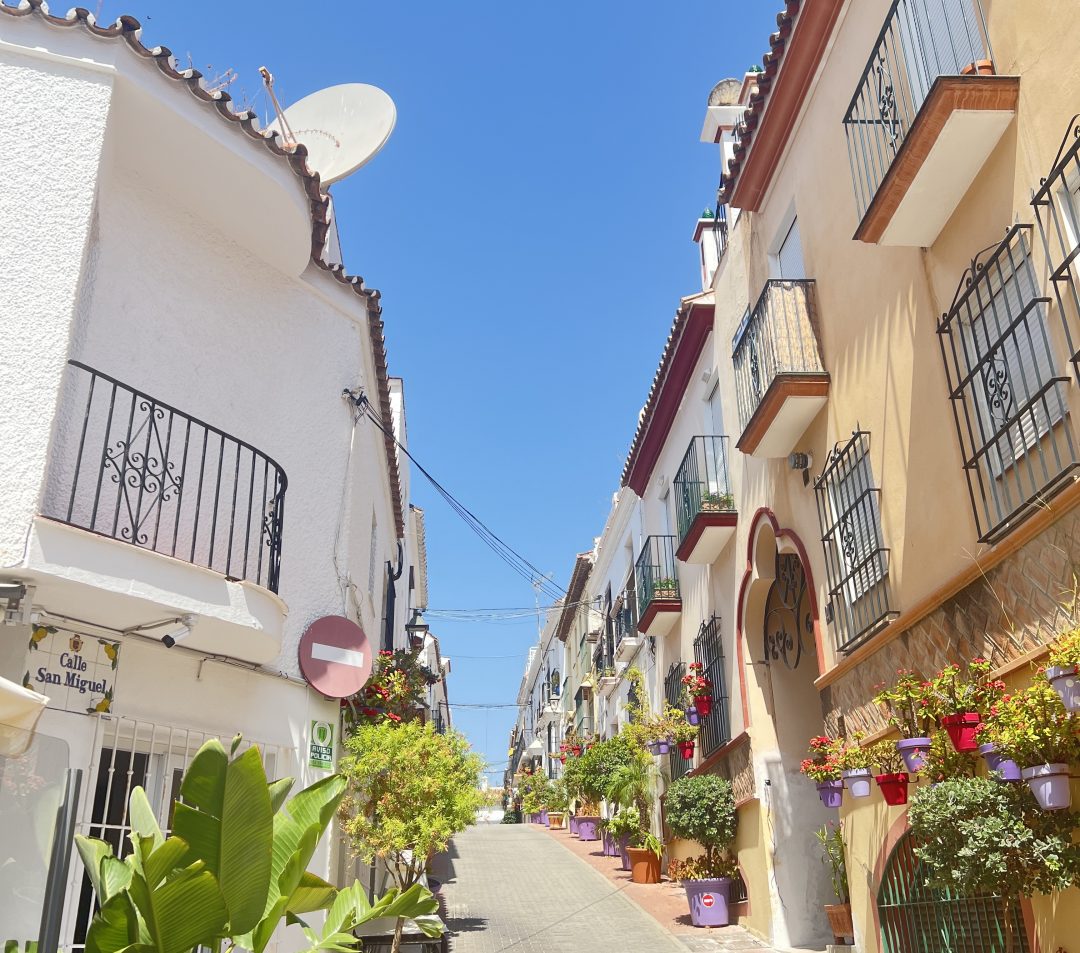
Calle Caridad is a beautiful, typical Andalucian white washed street, full of little boutiques, townhouse hotels, interesting shops, cutesy bars and a real variety of restaurants. Huge banana trees and palm trees line the streets, with pots of greenery and colourful flowers, tumbling down from wrought iron balconies. Attention to detail, from all of the businesses and townhouses, is very much in evidence and gives the place a feel of the very beautiful Marbella old town.
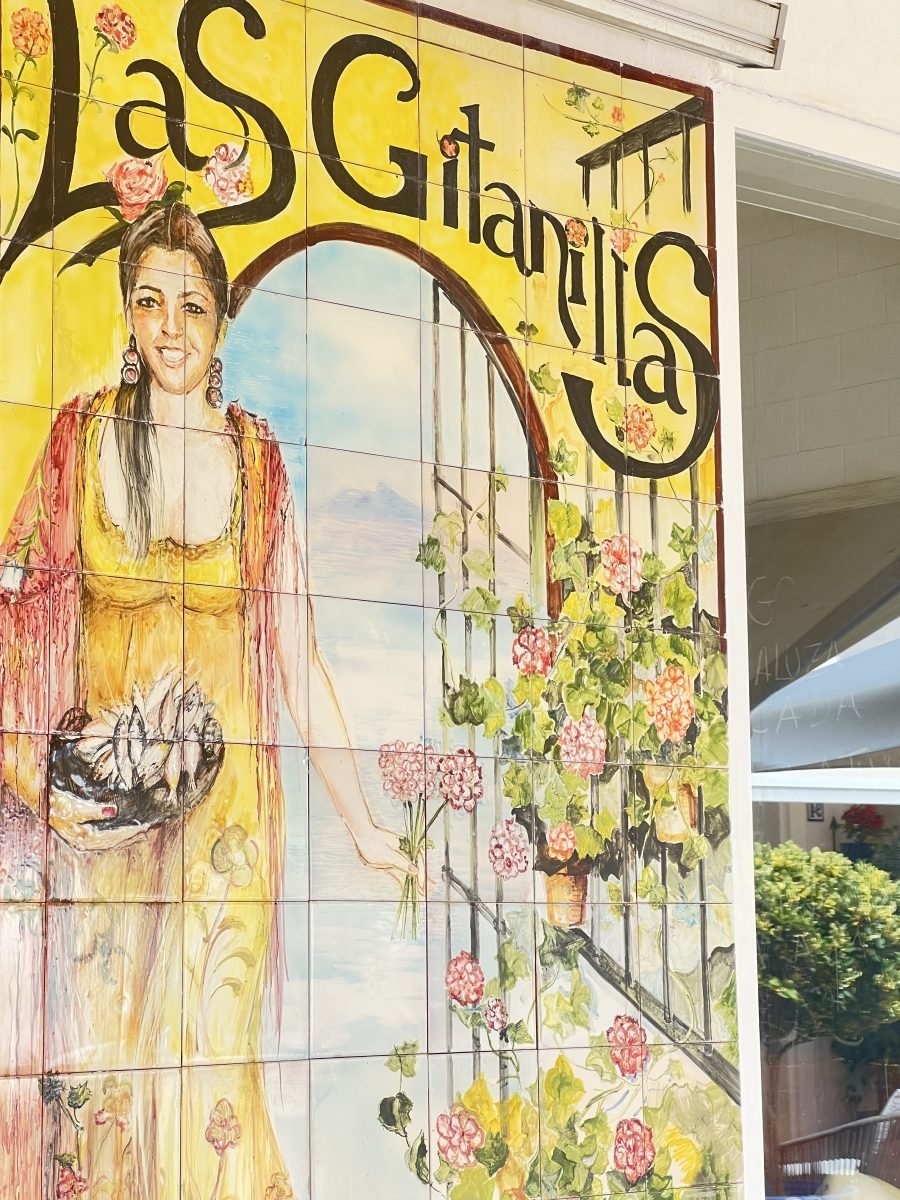
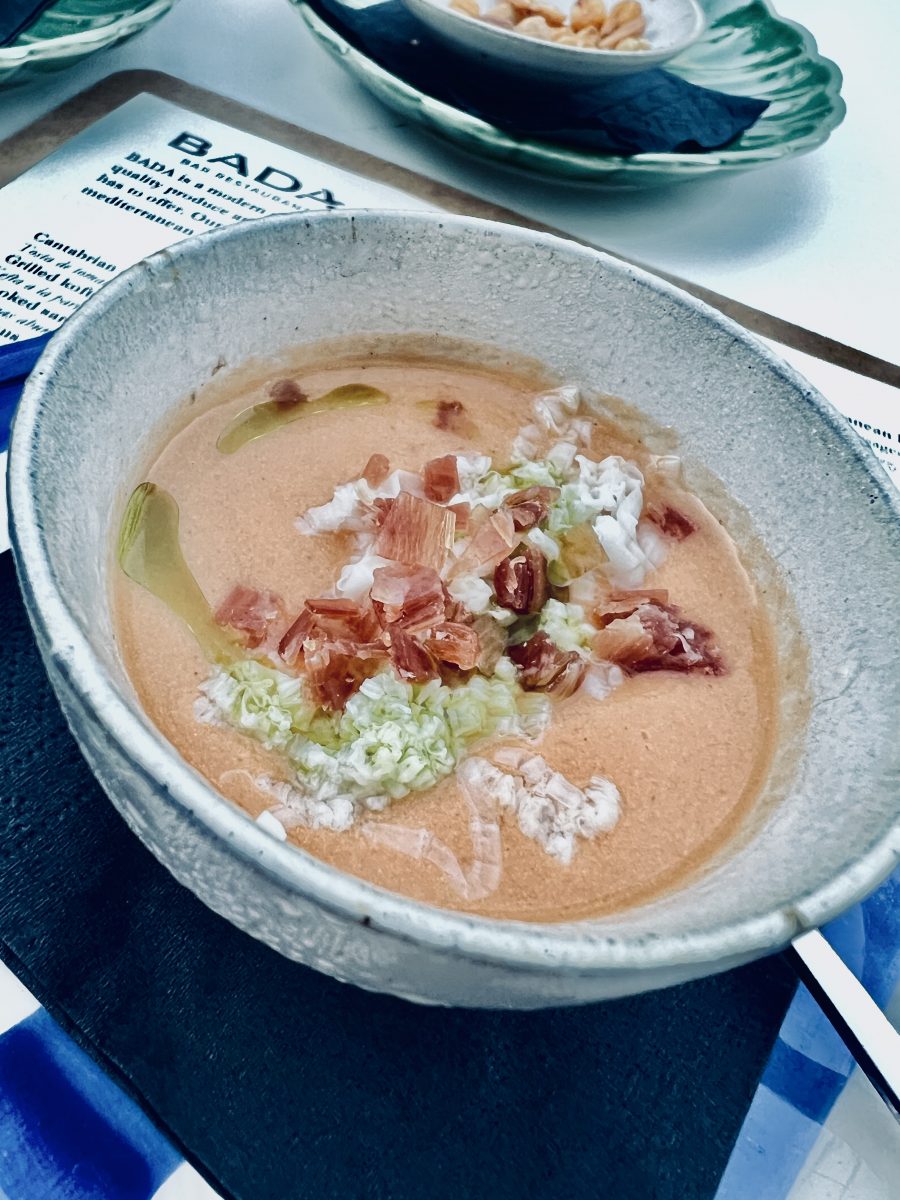
Eating out is not difficult, in and around Calle Caridad, as there is so much choice, and from reading reviews of the various restaurants, some really excellent choice. We opted for a restaurant called Bada, which was every bit as good as the reviews suggested. And, a bit more. The menu isn’t huge, but there is a really good choice of vegetarian and non-vegeterian, covering dishes from Andalucia, wider Spain, Morocco and Asia. We opted to go tapas style and mixed our cuisines – gazpacho, chilli halloumi and spicy flatbreads, smashed potatoes with a minty yoghurt dip, Greek salad and the most delicious Lebanese pizza, with chargrilled chicken and hummus. All washed down with a very pleasant bottle of chilled, dry white wine. Much recommended.
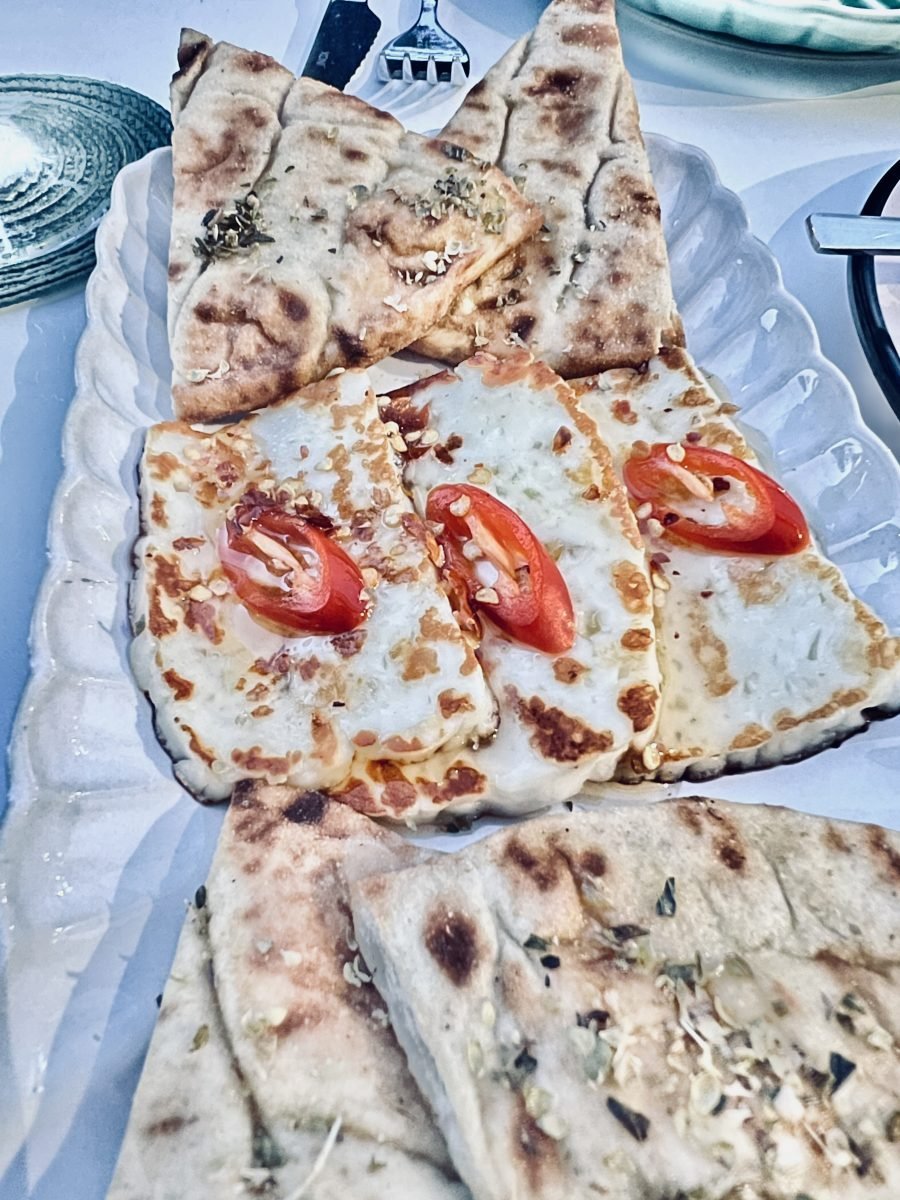
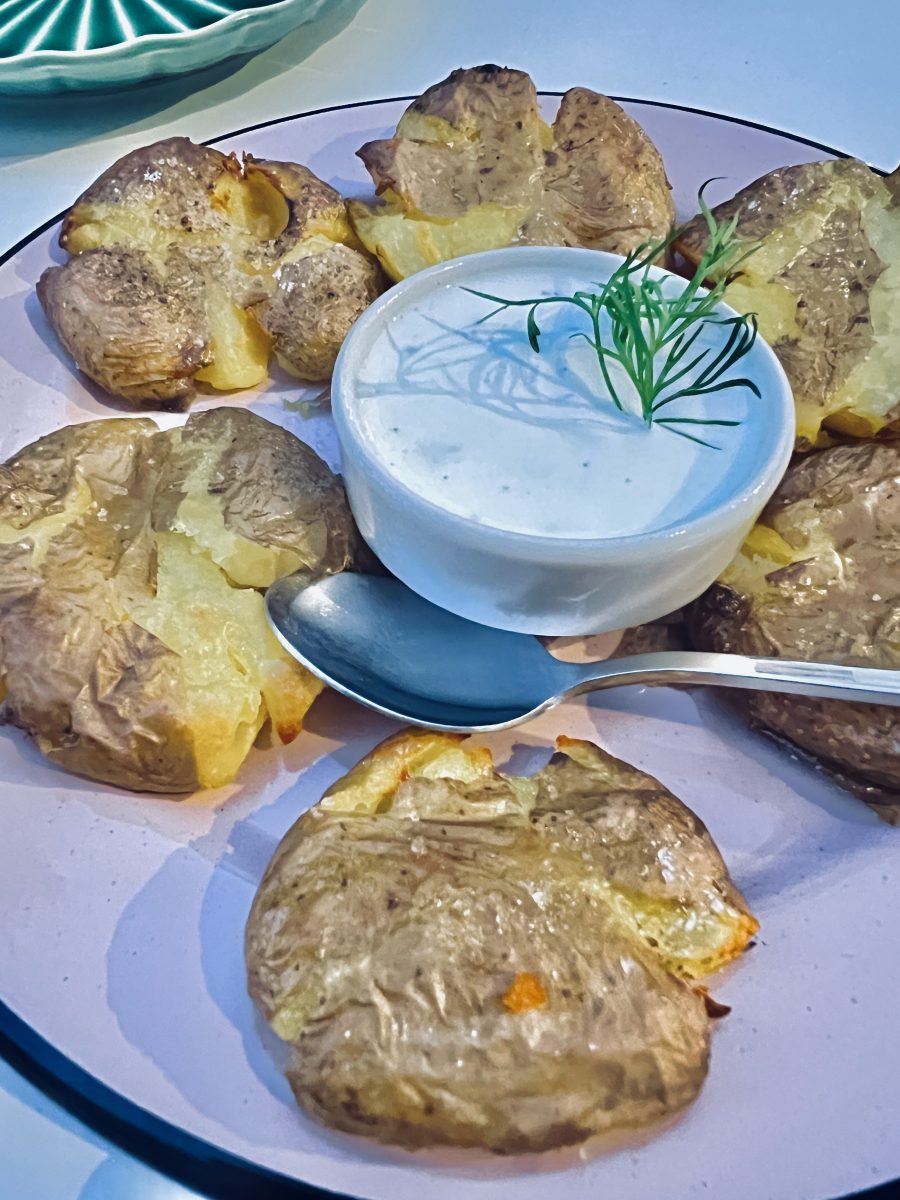
Another thing to recommend Estepona, if you arrive by car, is that there is a large underground car park on Avenida Espana, the main thoroughfare which runs alongside the beach, so very handy for the old town, which is obviously mostly pedestrianised. We were hugely impressed with this coastal town, and as it’s now less than an hour from our house, we think we’ll definitely be getting to know it a whole lot more.
by Helen | Aug 21, 2025 | Interiors
Yep. Another one of those things, like the butter bell, I had not heard of until recently. Fabric paint. Paint for your fabrics and furnishings. How this has passed me by, is beyond me, but here we are. Until I saw a post on Instagram, and started to investigate what I think I assumed was pretty much impossible. I mean – painting fabric! But it is a thing, and I am now a convert and my paintbrushes are ready and waiting, as soon as our furniture comes out of storage. It’s been an expensive business, renovating an old and neglected Andalucian townhouse, and we’re at the stage now where we need to keep an eye on the money pot. We’ve had to make some pretty high ticket purchases, because we sold a lot of our furniture with the house in Istria, so now we’re looking to be a bit more creative, and hopefully curb the spend, going forward.
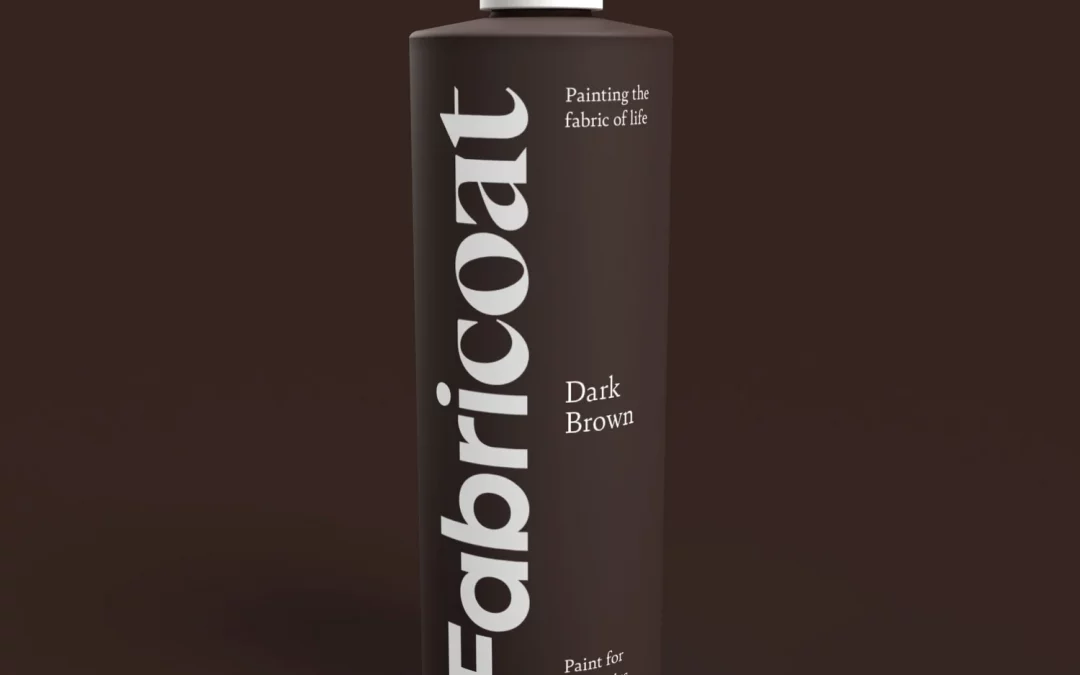
So, Fabricoat came to my attention and I was intrigued sufficiently to order a 500ml bottle of Olive Green paint and have it sent over to Spain, so that I could experiment on a couple of small footstools, before deciding if I’d order more and transform some larger pieces of furniture.
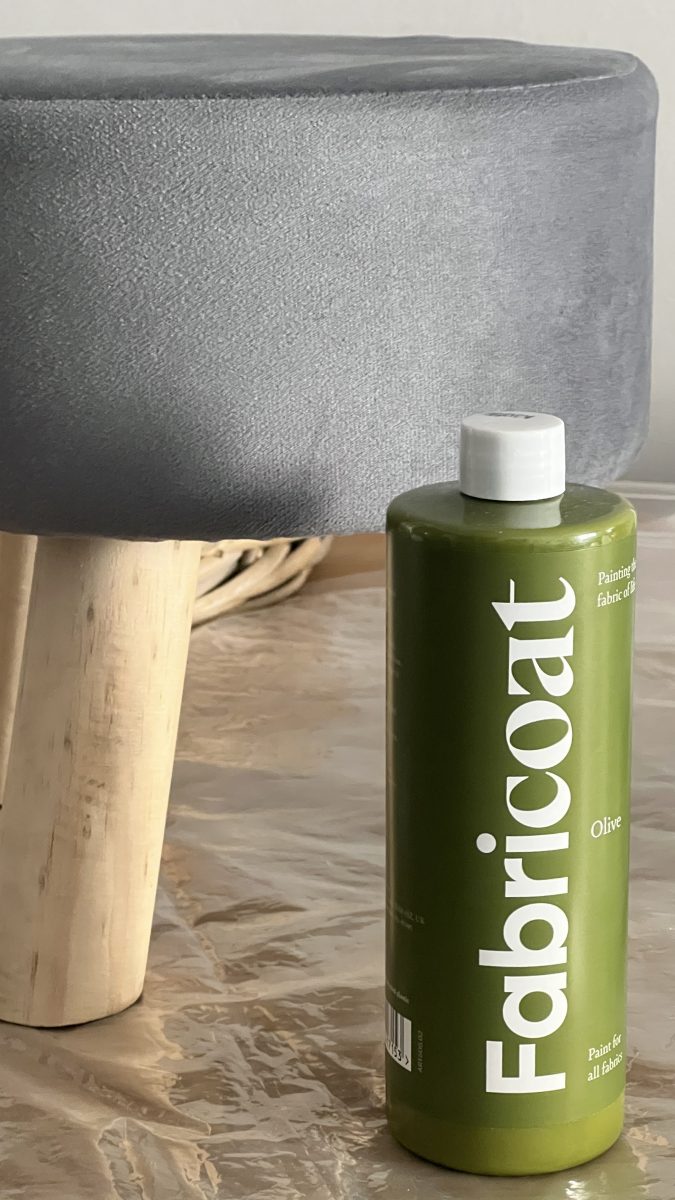
Application is really easy. The recommendation is to brush down the fabric covering to be painted, spray lightly to dampen with water and apply your coats (it took a couple to achieve the colour of the footstools), brush lightly and let dry in between coats. The recommendation is also to use a darker colour than the original fabric, for best coverage. If the fabric has a pile, such as velvet, faux-suede, chenille, draylon or microfibre, it is advised that double the quantities of fabric paint are ordered, because there’s lots more surface area to cover on these types of fabric. And obviously, always test the fabric for water absorbency first. If it’s absorbent, Fabricoat will work.
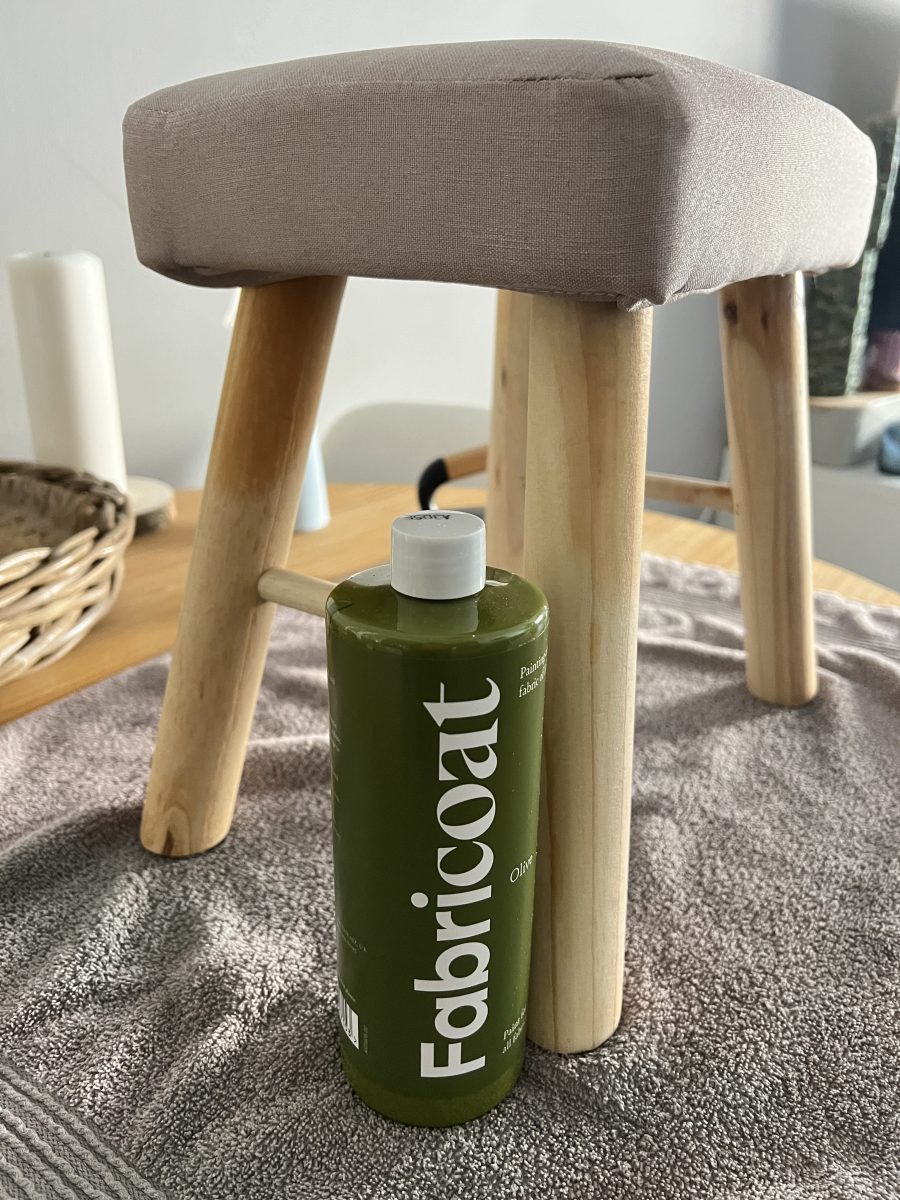
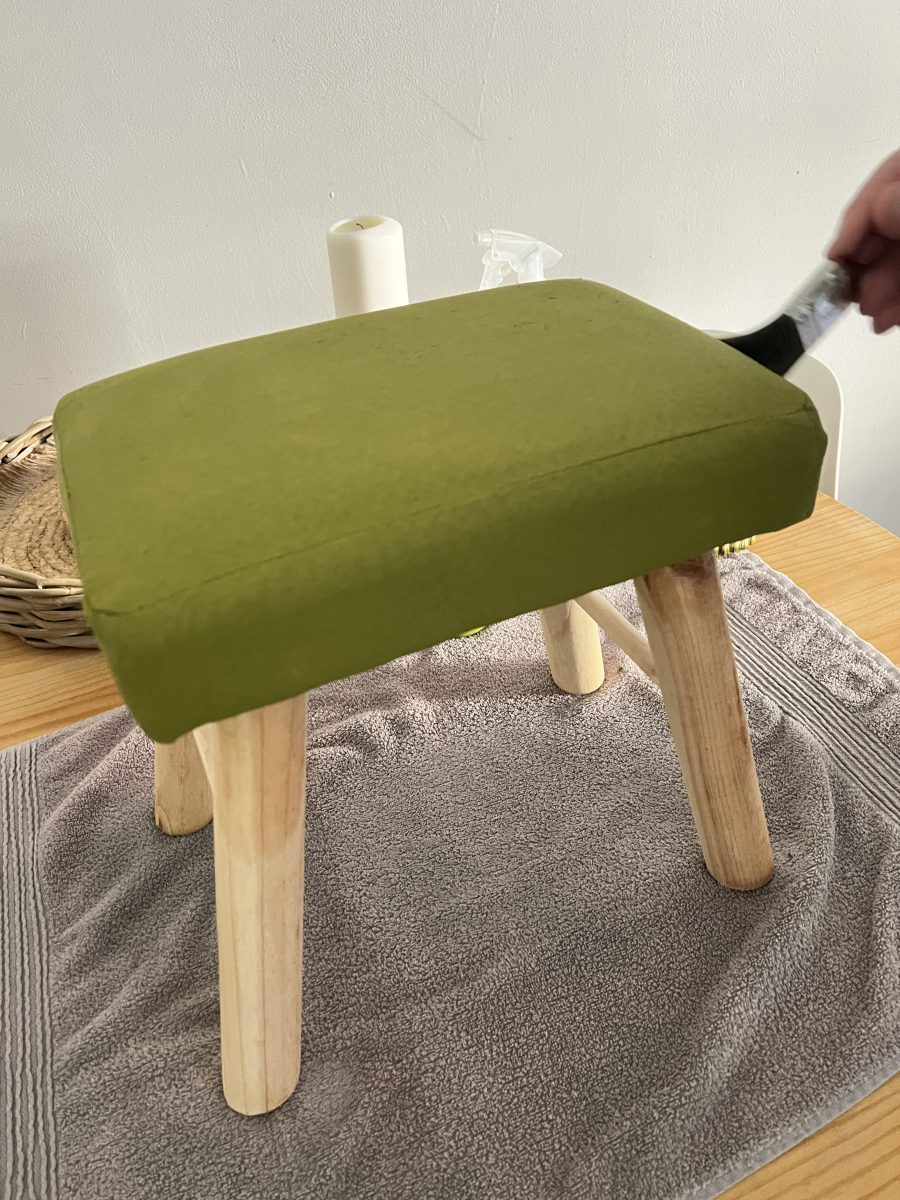
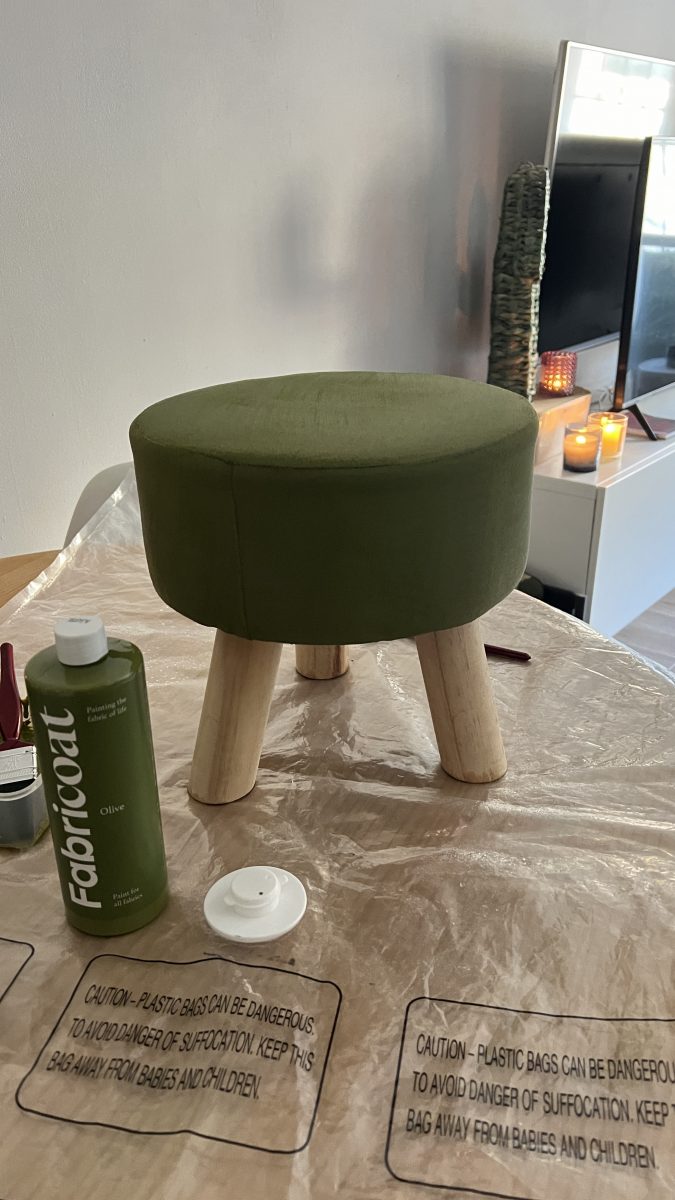
Both stools have stood the test of time, without any kind of colour fading, so we’ve placed a bigger order for the fabric paint. We have an Eve mattress, bought a few years ago but still super comfy. It will sit proud of the new bed, which is green velvet – I know! – and the yellow edging of the deep mattress, will be seen. So, it’s going to be painted this beautiful olive green colour, which will hopefully complement the bed surround and the bedding. The next project will entail the refurbishment of a chaise longue, purchased from the storage people. It’s a bit bling at the moment, with swirls of gold velvet patterns, but we’re going chocolate brown on this, with the frame being painted a vanilla cream. And, if we like the brown, we also have a funky seventies swivel chair, currently resplendent in lime green, which will need a bit of tone down, to fit in with its new surroundings. At just short of £150 (including shipping and taxes, because it comes from the UK), for five and a half litres of paint, it’s sure less expensive than any kind of re-upholstery job. Results will be posted…
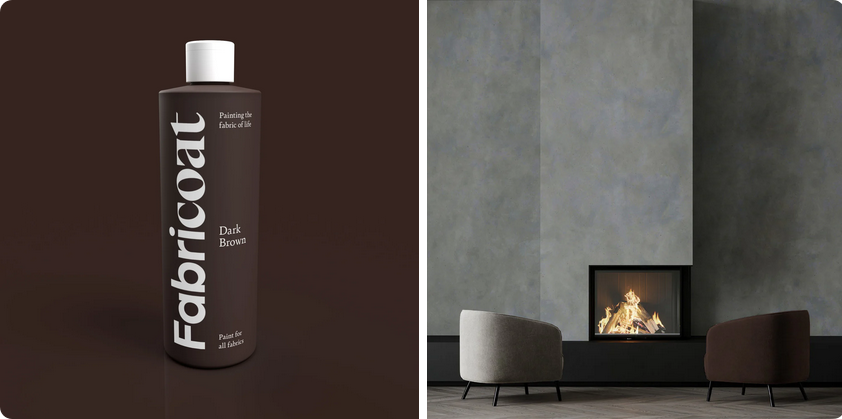
This is not a sponsored post and we get no kickback from the company. All paint is paid for by ourselves. It’s just a product we like and want to recommend.

by Helen | Jul 7, 2025 | Lifestyle
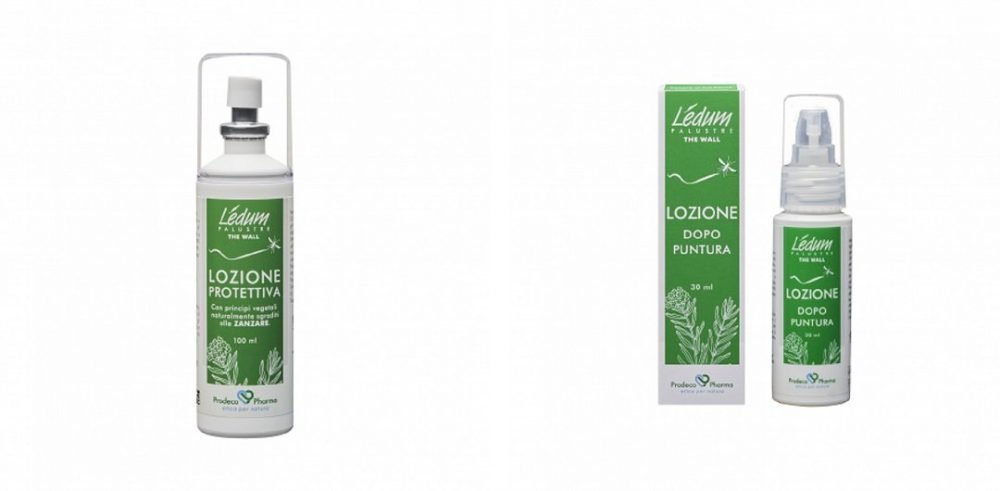
Since moving to warmer climes in Europe, we’ve become quite adept at dealing with bugs and mosquitoes. One of the first things we had installed in our house in northern Istria, were insect blinds at every window. These were much needed, as mosquitoes in particular, were pretty rampant in this part of the world. We also discovered the BEST mosquito repellent (and post-bite spray) called “The Wall”, a moisturising protective lotion, based on plant principles, that naturally repels these critters. It is a refreshing protective lotion, made from Ledum palustre (also known as marsh tea or wild rosemary), and essential oils of basil, geranium and lemongrass, which naturally repel mosquitoes. I’ve only ever found this in farmacias in Italy, but it is available to buy online. It’s not the cheapest, but it’s by far the most effective repellent (and after-bite spray) I have ever used. Smells lovely too, which is always a bonus with these things.
But, as good as this lotion is, it’s not the best summer repellent we’ve discovered. That title goes to an electric bug zapper, from a Spanish website, called Create. This anti-mosquito lamp works with an ultraviolet light wave frequency emission system. It has a 360° air intake, so insects are attracted to the lamp from any direction. Once this happens, a silent suction fan absorbs the mosquitoes and flies inside, where they get trapped. It doesn’t generate noises or smells, and, unlike other repellents, this device does not work with chemicals. It has a timer function, so you can either leave it on continuously, or programme it to automatically switch off after 8 hours or 12 hours. It’s quite a stylish little object too, white and boxy, with a light function, which is very handy – and with a pull out tray at the back, where you can look in wonder at all of the extinguished mosquitoes, flies and bugs. We’ve been really surprised by how many are actually trapped and we have noticed a considerable decline in the number of bites we have had. In fact, it is only when the zapper isn’t on, that we seem to get bitten, so I would say that’s a good sign it’s working and very effective.
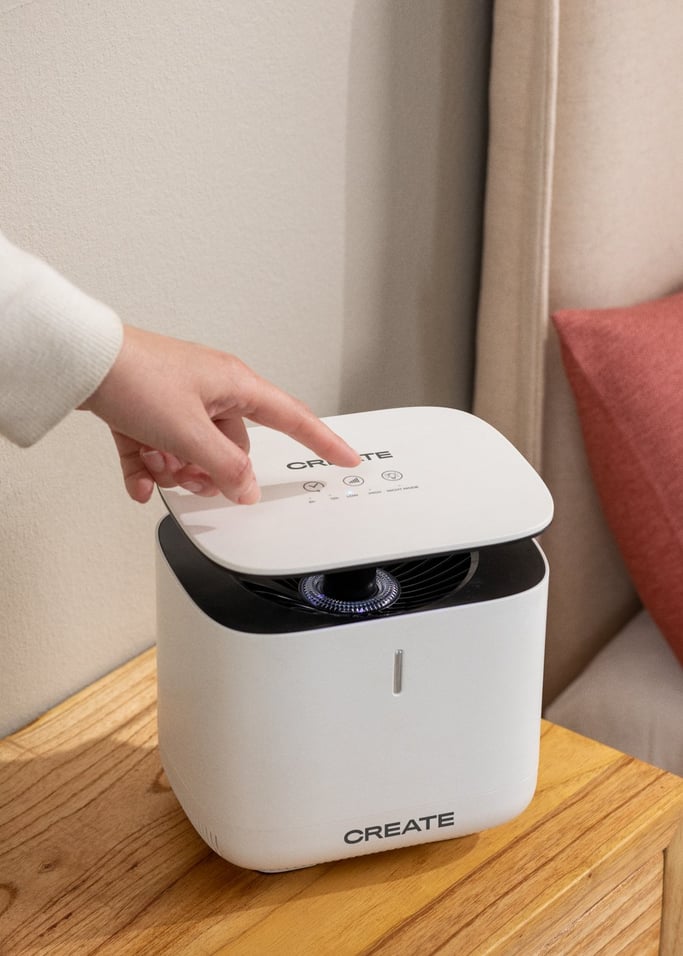
This zapper is currently on sale via the website, and retailing at €24.95, the normal price being €29.95. We only have one of these currently, but as our windows in the house we are renovating won’t really accommodate insect blinds, we’re going to invest in three or four more, so that we definitely have all of the bedrooms covered, when guests stay. And because they are very portable, we can then move them around the house to where they are most needed. And, we can finally say adios to these annoyances…

This is not a sponsored blog post and we have not received any form of payment, from either company. Both the mosquito repellent and the bug zapper were purchased by ourselves – we’re just happy to let people know about them, as we’ve found both products to be very effective in hot, summer weather.
Create Image : www.create-store.com
by Helen | Jul 4, 2025 | Renovation
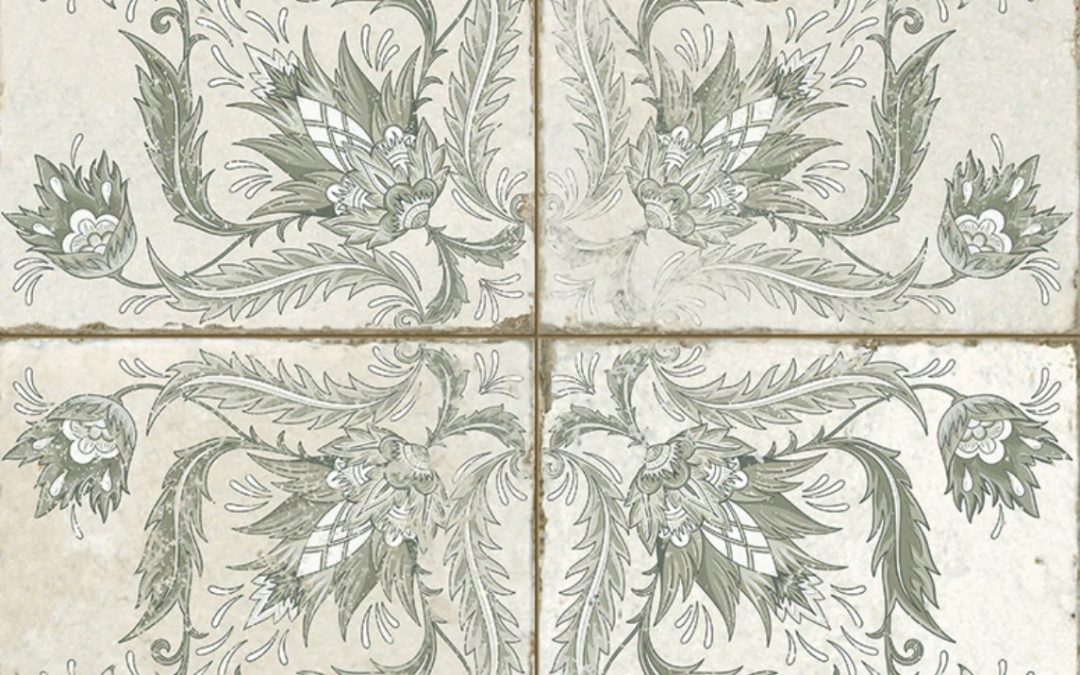
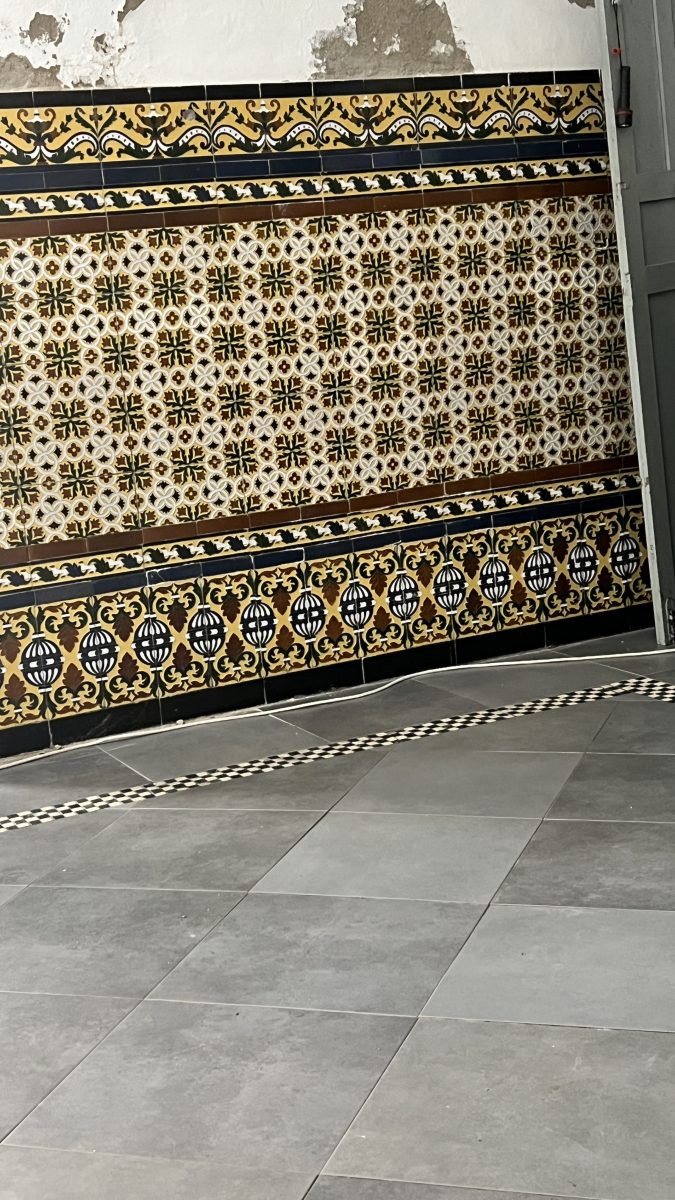
Our lovely Andalucian townhouse, when we bought it, was full of tiles. But unfortunately, most weren’t those beautiful Spanish tiles that we all swoon over. They were mostly patterned, but arranged in the most migraine inducing way – a really terrible mix of colours and patterns and textures. As we had a very strong vision for the renovation, and ultimately what the house would look like, we decided early on, the tiles would have to go. All were carefully removed and we now have a few good piles of ceramic tiles, all now in colour and pattern order and waiting to be cleaned up and either repurposed or sold on. In our tile journey, we have made some good contacts, as we wanted to replace the tiles with originals. The guys at Bert and May and Maitland and Poate were super helpful, in our initial research. Both have set up reclamation businesses in Andalucia and we did try, with both, to source replicas of the tiles we were keeping, so that we could replace the ones we were getting rid of. It all came down to cost in the end, because as well unique moulds having to be made, and colours matched perfectly, for the area we were considering covering, the price started to become prohibitive. So, as much as we wanted to support one of these businesses, we had to look elsewhere.
And that place was online. A bit risky, because all we had to go on, were images on a computer screen. But with ever increasing temperatures – meaning schlepping around tile stores was becoming more and more unlikely – and far too many other house things to buy/consider, we decided to be brave and trust our instincts. Orders were placed for a LOT of tiles, and the nervous wait for delivery started, and the hope that they would all arrive undamaged…
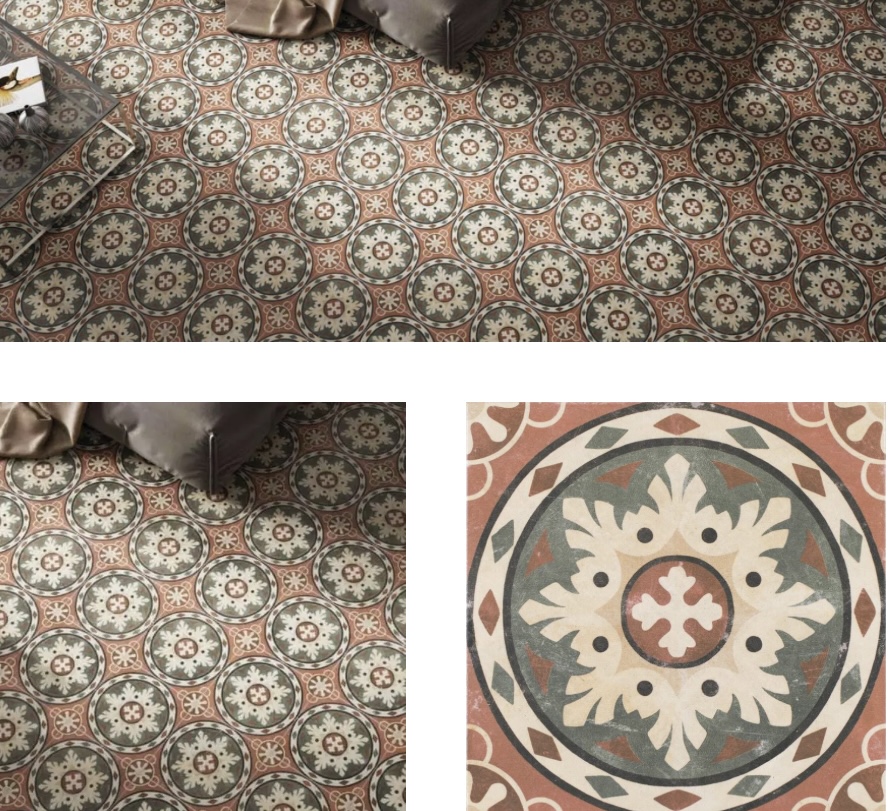
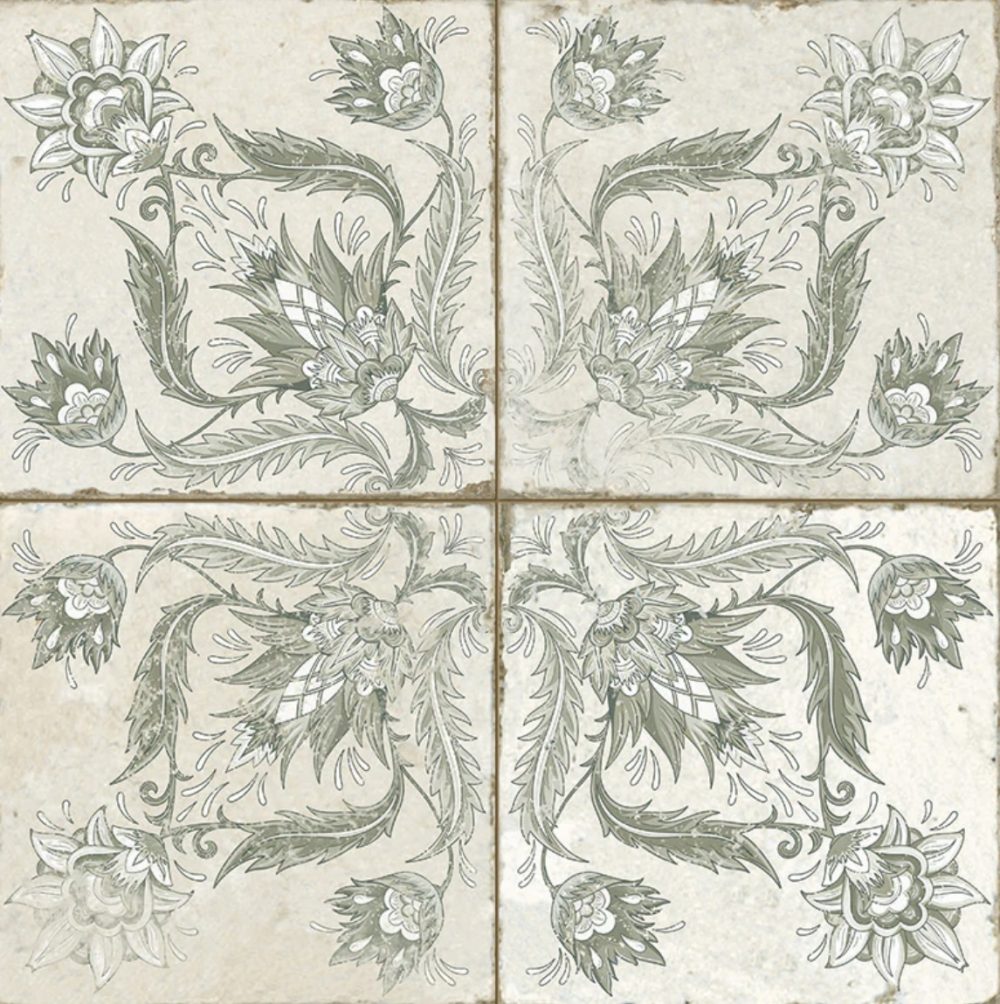
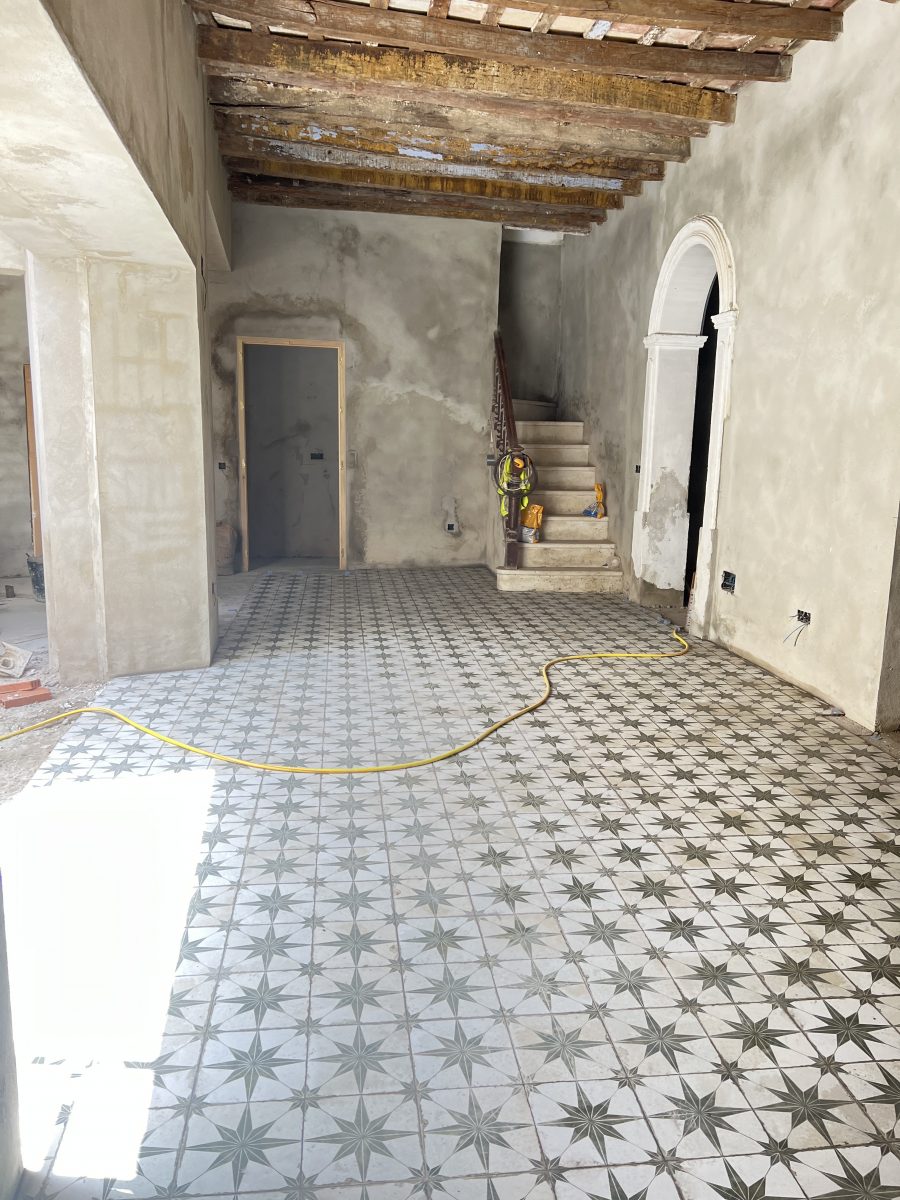
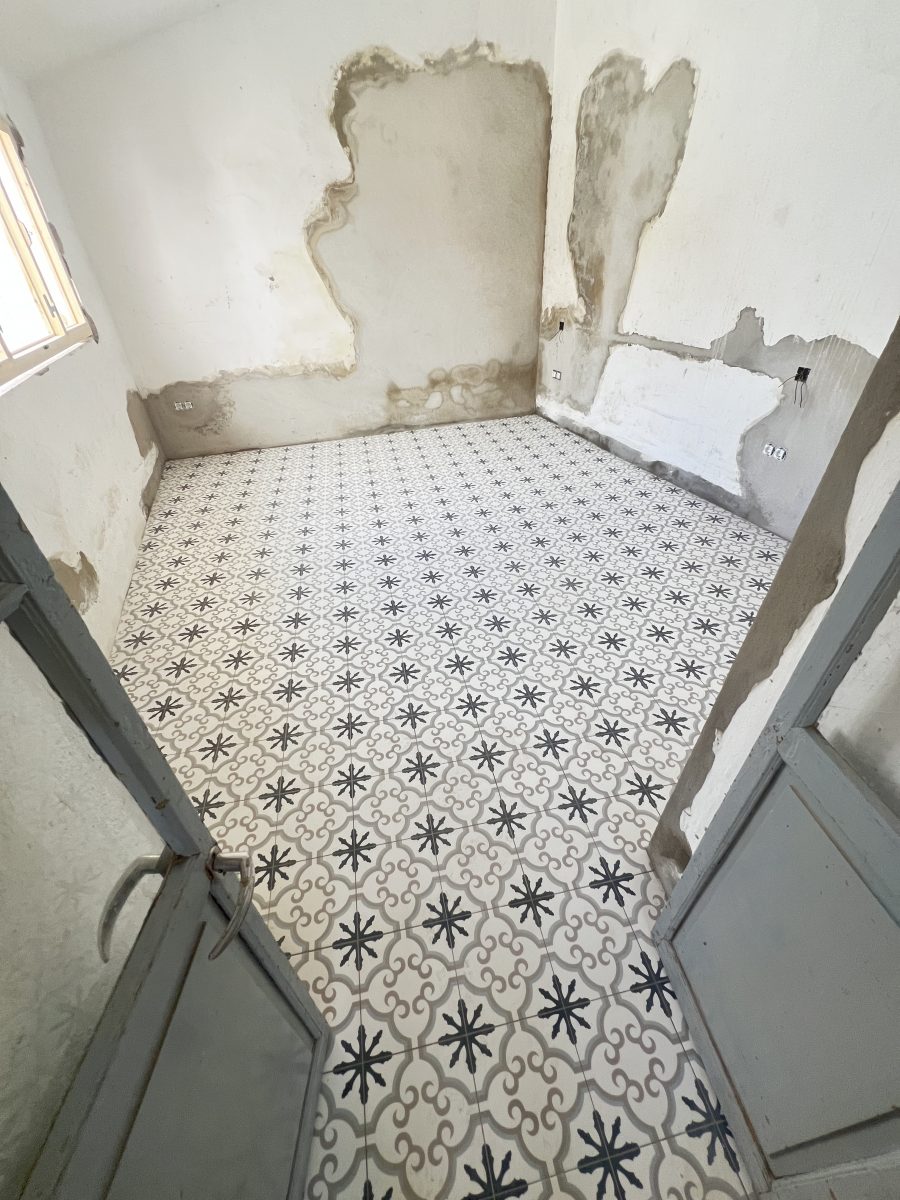
The original tiles on the first floor are largely in very good condition, and so in the places where repair was needed, this has been done, but we’ve managed to keep the ones which have always been there, in two of the bedrooms and the big open plan living space. They are super pretty and once we’ve cleaned them up and had them fully restored, I’m sure they will be as beautiful as they were, the day they were laid.
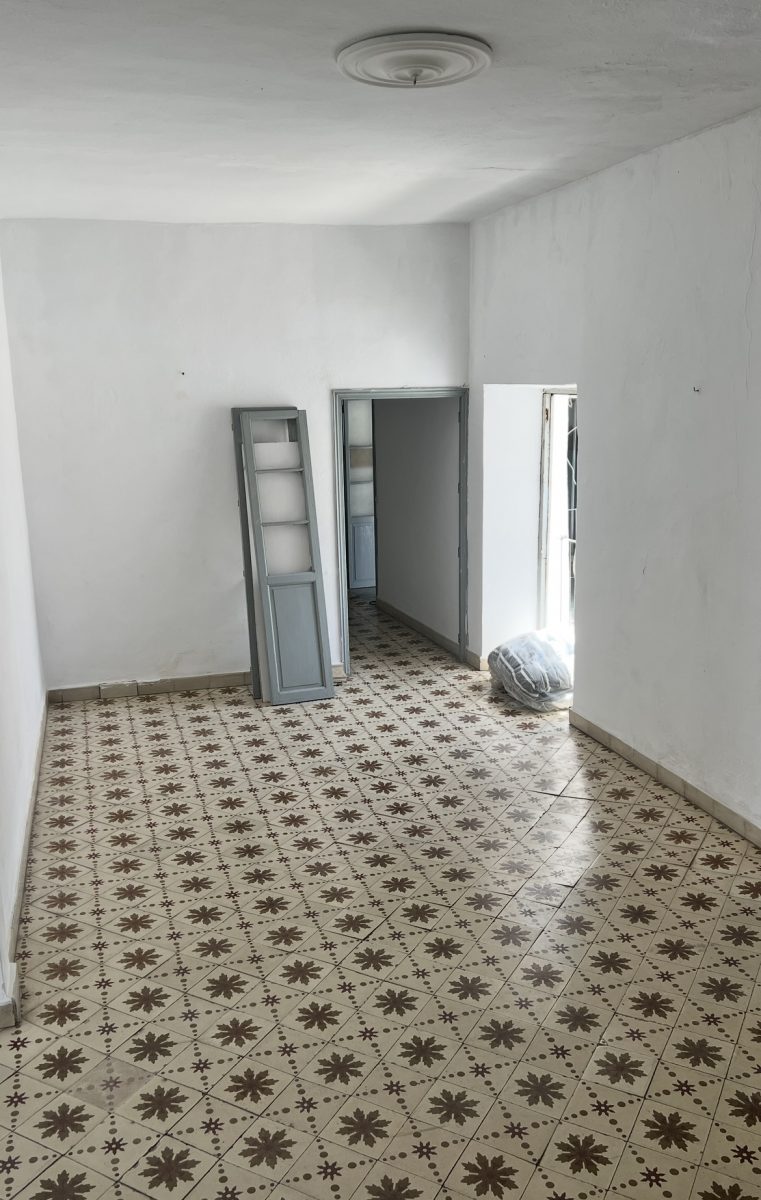
I think, looking back at the original tiling in the house, we made the right decision in replacing quite a lot of it. However, what has been removed, has been safely stored, in separate batches. Now that we can see the tiles in isolation, rather than as an onslaught of colour and pattern, we’ve realised that some of them are actually quite beautiful, and we may well have plans to repurpose at least one set. The others, who knows? Maybe we’ll find out that they are worth something and Bert & May or Maitland & Poate may want to take them off hands…
by Helen | Jul 1, 2025 | Lifestyle
Have to admit, until fairly recently, we’d never heard of the butter bell. We just did what I suppose most people do – keep the butter in fridge, where it’s always too hard and cold. Or, leave it out in a butter dish and return to a swimming pool of buttery oil in warmer weather. It never seemed too much of a problem, as I didn’t know there was a solution. I didn’t even know there was a problem, especially as I’m not a huge butter fan, so had never really questioned our storage of it. Until I chanced upon a butter bell on Instagram, and our buttery lives changed forever.
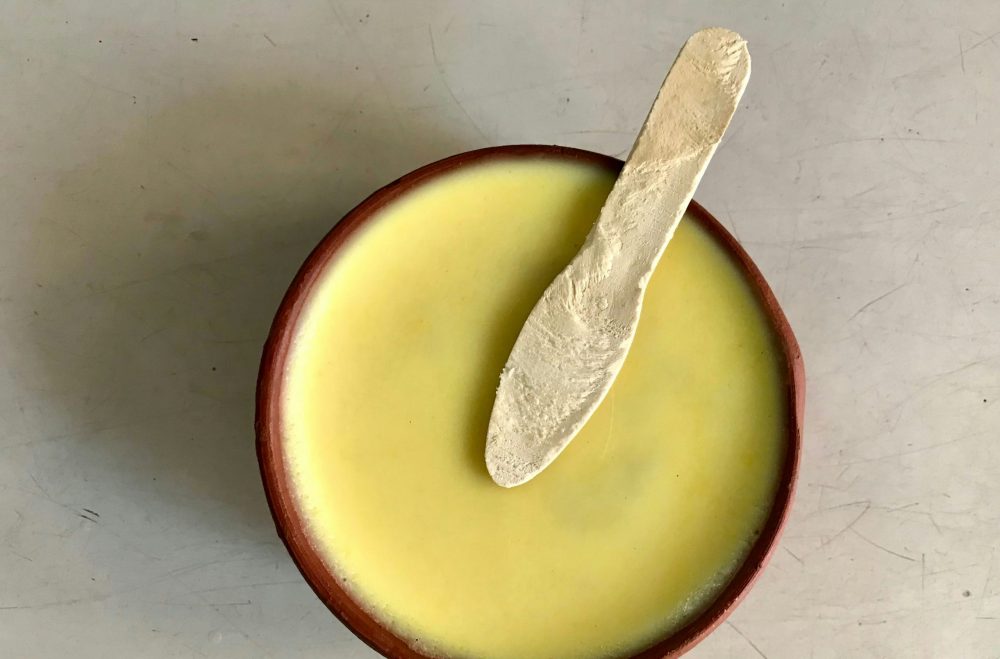
Since finding out about these ceramic pots, I now realise that probably everyone else has always known about them. But in case, like us, you haven’t, here’s the lowdown on butter bells and why you definitely need one in your life…
The butter bell, also called a French butter crock or butter keeper, dates back hundreds of years. Well before refrigeration, it is known that French cooks crafted ceramic bell-shaped crocks – known as “beurrier à eau” – to preserve butter at room temperature, by sealing it from oxygen with water, in designs especially made in Vallauris, a town famous for its pottery, or in Brittany or Normandy, regions renowned for butter production. However, the invention of refrigeration meant that the use of butter bells started to decline at the beginning of the 20th century. In the 1970s, North American craft potters apparently rediscovered, and began producing these crocks again, selling them at fairs and boutiques, bringing about a resurgence in their popularity, and in the late 20th century, interest increased in traditional methods of food preservation, and the butter bell, gained popularity once again.
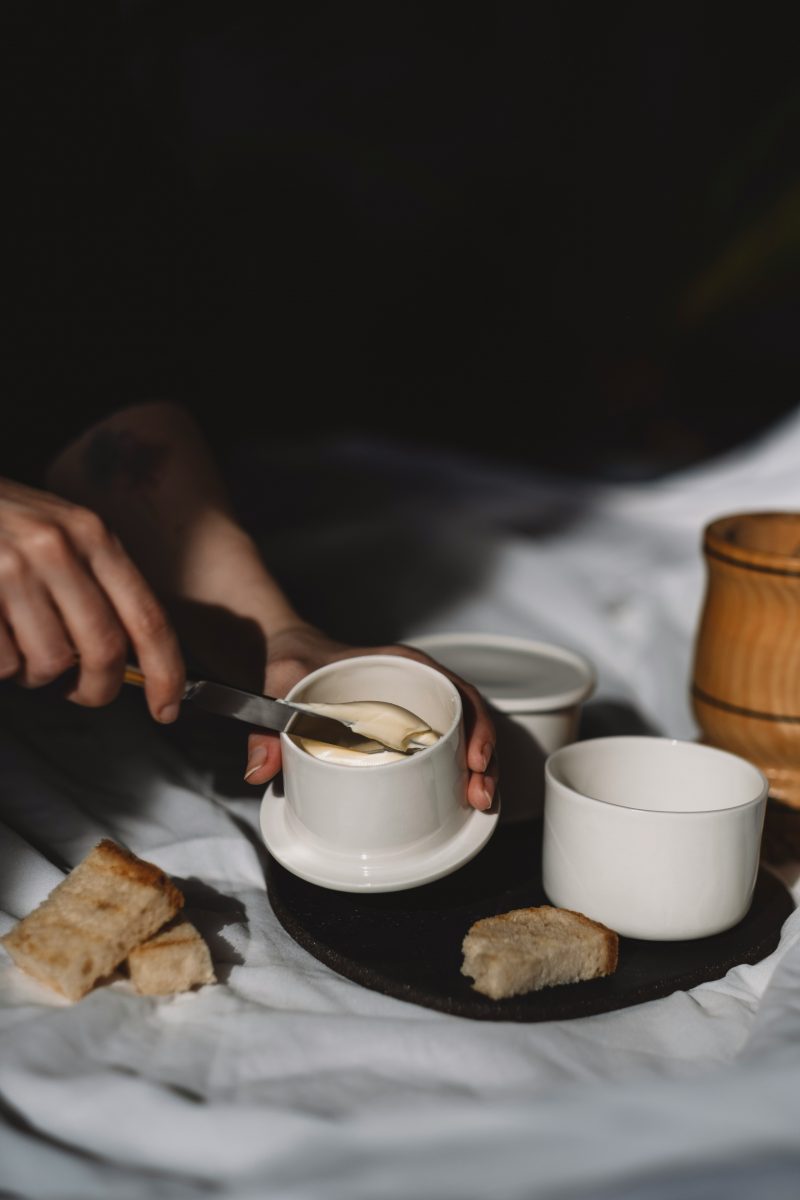
L. Tremain, Inc. trademarked the name “Butter Bell” in the US in 1995 and modernized the traditional French design, creating the “Original Butter Bell® Crock”. As I now know, they are widely available these days, and some of the designs are really quite beautiful. It’s such a simple concept too. The lid, filled with butter, is inverted into a water-filled base, creating an airtight seal that keeps oxygen and bacteria out. The important thing is that it’s an airtight seal, not that the butter is touching the water. That little pocket of non‑circulating air isn’t really apparently a big deal in the world of butter bells. This seal preserves butter for up to a month when kept below about 27 °C and with regular water changes.
Today, butter bells are appreciated for their ability to keep butter soft and spreadable without refrigeration, as well as their undoubted aesthetic appeal, and their connection to traditional food preservation methods. And, do you know what? They really DO work! I ordered one – obviously – but was very sceptical. I mean, summer heat in Andalucia and you expect to keep butter out of the fridge and it doesn’t melt?
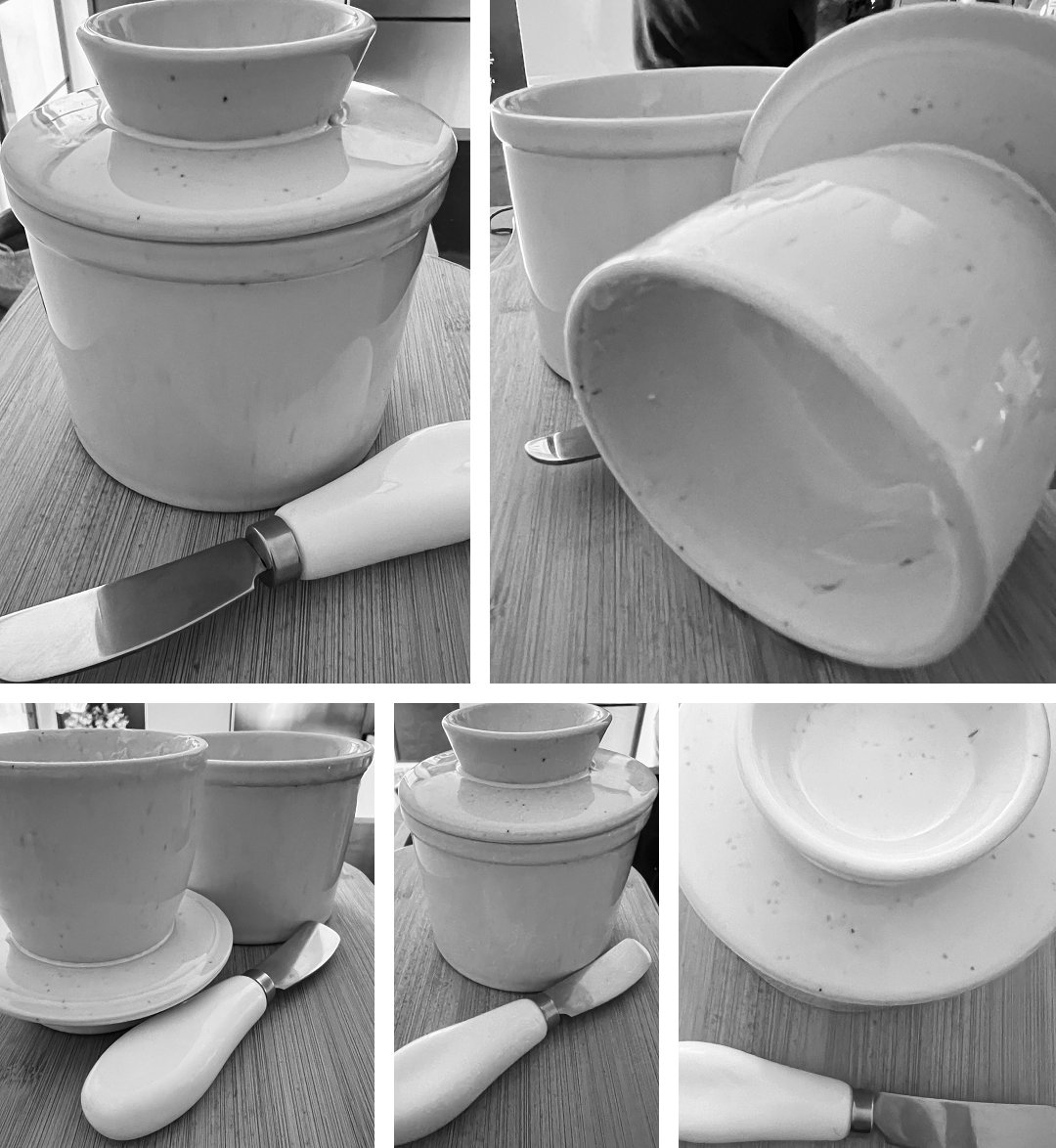
In the cooler months, this is the perfect receptacle for butter. It keeps it cold, but spreadable. No more tearing bread. The butter is smooth, but still with substance – perfect buttering conditions. We’ve had to adapt a little in summer months, as temperatures rise into the forties. Leaving the bell out on the kitchen work surface is no longer the best idea, as the butter definitely does become much, much softer. So, we keep it in a cool cupboard and problem solved. It is important to remember to change the water regularly – every two, certainly three, days – and to always hand wash the whole thing before re-filling.
It’s easy-peasy to refill, too – the bell (or at least ours) seems to take just under a normal sized pack of butter, so we use what’s left over first. It’s best to let the butter soften at room temperature first (don’t melt it), then press it firmly into the bell-shaped lid to remove air pockets. Finally, level off the top with a knife or spatula for a clean seal.
Our butter bell is a retro style, in white ceramic, with a lovely bone handled butter knife. Not at all expensive, but it definitely looks like a kitchen item with a little bit of history.

by Helen | May 20, 2025 | Renovation
Unlike previous renovations, when we’ve actually lived in the properties as they were being renovated, this time, we have lived in an apartment, by the sea, a good couple of hours drive away. Each trip over to the house, is over a four hour round trip, and so we haven’t done so many actual visits. We keep on top of everything with daily updates with our builder and video calls when necessary, so although we’re not right in the middle of it all, we feel very much in the loop, and know what is happening at all times.
This means that my blogging of our renovation journey has been a bit more sporadic than previously. But so much has been happening in the house – so much more than we actually envisaged initially – that I think it’s important to keep a record. Something we can look back on in the future, and wonder once again, how on earth we did it.
So, the main bathroom…
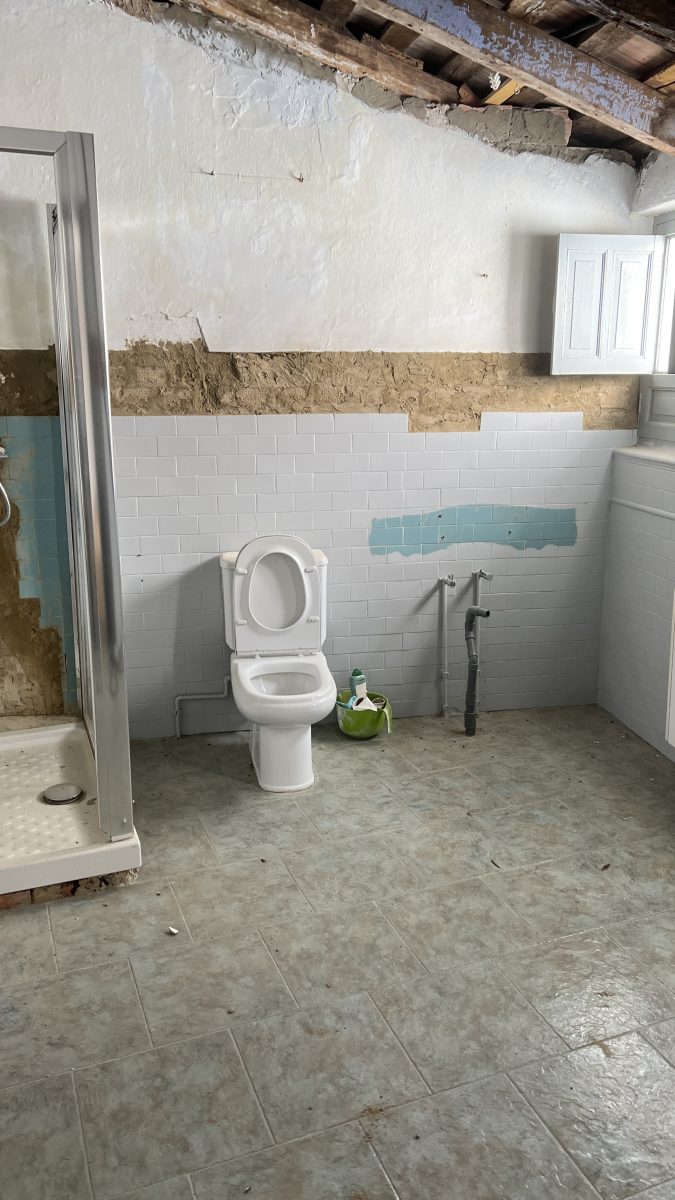
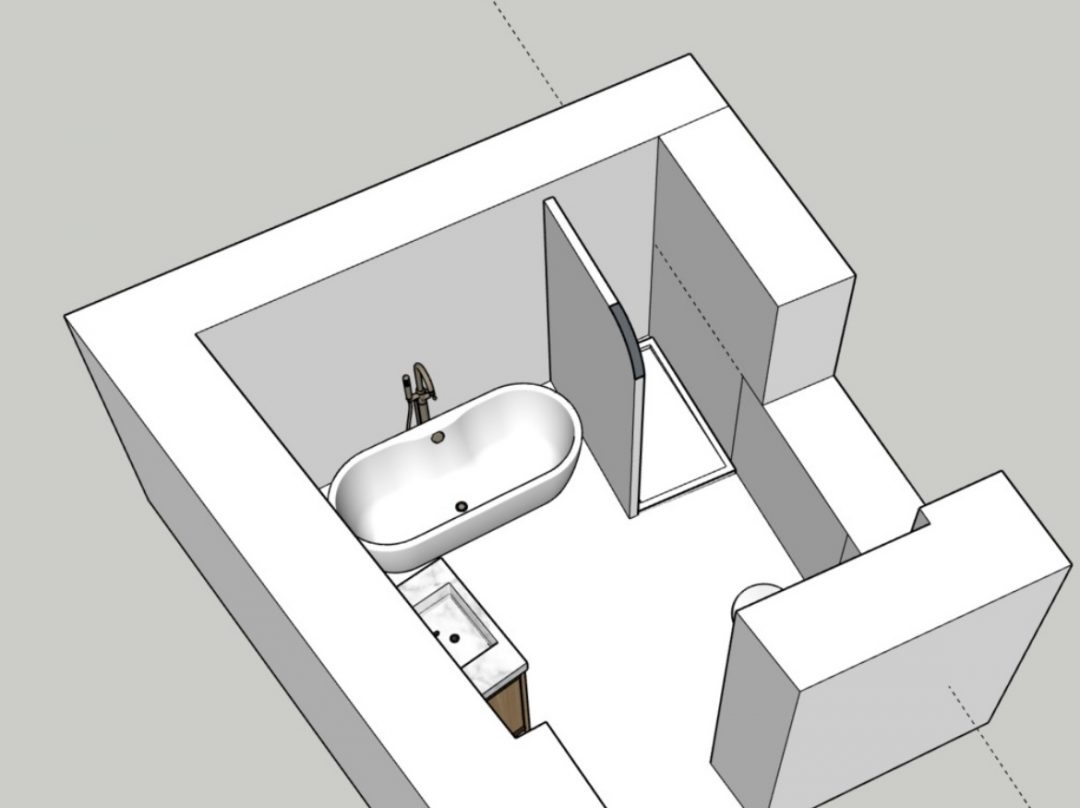
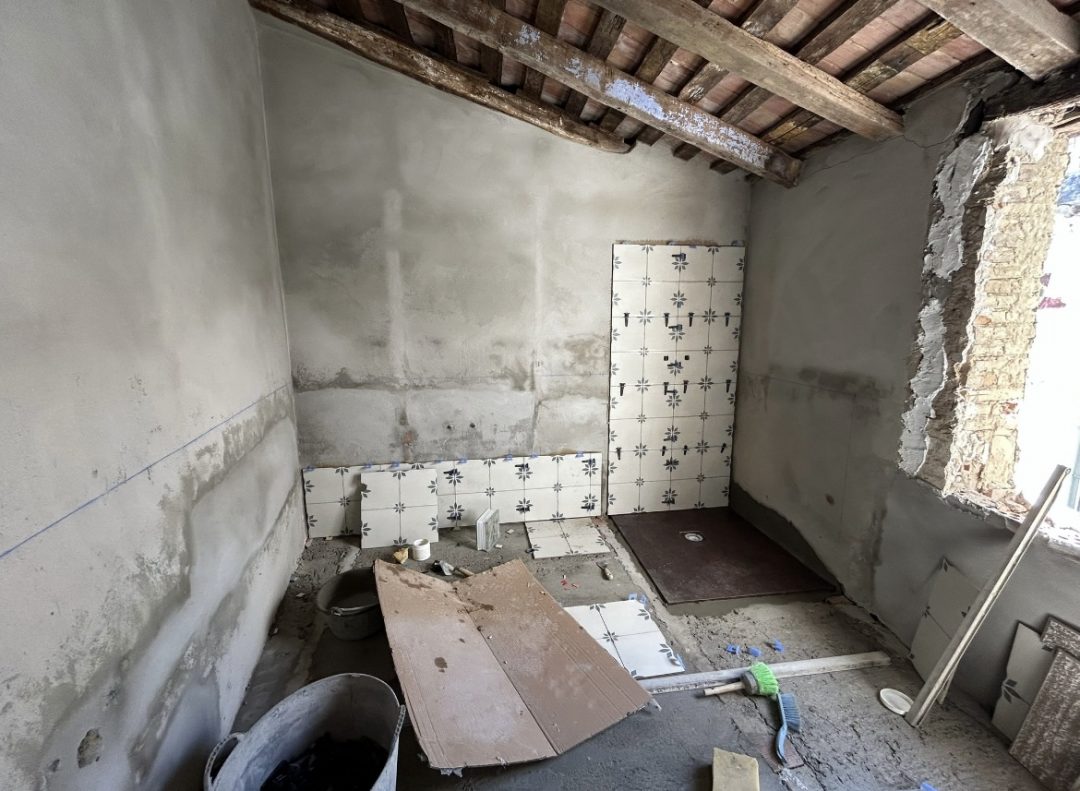
This was what we inherited. A bit daunting, as absolutely nothing could be salvaged, but we knew it had potential and we had a strong vision, so the instruction was issued to just get it all out and stripped back. And Jose produced a drawing which aligned with our vision.
The ongoing renovations…
What we’ve done…
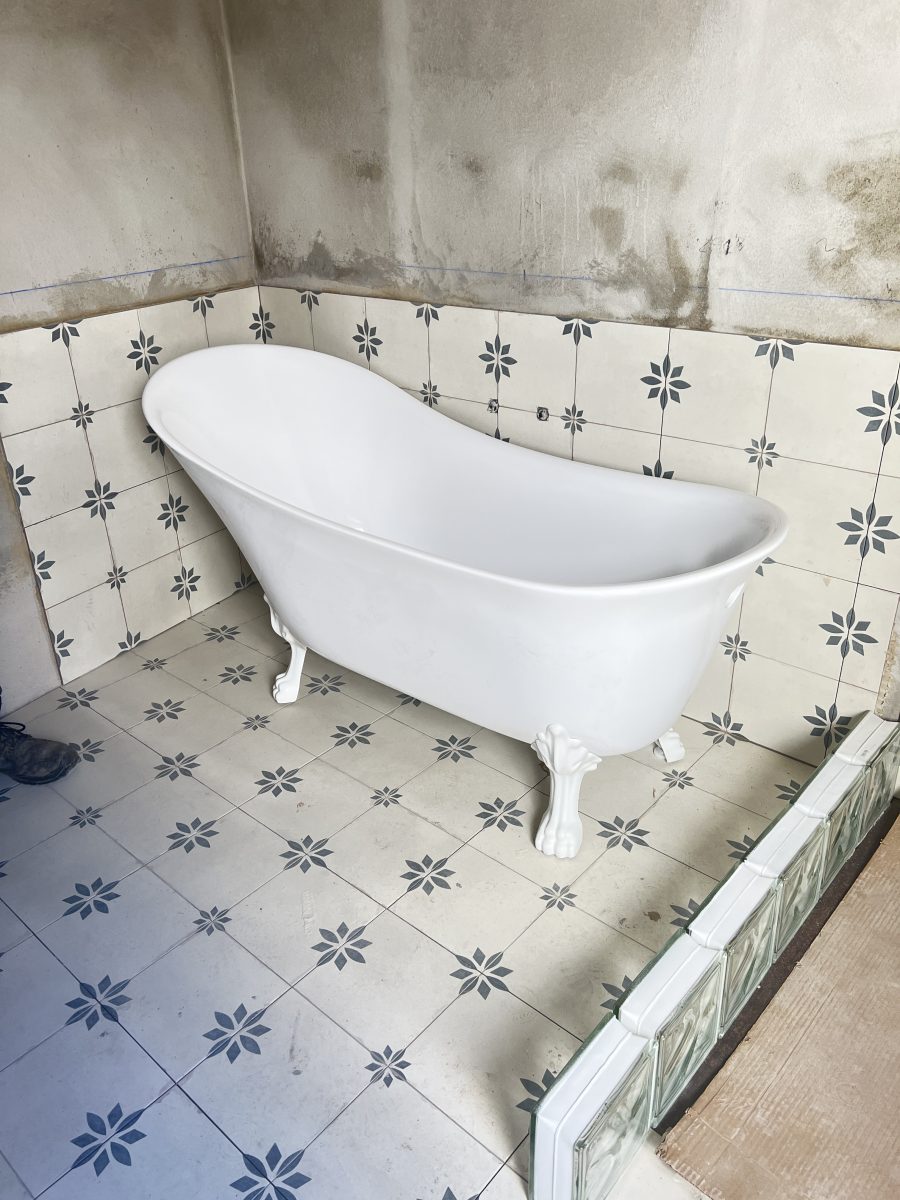
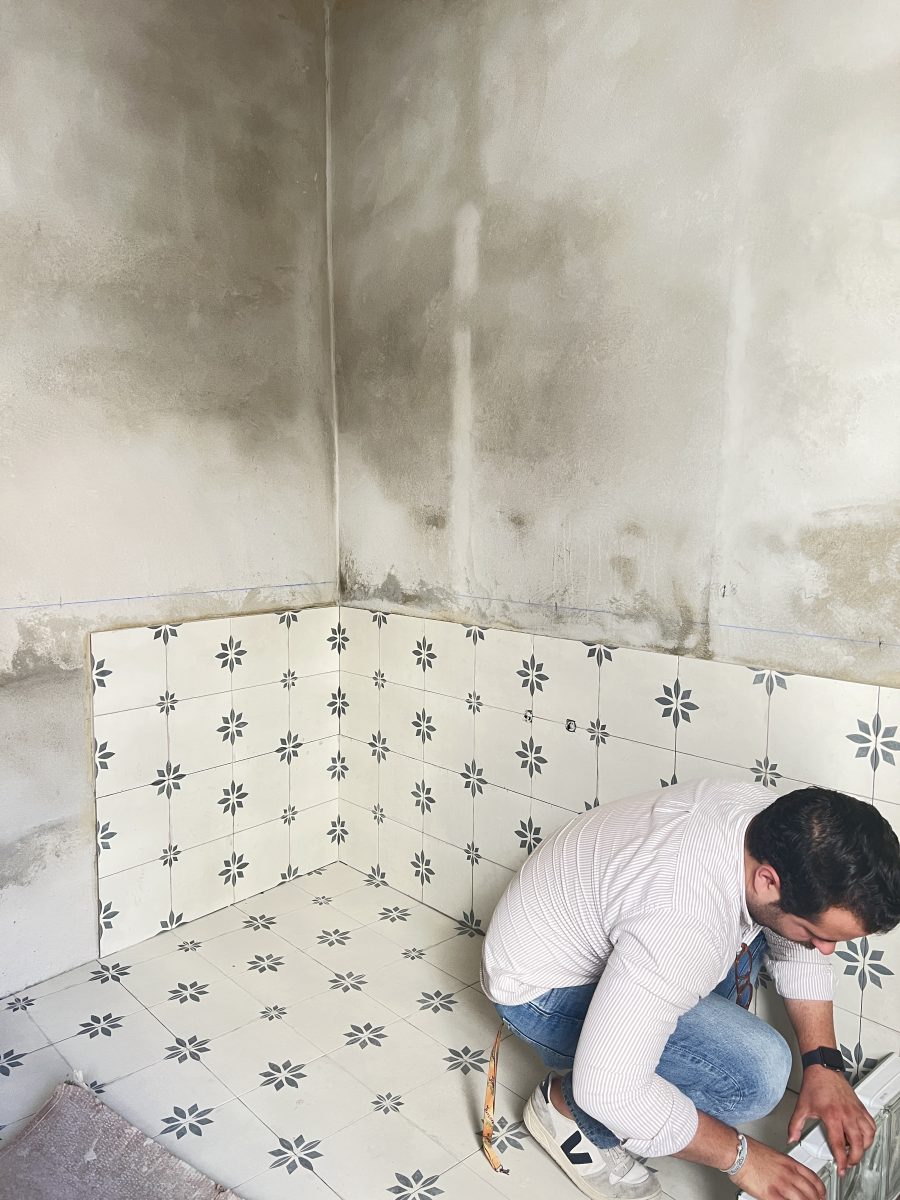
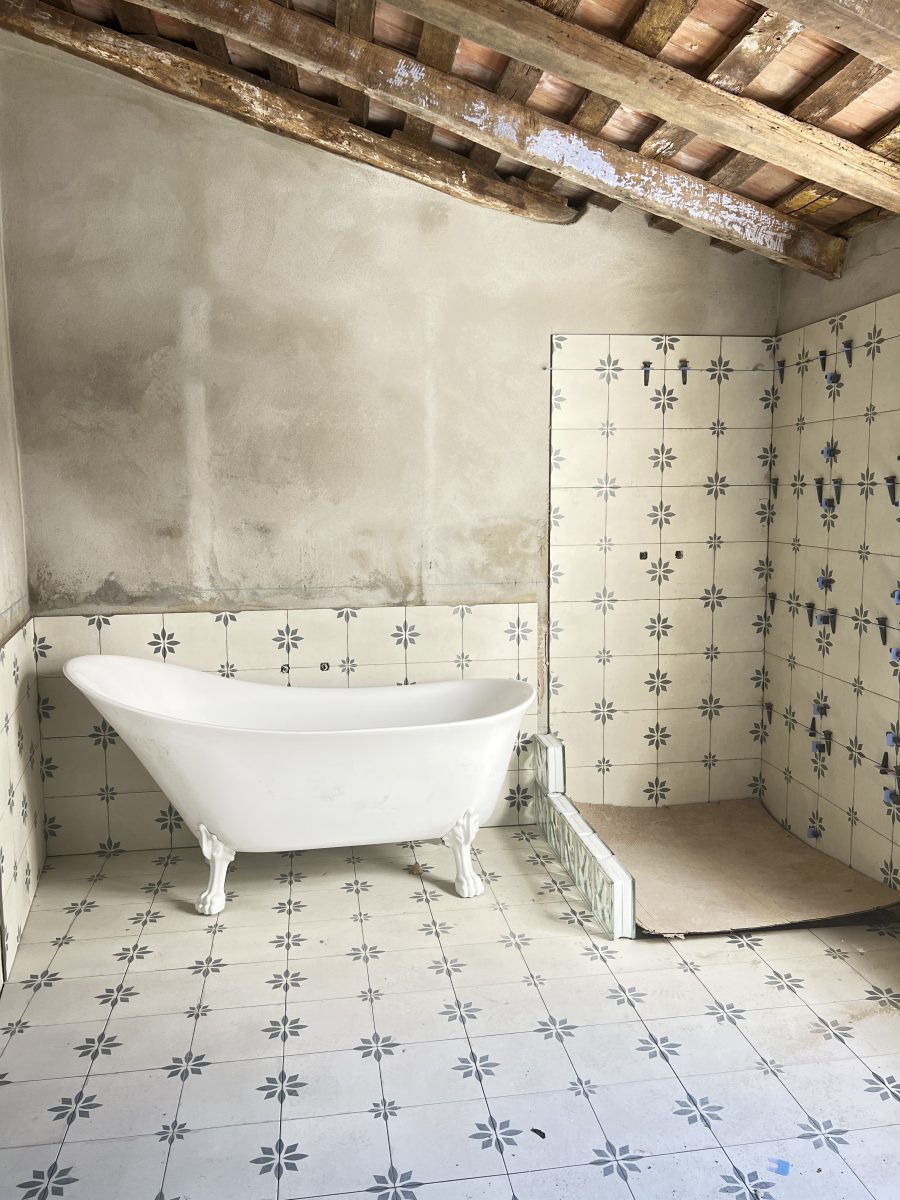
Walls have been repaired and replastered, and are now half tiled. The remaining plaster walls will be painted white. The bathroom originally had a small shuttered window, in the corner – you can see it in the first image – and then at the opposite end of the wall, a full length window, overlooking the courtyard. This definitely had potential and we loved it, but we quickly realised, it limited what we could do with the bathroom and the placing of sanitaryware. So, the decision was made to block up the small window and site the shower in this corner, then brick up the bottom half of the full length window to create a smaller one, which would increase the useable wall and floor space. The original flooring was taken up and we chose tiles that suited the style of the house. We didn’t want them to look “new”, we wanted to look as if they could have always been there.
One thing we definitely knew we wanted, was a bath. And, having wanted one forever, we decided that this was the bathroom for a much longed for free standing bath. We deliberated over the size/style/colour for weeks and weeks as this was an expensive outlay and we had one chance to get it right. And, I think we have definitely made the right decision!
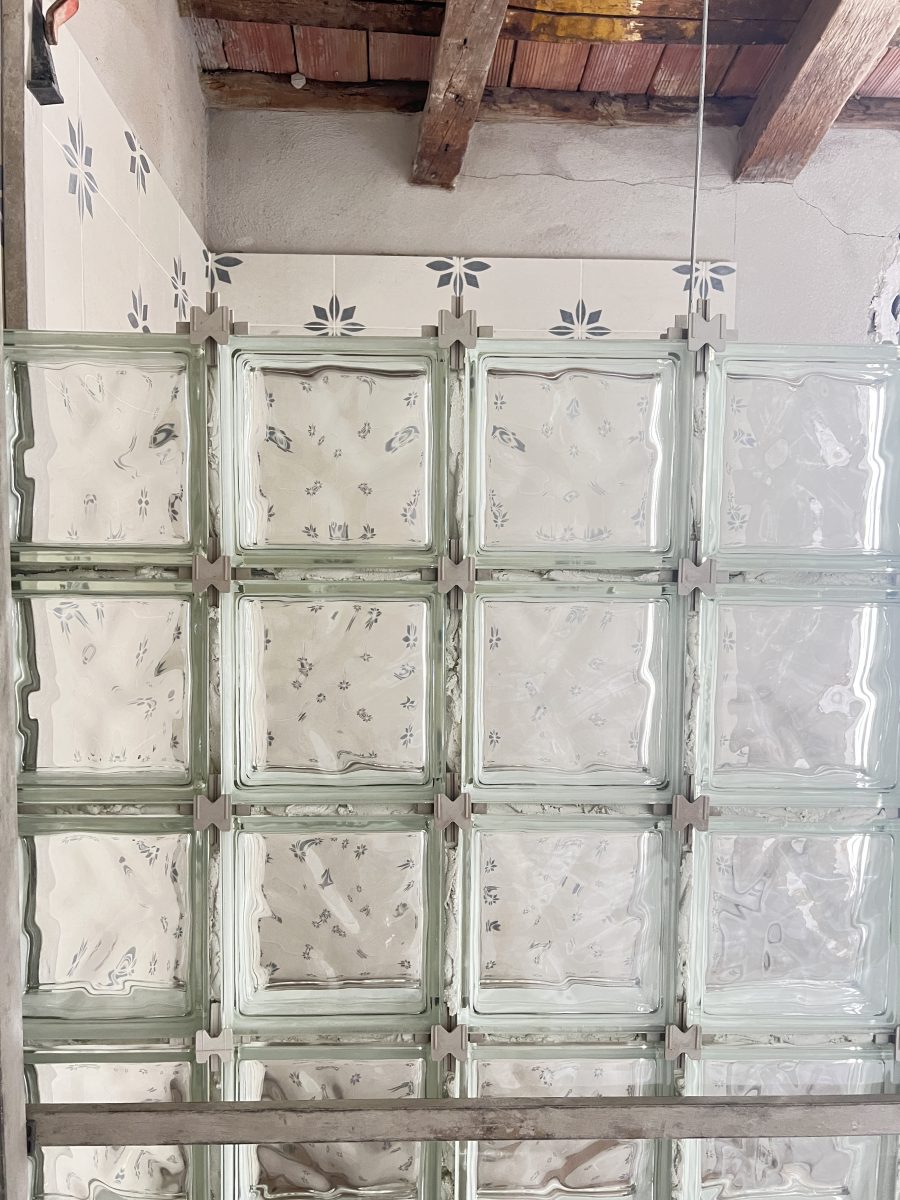
All of the bath, sink, shower and shower accessories are quite Victoriana, made of brass and with beautiful little blue tile insets. And, by an amazing stroke of luck, I found totally by accident, a company which manufactured, in exactly the same style, towel rails, hooks, toilet roll holders etc so we opted for these. These are still packed away, only to be installed when everything else is done, along a with a gorgeous brass, Victoriana mirror for above the sink. A brass sink, too, which we’ll have mounted on an old cabinet, which will be renovated and restored. Another non-compromise must-have, was the shower wall, made out of glass bricks. I’ve tried to wedge a glass brick something or other in every renovation we’ve done, with no success. Until now. I have my glass brick wall! And a beautiful non-slip copper effect shower tray, with a copper drain. It’s a beauty.
It’s been a couple of weeks since we’ve seen the bathroom, so we know that things will have come on. We’re just awaiting delivery of blue ceramic edging pieces for the tops of the tiles on the walls and are now researching old cabinets, which will house all of our bathroom bits and pieces. And, the search is also on for a beautiful chandelier – just what I think this bathroom will deserve.
by Helen | Mar 11, 2025 | Spain, Travel
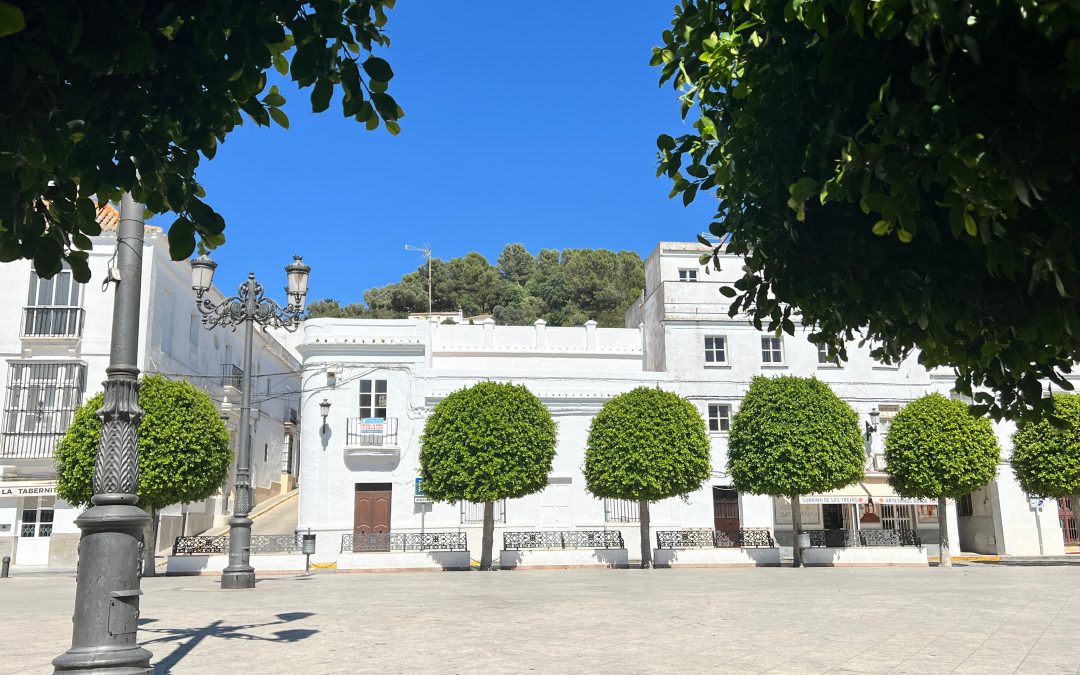
Before we started researching areas, as possible places to buy a property and relocate to, I don’t think we’d heard of Medina Sidonia before. However, the name resonated with us, creating visions of Moroccan medinas. Deep in the south west of Andalucia, the town is one of the region’s many pueblos blancos, where you can step back in time and immerse yourself in its history. Its Roman, Moorish and medieval heritage is palpable – walking the whitewashed and cobbled streets, the buildings transport you back to another world. It is thought to be one of the oldest cities in Europe, and certainly, its historical monuments, ancient walls and arches, its castle, and Roman remains such as sewers or the Roman road suggest a city which has survived the ages. Arab influence is strong, with narrow, cobbled streets, whitewashed houses, and picturesque squares, lined with orange trees. I’m not sure if we ever imagined ourselves so far south in Andalucia, in an area we didn’t know at all, but sometimes decisions are made for you…
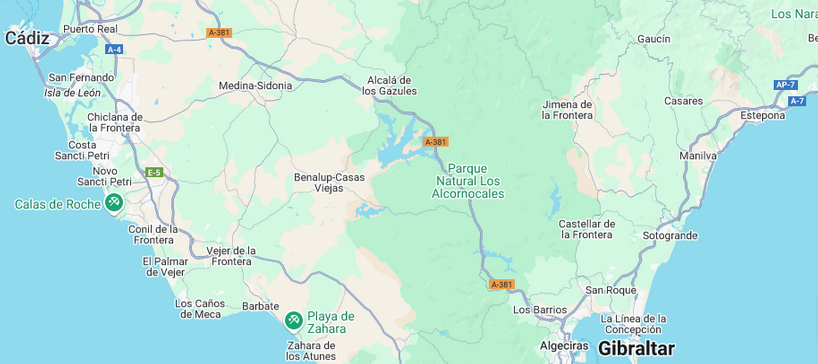
(Map : Google Maps)
The first house we viewed when we arrived in Andalucia was in Medina Sidonia. It was pretty high up on our list and we booked ourselves into this hotel for a couple of nights to acquaint ourselves with the town. First impressions were great – high up on a hill, with views all the way down to the coast at Chiclana de la Frontera. It was a hot August morning when we arrived, and the white town, clinging to the hillside, did look incredibly pretty. First impressions of the house were also great – renovated to our taste and with commanding views across the countryside, as it was quite high up in the town. However, when we really drilled down into, for a variety of reasons, we decided not to pursue this house – land either side of it led us to think that one day, we could be living in quite a hemmed in location if properties were built to the side. It was just a little too far out of town, once we’d got our bearings. And although it was beautifully renovated, we realised that it was perhaps smaller than we wanted. So, a house down, but our first impressions of Medina Sidonia grew.
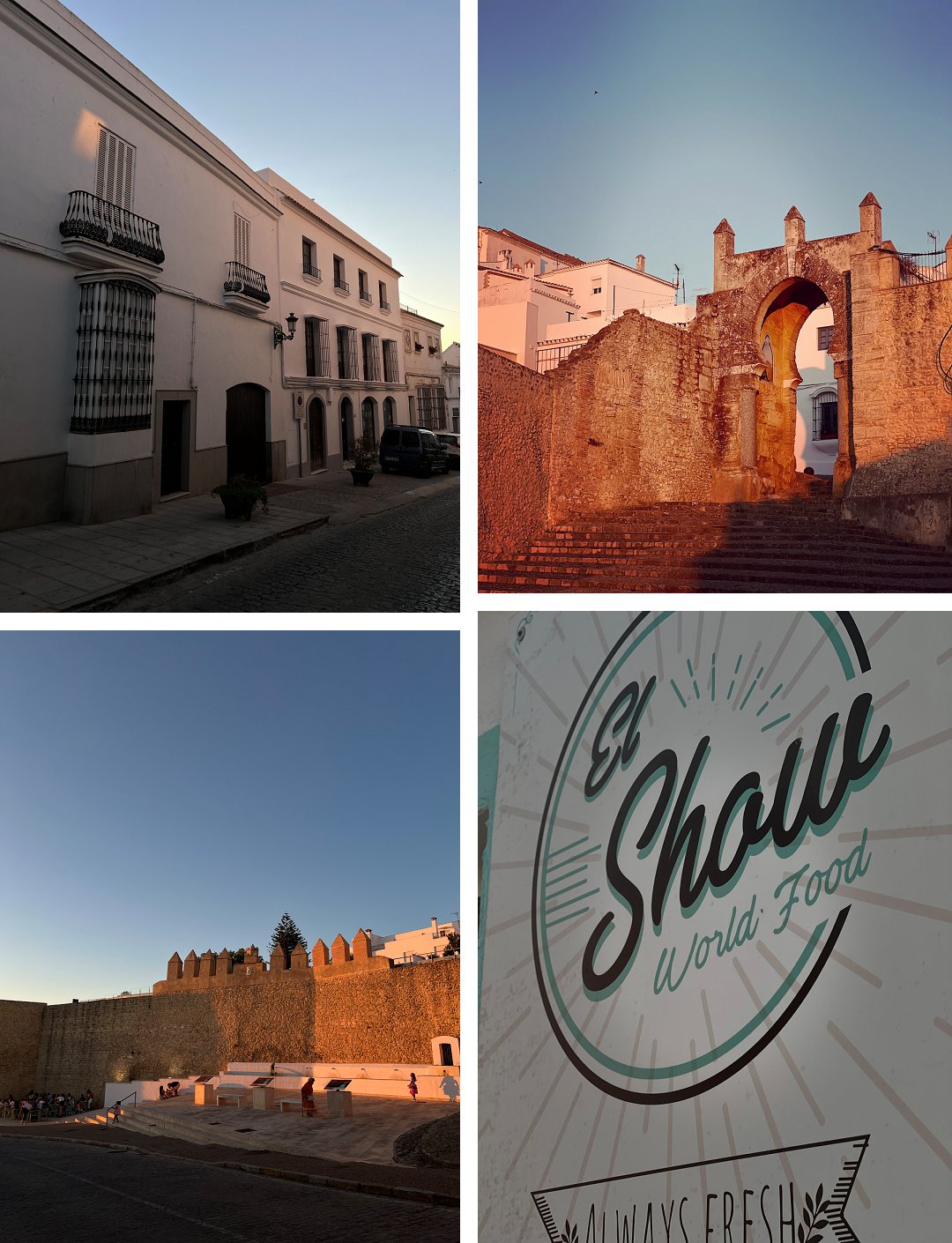
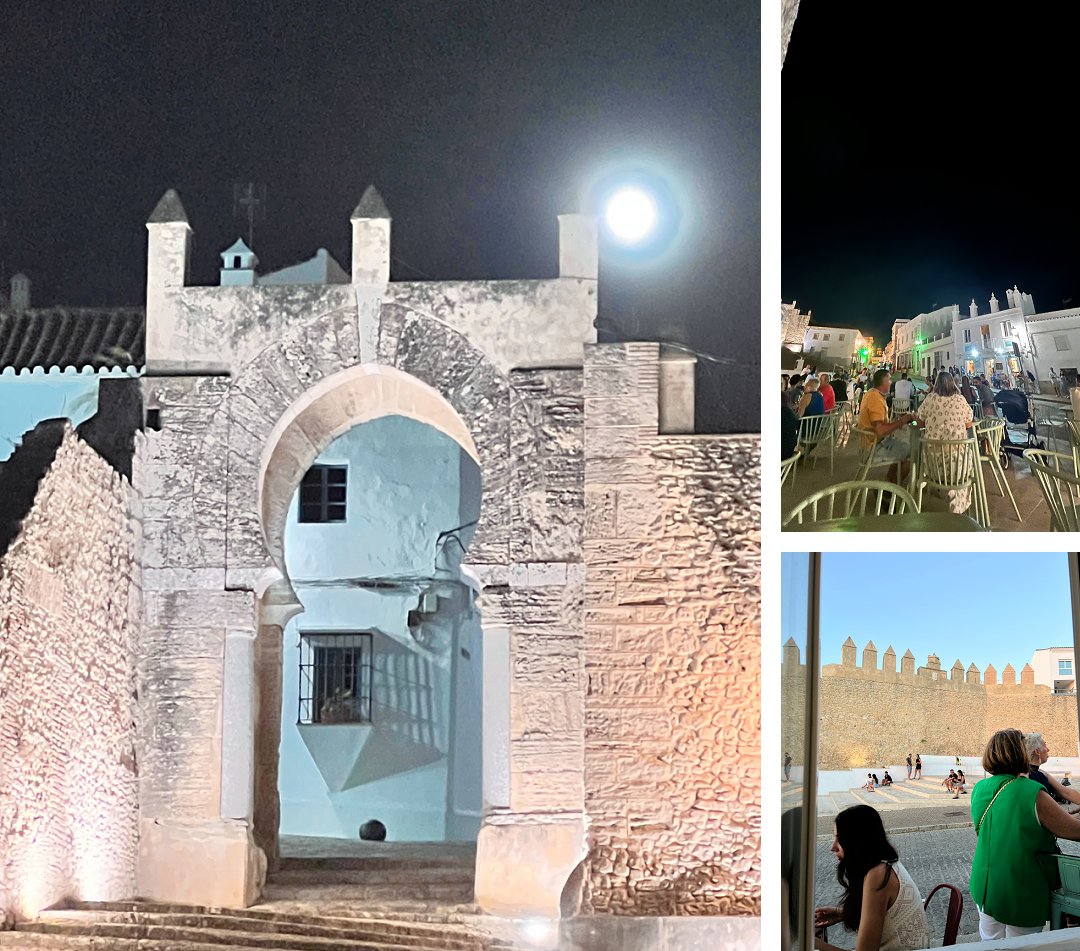
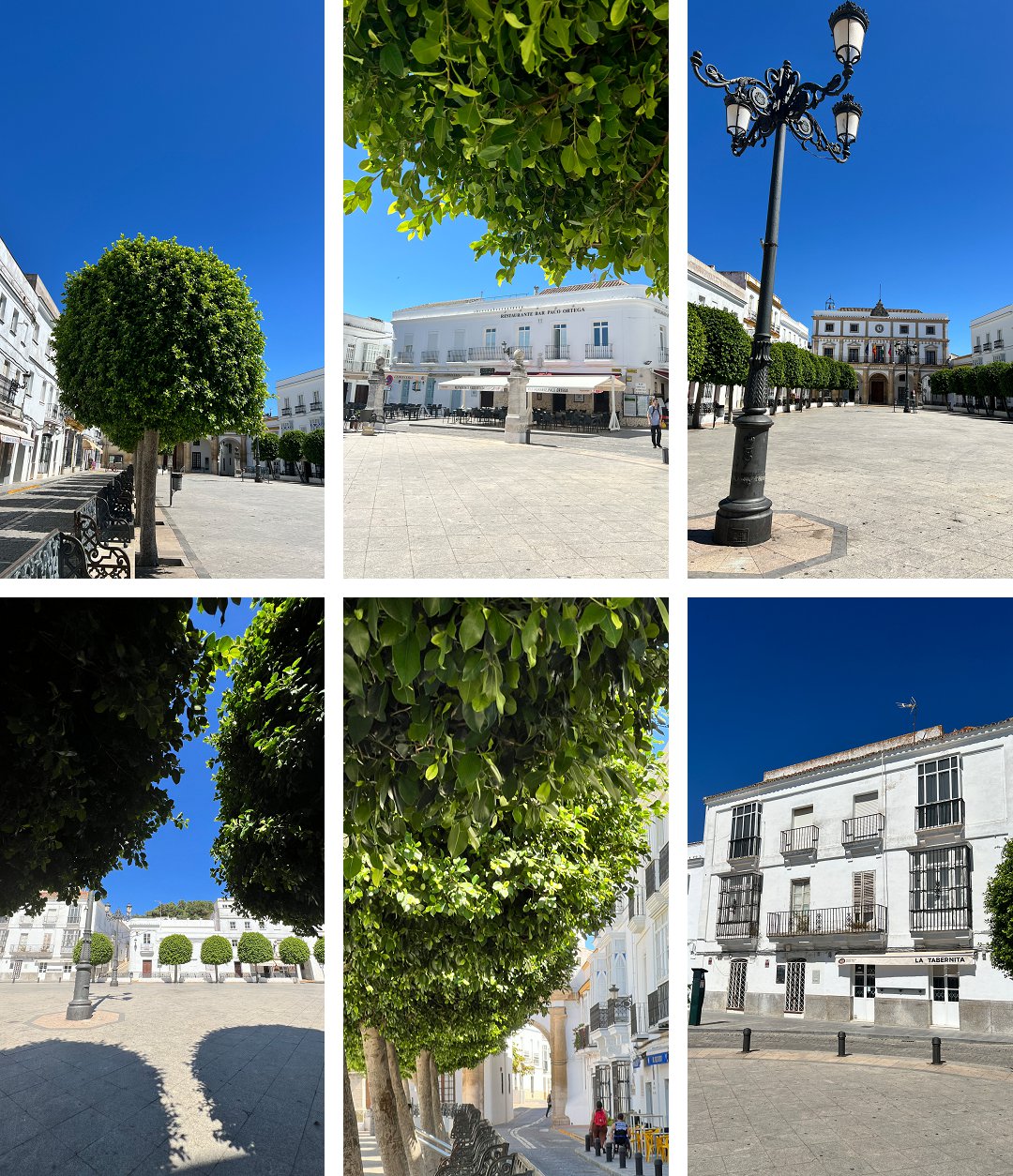
What we loved about Medina Sidonia, were the contrasting architectural style. The honey coloured city walls, with steps going up the side into the oldest part of the town, were just beautiful, especially in the late afternoon sunlight. Very Moorish/Arabic with their turrets and arches. And then the beautiful white washed houses, with their traditional black wrought ironwork at the windows and balconies, and big heavy doors. One house in particular had really caught our eye on the estate agent’s website, but we knew that this was a pipe dream, rather than anything realistic. It was huge, situated right on the corner of the magnificent Plaza de Espana, with orange trees right outside the front door, and ripe for an amazing renovation. But, it was just too big a dream and would have taken far more money than we had to turn it into a home,
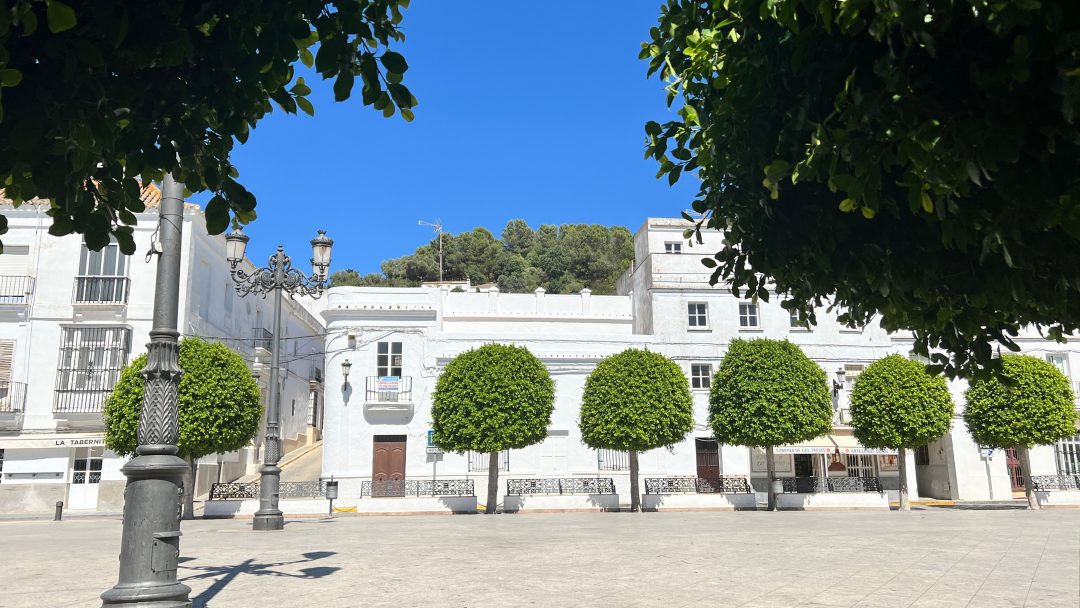
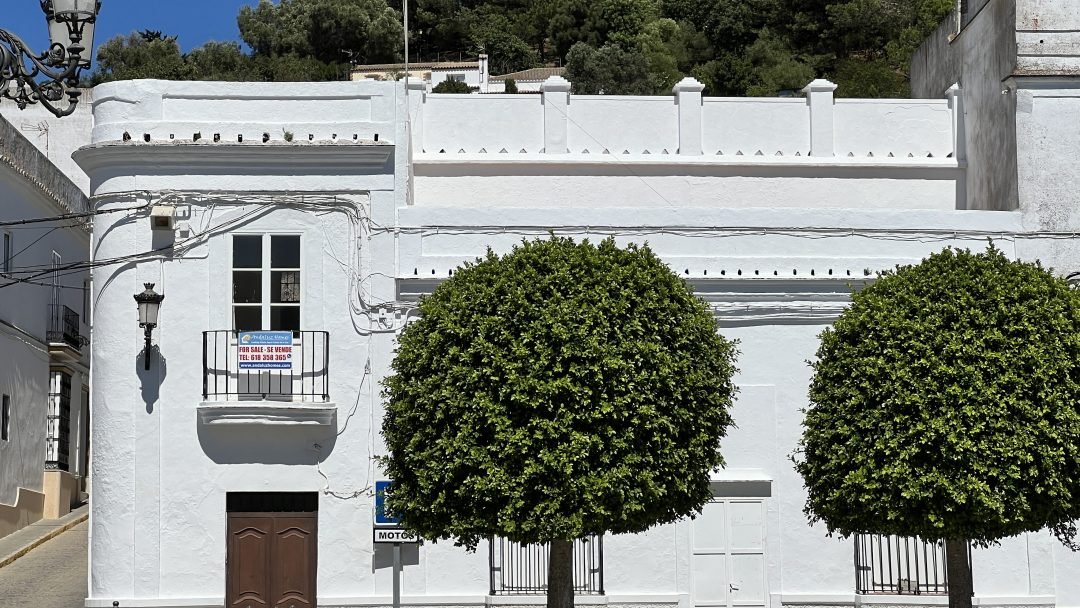
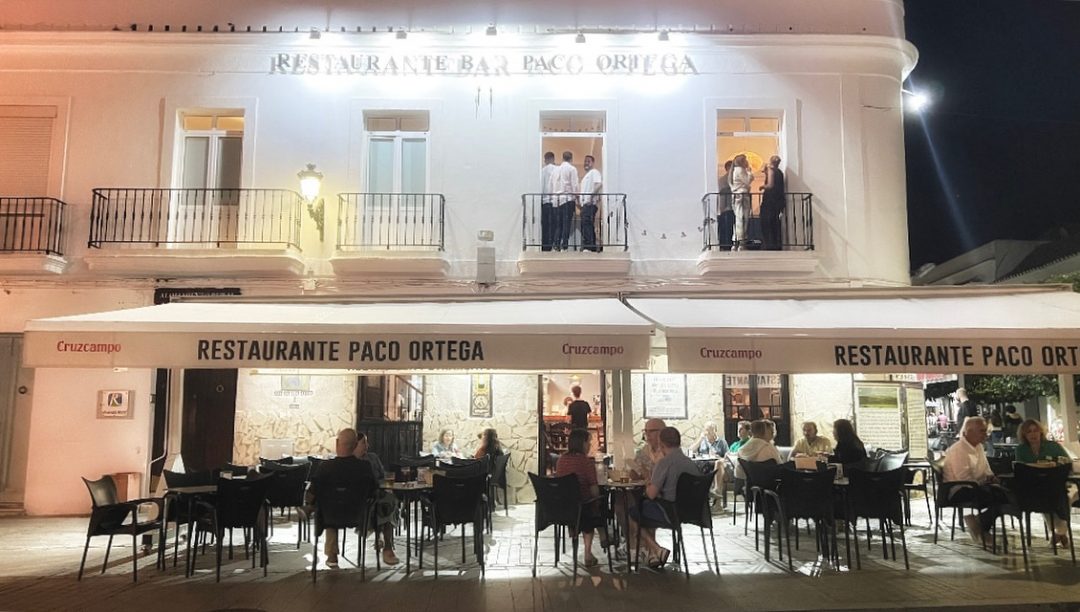
However, we were very taken with the town, and some weeks later, we’d found ourselves an apartment where we based ourselves for just over a month. This enabled us to get to know Medina – and the surrounding countryside and coastline – a whole lot better. And, to realise that as beautiful it is, the town wasn’t quite right for us to make the big move to, and call it home. We felt that, after experiencing it, it was a little more isolated than we wanted and we knew that come summer time, it would be completely overrun with tourists. Unsurprisingly, because it is beautiful, and we had after all, visited as tourists ourselves, but we knew that such a seasonal influx of people would ultimately do our heads in. So, we enjoyed our time there as very temporary residents, glad to have made a decision.
But it is a pueblo blanco that has made a big impression on us. It will always make think of hot weather – we were there in October and it was still so, so warm. The orange trees were full of fruit, the sky was blue for most of the time we were there, and because we were high up, we saw some of the most beautiful sunsets. It was great to have a base after a couple of months on the road, and we feel really privileged that we were able to experience this lovely town on a bit of a more permanent basis.
by Helen | Mar 8, 2025 | Renovation
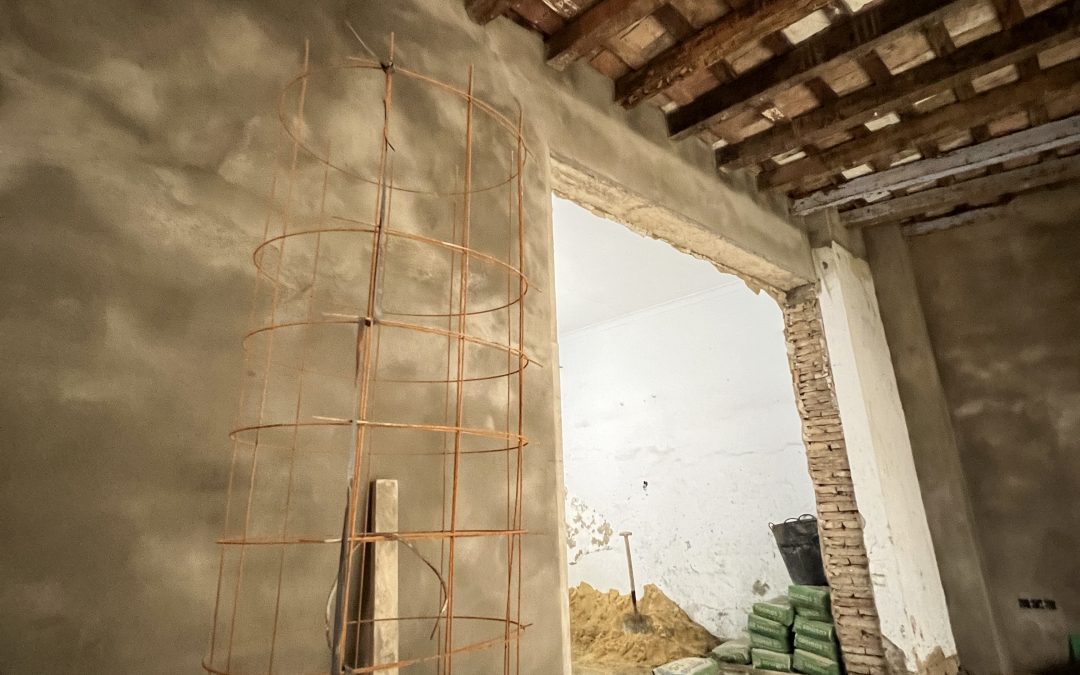
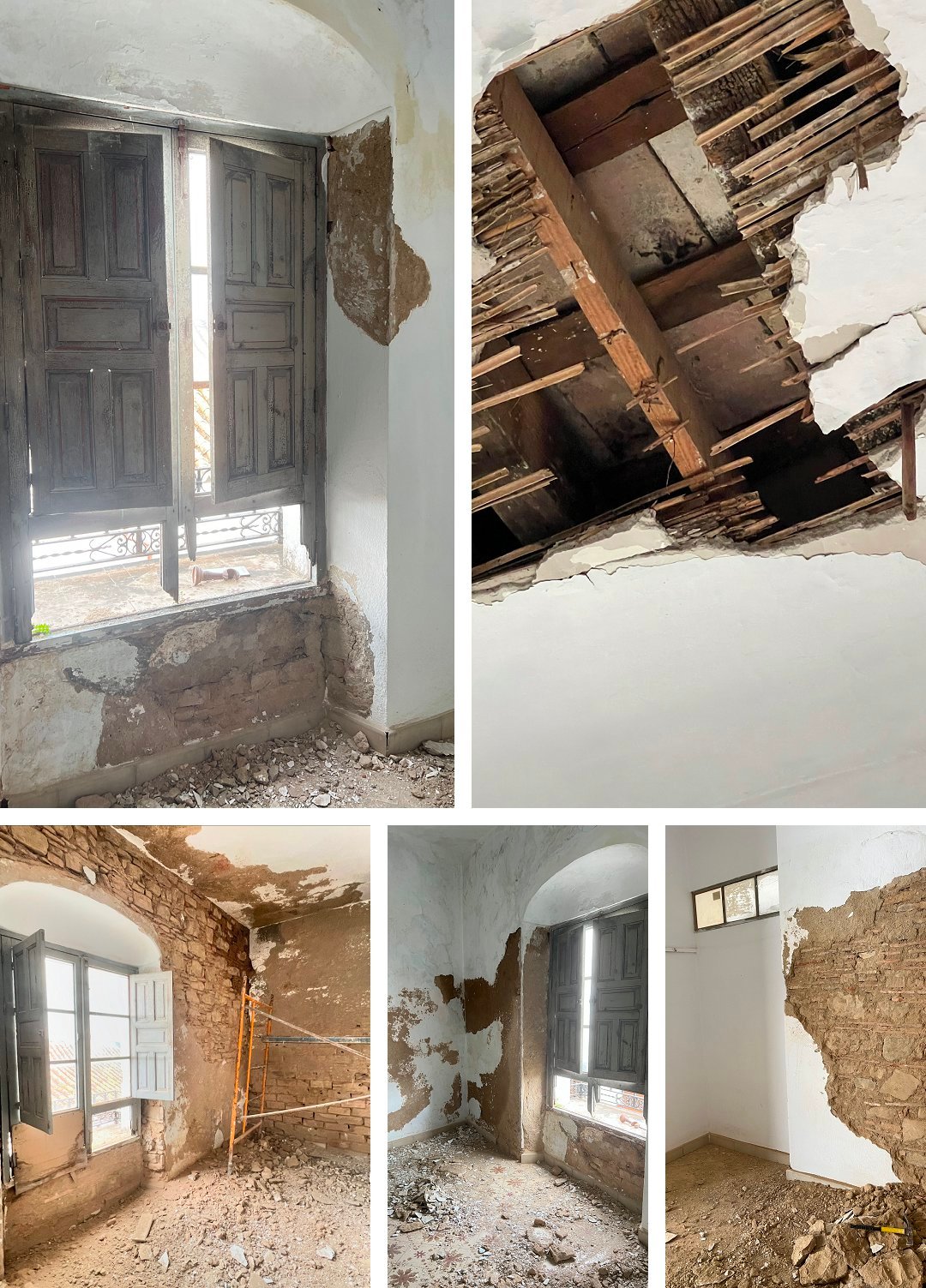
The renovation – well, I say *renovation*, but what I really mean is demolition – started in earnest a few weeks ago. We are very lucky that we’ve bagged ourselves a gorgeous apartment to rent, in a lovely western coastal town called Sanlucar de Barrameda, meaning that we have somewhere comfortable and clean and cosy to live, whilst the house is being knocked to be pieces. To be fair, we knew that this stage would be pretty awful, and each time we’ve visited, it has been exciting and awful in equal measure.
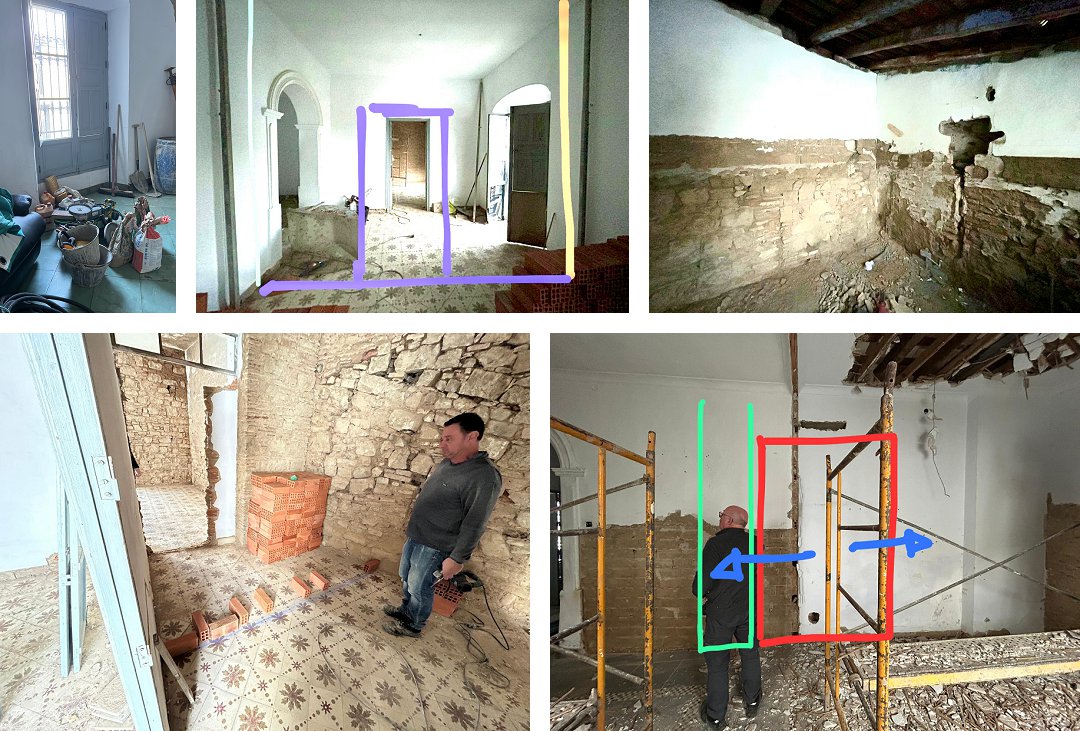
Awful because the house is full of dirt and debris. Scaffolding is up in most of the rooms. All of the windows have been removed. Piles of cement bags and bricks are found in most corners. A couple of cement mixers seem to always be whirring away. Exposed wiring hangs from ceilings. Some ceilings have been removed. Most of the internal ground floor walls have been removed. It is absolutely filthy, in every room. It is, in fact, a building site.
But exciting, too, because with each visit we can see the house we bought disappearing, and our vision of our town house appearing. A lot of original features had been taken out by the previous owner, and over the time he had it, a lot of the house had fallen into disrepair. When we saw the house online, the listing featured imagery from a few years ago, so we were lured in – and, when we actually viewed, we realised exactly why new photographs had not been taken. The listing, with photographs, can be seen here. The scale of the potential project was not lost on us, but by then, we were in too deep, as we had already lost our hearts to this sorry looking Andalucian townhouse. I don’t think the estate agent could quite believe his luck when we rocked up and put in an offer on this very ugly duckling…
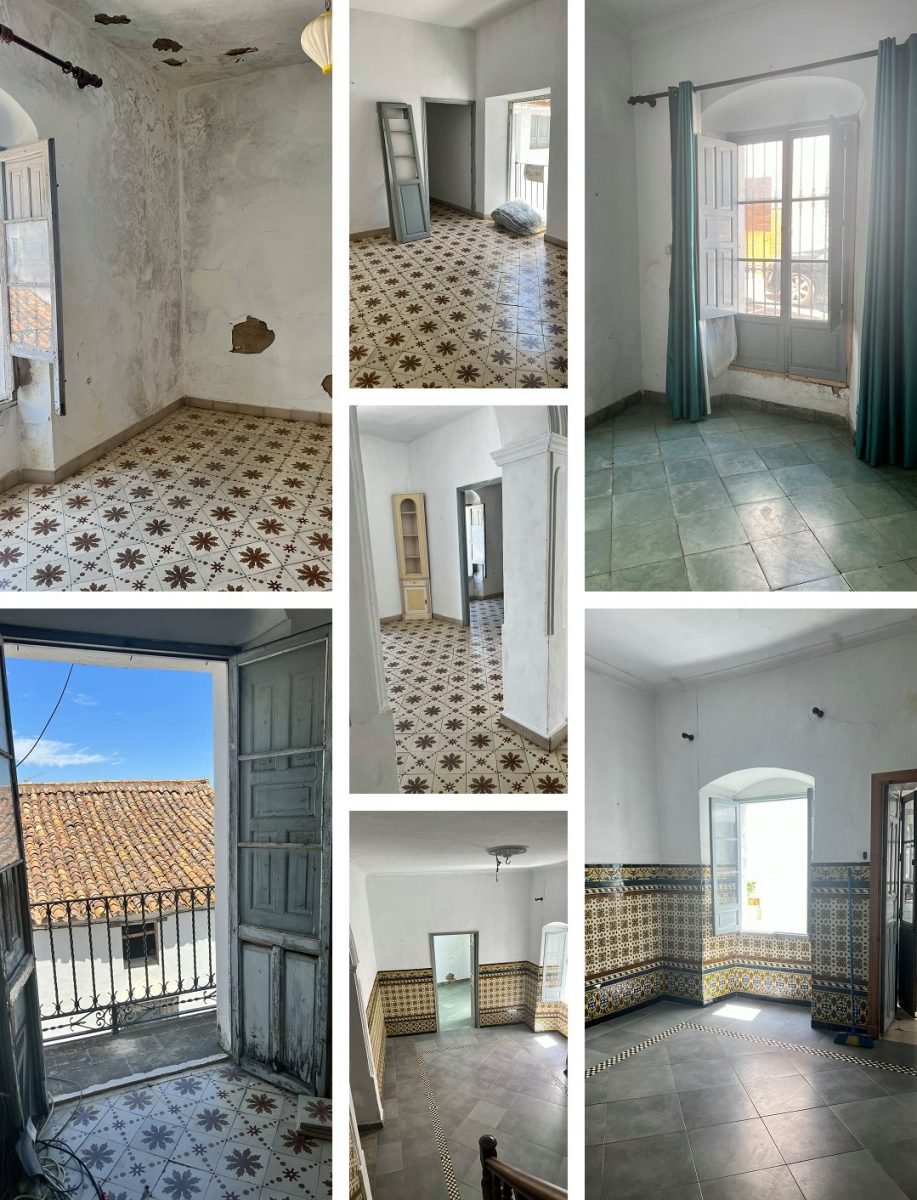
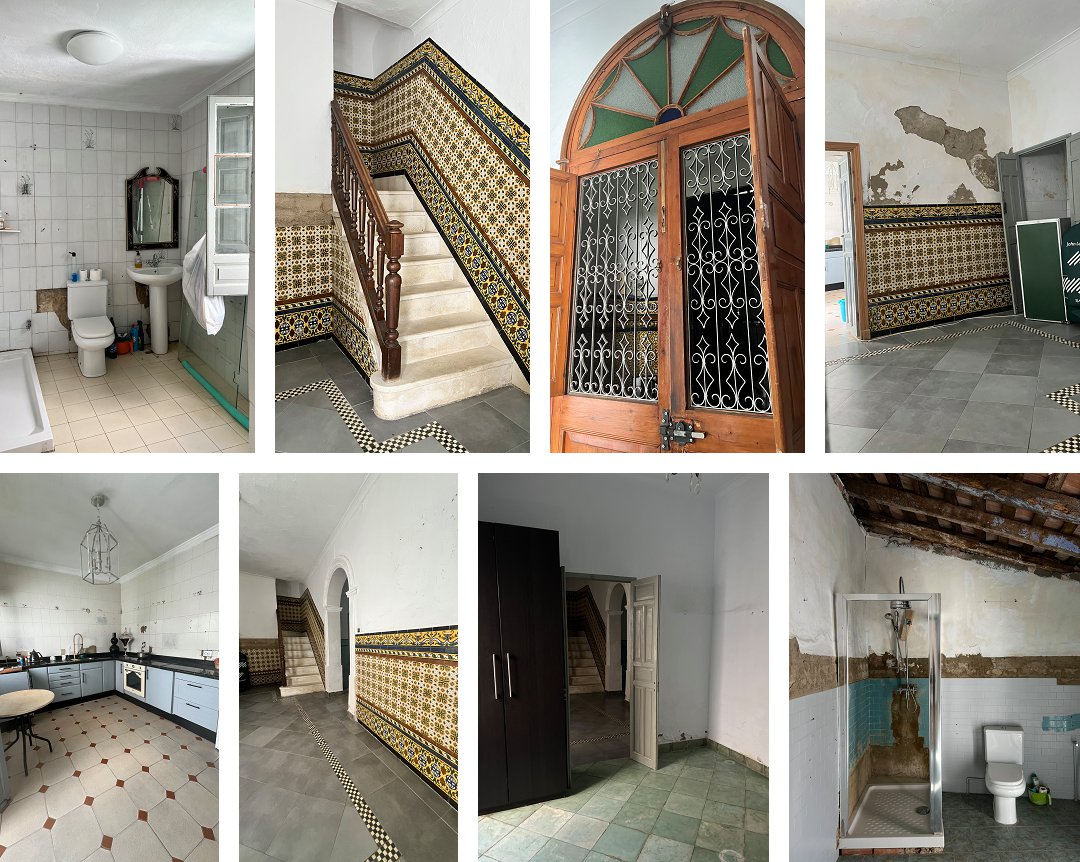
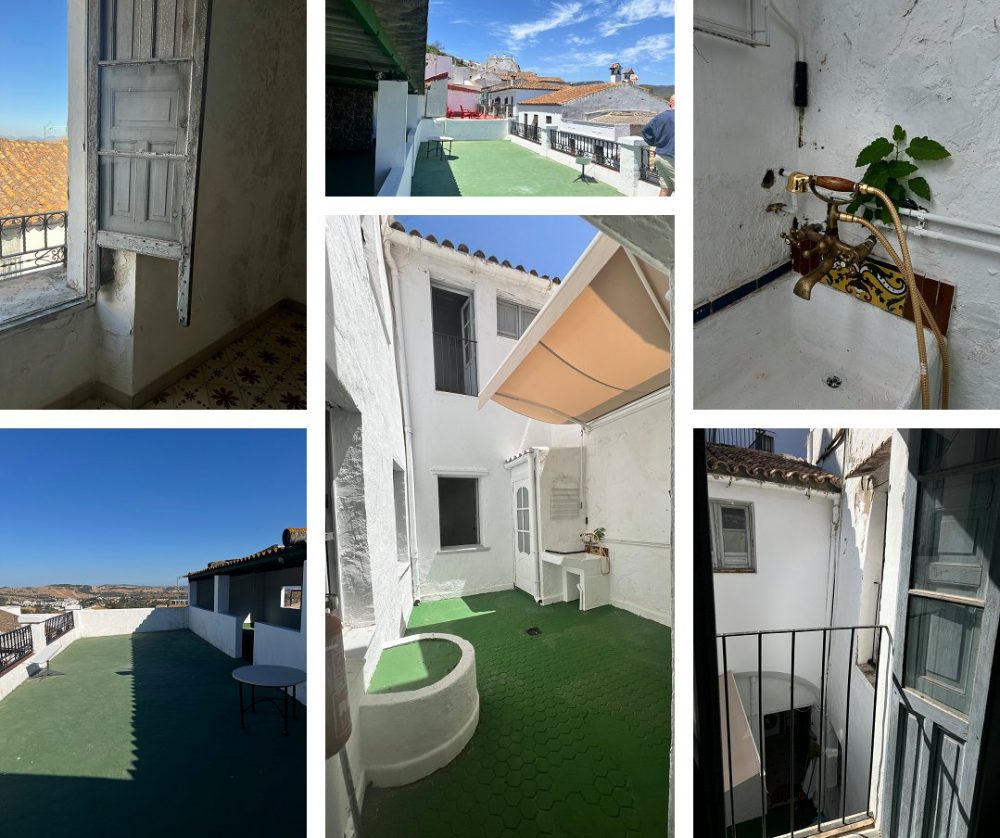
Yep, it really was a bit of a mess – and definitely in a much worse condition than the listed photos suggested. But, as soon as we stepped inside the house, we felt the bones of the house and they felt good. We knew that with a lot of work and a lot of thought, a lot of time and a not insubstantial amount of money, we could transform this dilapidated building back into an elegant townhouse. A builder came out to assess the house and we were immediately reassured – he lives in the town, is part of a family business which focuses on the renovation of these properties, has renovated the townhouse directly opposite which is now a stunning airbnb, gave us a comprehensive (and very good) quote for the works, and is now our project manager.
And work has started! Wow, has it started. We want to retain the integrity of the townhouse, and keep as much of the structure as possible, BUT we have had to make some quite big changes. The house is large, but felt quite small because there were a lot of rooms, which felt quite disconnected and which, if not changed, would be very under-used. It also felt quite dark – and having bought a dream house in the Andalucian sunshine, we wanted to capitalise on the beautiful light. So, work has started on re-configuring the living space and certainly on the ground floor, some quite key walls have been removed. Already, the house feels lighter and more spacious. And, we will have the space to live the open plan life we want. But, currently. we’re quite long way off living the dream…
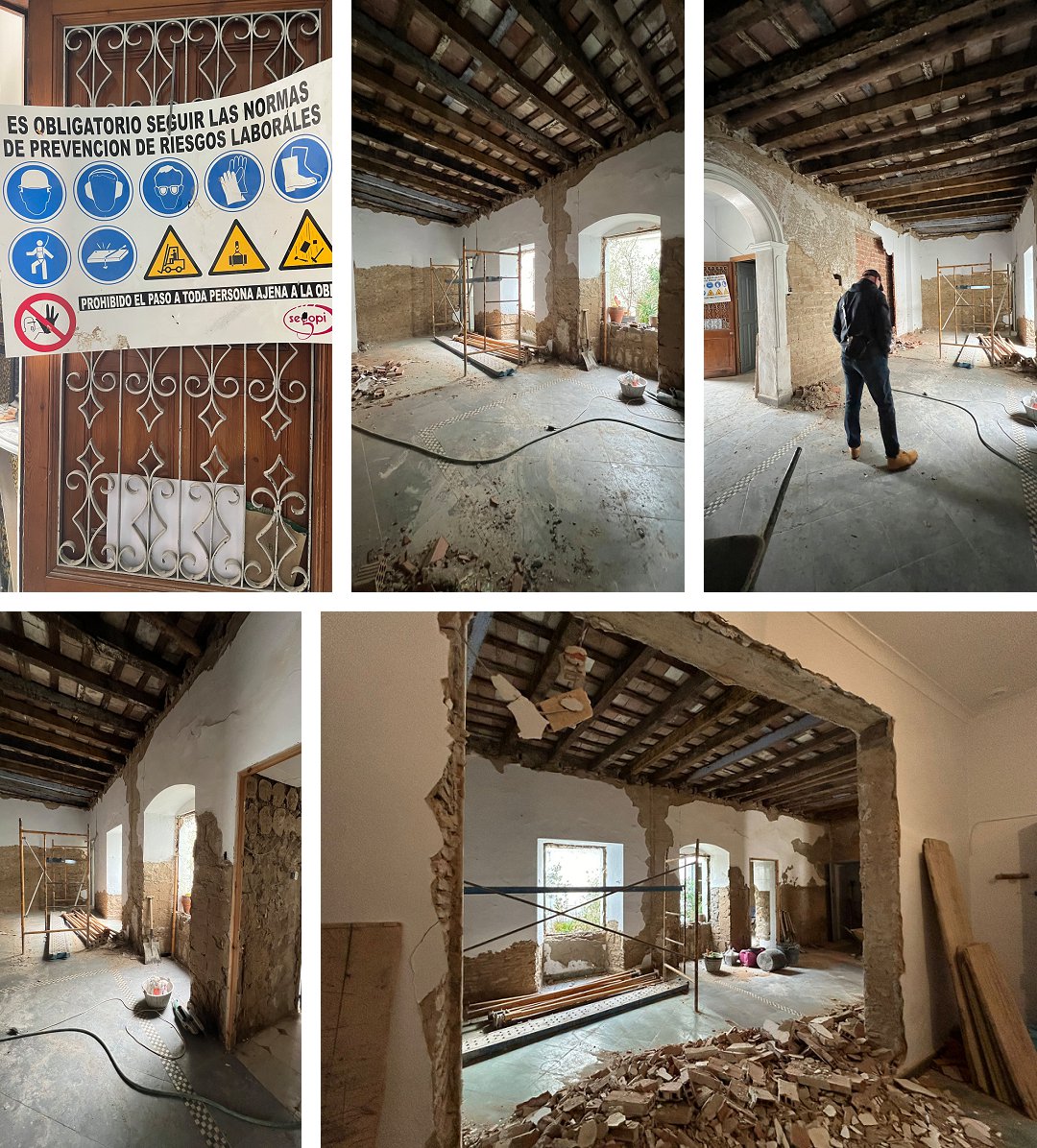
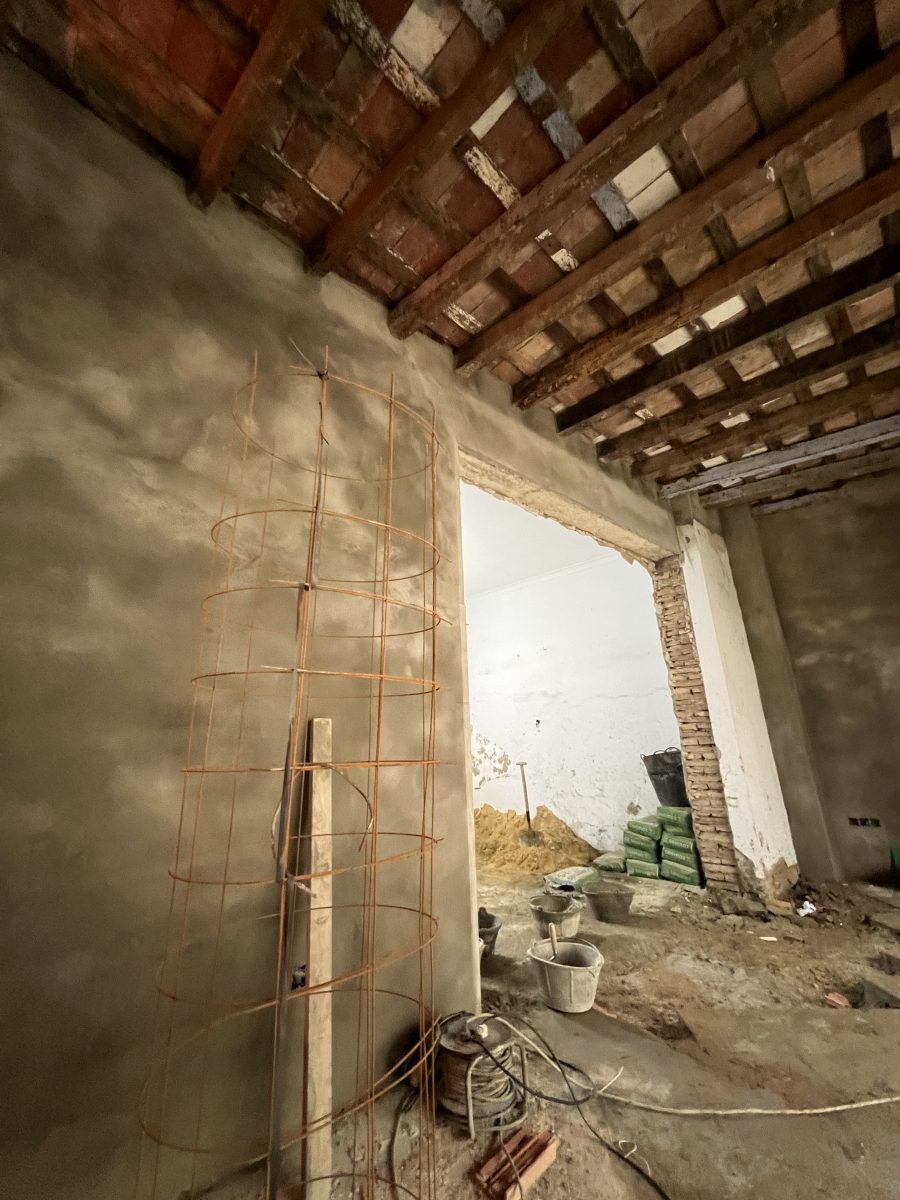
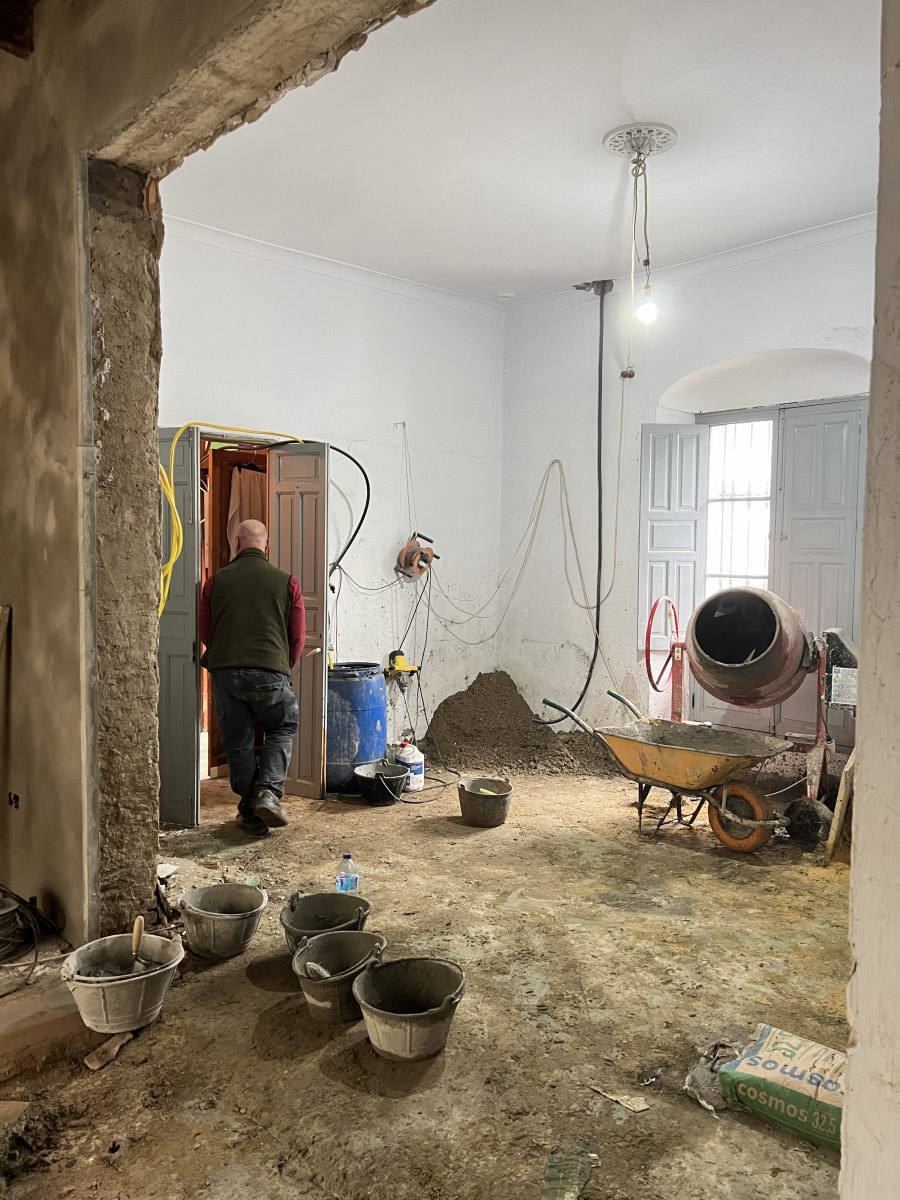
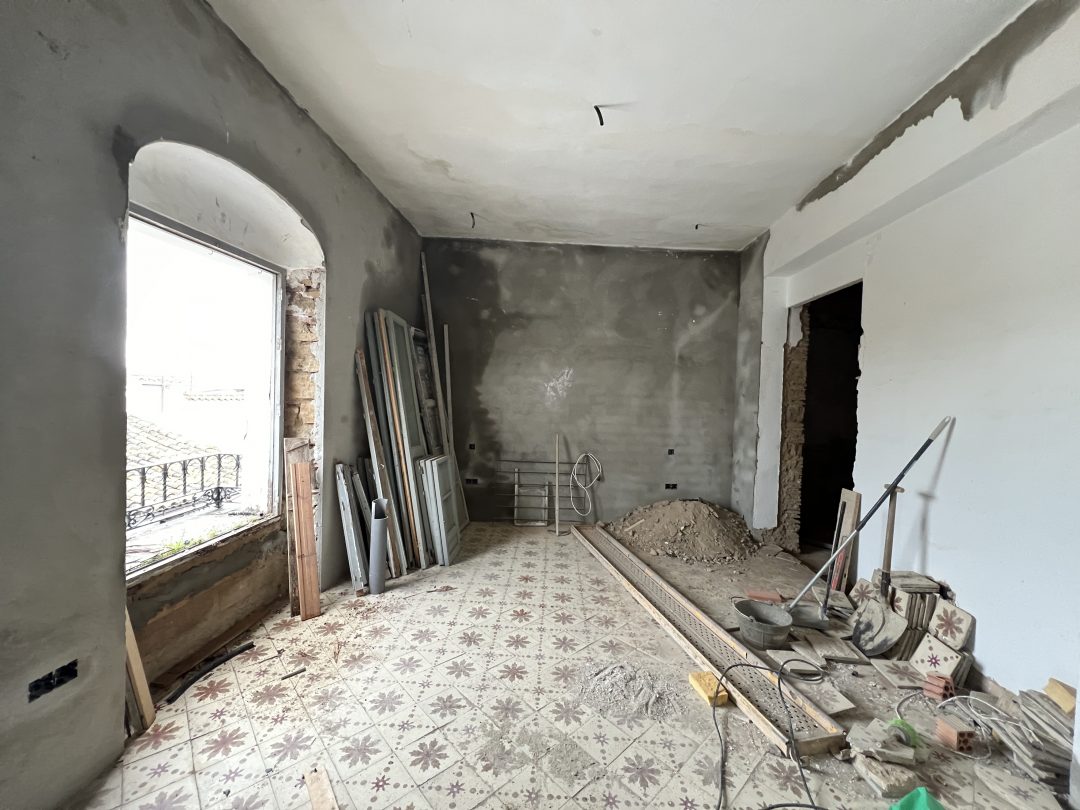
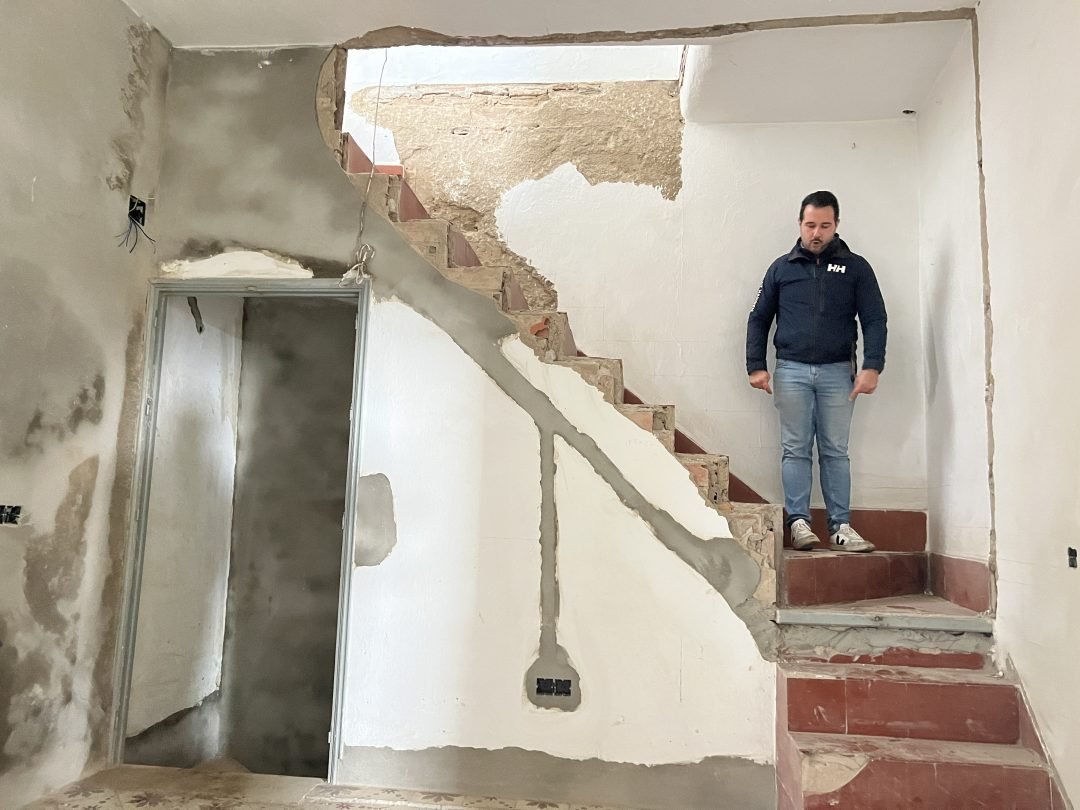
There’s a long, long haul ahead, but it’s amazing how much work has been done in less than three months. And, in less than three months, we are out of of our rented apartment. To be continued…

by Helen | Feb 6, 2025 | Lifestyle
“Three generations of a family on a mission to preserve the traditional grape varieties and the wine culture of Istria and Motovun…”
So says the website of the Benvenuti Winery, located about 20 minutes away from where we used to live in Istria. And, if there’s one thing that Istria is not short of, it’s wineries. Most that we have visited are excellent – the kind of wineries where you to go to buy a gift, or really treat yourself. Most of the others are great – producing good quality, drinkable wine, often sold as open wines, so you’re not restricted to bottles. You fill by the litre, or five litres or ten litres. These open wines are usually the local variety – as in not a speciality wine, but apart from one or two exceptions, they are really good value, if you like to have a stock of “every day” wines. The one or two exceptions, we visited and purchased from – and didn’t repeat the experience – shall remain nameless, however, as this may have just been down to our personal taste. Although I don’t think so…

So, Benvenuti. The winery has been producing wine in the family for a very long time, having vineyards, some of which were planted in the first decades of the last century – confirmed by the remains of a jug, now on display in a museum in Trieste, from the Roman period, which was found in one of the vineyards. Vineyards which produce three varieties – Malvazija Istria, Terana and Muscat.
The winery itself is located in the small town of Kaldir, across the valley from Motovun. In a commanding hilltop spot, it has stunning views of the northern Istrian countryside, taking in rolling hills, vineyards, small villages, abandoned houses, majestic villas and of course, the jewel in the crown – Motovun itself. Like many wineries, the operation is housed in a cluster of stone buildings, beautifully renovated and with a grand tasting room, where all of the magic happens. Barrels and barrels of wine are stored in other buildings in other parts of the grounds, which themselves are beautiful.
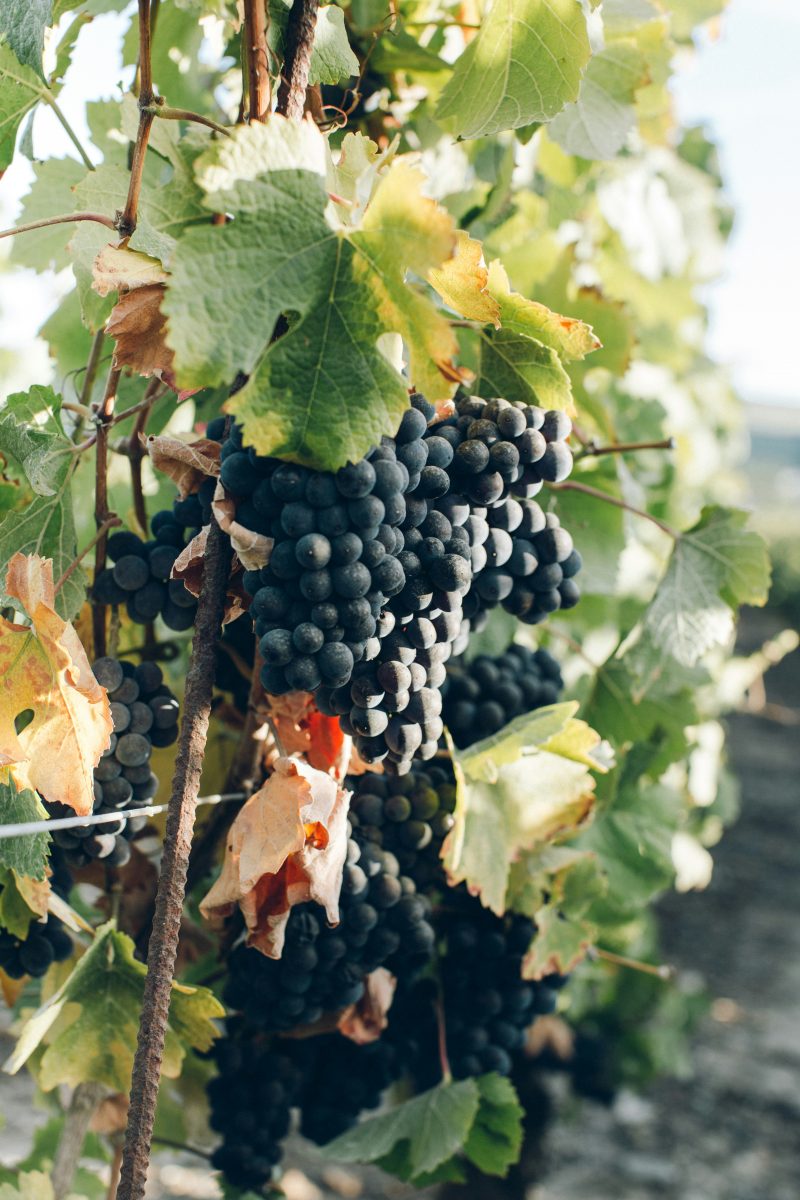
By a very strange twist of fate, when we sold our home in Istria in summer 2024, Benvenuti became a part of the memory of our time there. The new owners lived in Rijeka, on the eastern side of the peninsula, some 80kms away from our house. And as they were buying our home, one of them took on a new job – at the Benvenuti Winery. So, until we left, she was doing a round trip from Riejka to Kaldir every day. We didn’t know this until shortly before we left, so when we had friends to stay who were helping us to pack up the house, we decided to say hello at the winery.
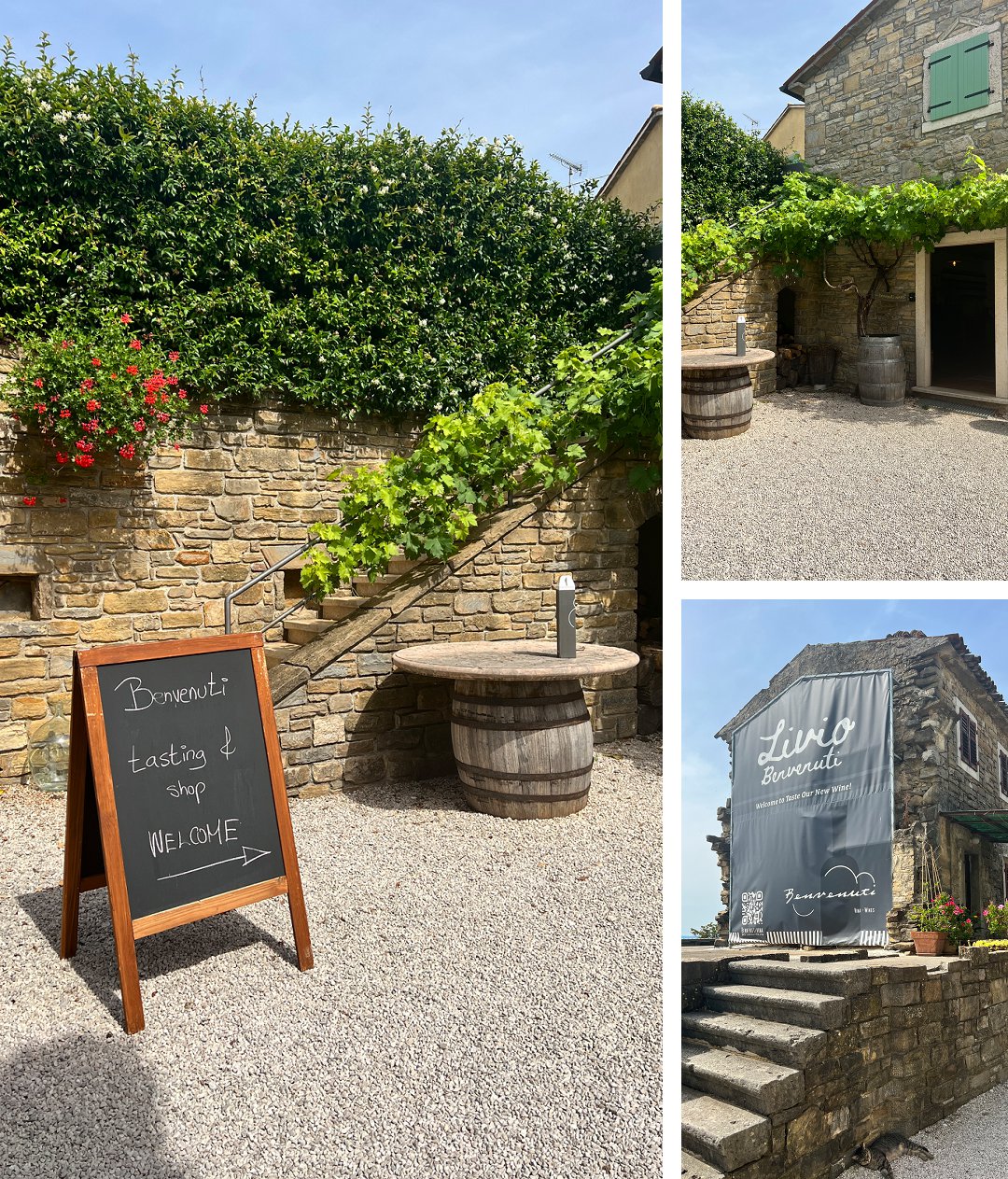
A wine tasting was in full swing, but we ushered into the coolness of the tasting room – a welcome relief, as the middle of July in Istria can be hot, hot, hot! I think because we were the people who were selling the house, we were given a bit of special treatment and whilst the group tasting was going on, we were kind of invited to join in on the periphery. A good way to get to know the wines, with out the pressure of being part of the tasting group. It was nice to introduce our friends to the winery and especially nice to make a purchase of Benvenuti wines – which have now made their way, boxed up, all the way to Andalucia. To be opened when our friends who accompanied us, come out to visit us in our new home in Spain.
This visit is definitely a lovely memory and was a special way to bring to an end our time in Istria – wine tasting, in beautiful surroundings, on the top of a hill in Istria, with the new owner of our home.


by Helen | Feb 5, 2025 | Spain, Travel
We’re now increasingly finding that we need to be a bit more hands on with the house renovation, and need to factor in time to get across to Jimena de la Frontera to meet with Jose, the project manager, more often. Or be in San Roque where all of the house administrative stuff happens – meetings with our solicitor, or bank trips, or visits to the Town Hall to sign forms. Sometimes we can do it in a day, but at the moment we’re living nearly 130kms away, on the western coast of Andalucia, in Sanlucar de Barrameda, so sometimes, especially if it’s been a long day, the drive back can be tiring. So we’ve been investigating hotels, where we can stay over and get to know new towns and villages. And, in Hotel Al Almoraima, we think we’ve found somewhere pretty special.

Located about twenty minutes from our house which is being renovated, it’s the perfect place to stay when we need to be in Jimena over two days. Originally a 17th century convent (built apparently, in 1603) it has been refurbished to a really high standard. With an imposing neo-Gothic tower, an internal courtyard framed with beautiful Andalucian arches and extensive gardens, it is a real country retreat. A long and winding drive way, with trees on each side, opens out into immaculately manicured gardens, with absolutely exquisite terracotta lanterns lining the final part of the sweeping drive, which ends at a huge circular, gravelled courtyard, with a fountain in the middle. Ahead of you, is the magnificent entrance, with a long walled balcony above – which it turns out, was where our room was located. It couldn’t have been in a better position.


Probably because we booked in low season (we stayed in November), we lucked out again on our room, and were allocated one of the large rooms, directly above the entrance, with a huge terrace. I think there are only four rooms of this category, and so we really were lucky, especially as the late afternoon was still warm and the terrace was in full sun, meaning we could bask in the early winter sunshine. Our room was large, with a big canopied double bed. The furniture is mostly dark wood and quite traditional – not to our taste, but absolutely fitting for this style of hotel and renovation. The en-suite bathroom was also sizeable, with a window directly onto the terrace and a whirlpool bath. This was a bit of a feature, but when initially switched on, was quite violent in terms of noise and splashing of the water. Not the most immediately relaxing experience, but once the controls were under control, it became a whole lot less noisy. Again, the style of the bathroom was not really to our taste, but it was in keeping with the whole renovation, and so definitely not something that spoiled our visit.

The hotel, although not deep in the countryside, is not in a town, and so you can’t just walk to a local bar or restaurant. However, there is an on-site restaurant – La Gañanía – and although quite expensive, is really worth visiting, as it’s a lovely experience. Since eating here, I have read up on this restaurant and it would appear that it is a very well regarded restaurant, with renowned chefs and plenty of plaudits. The menu may not be overly brilliant for strict vegetarians and vegans, but it unashamedly wears its colours. It is a restaurant which specialises in meat – unsurprising as it is situated in hunting territory, but we did manage to mix things up with a very good cheese platter and a fish dish. And, a very unusual shared cheesecake dessert – with a topping of shaved parmesan.


We are very lucky that we can experience hotels like La Almoraima, out of season. I’m not entirely sure if it would be a real go-to choice, in the peak season, when presumably it is a whole lot more expensive. As lovely as it is, I think that it would maybe attract more people who wanted to immerse themselves in an historical experience, or a gastronomic experience. Which is absolutely fine – we love both of these things, but I think that for the price you might pay in high season, we may be wouldn’t appreciate it quite as much, as some. However, in low season, it was the perfect choice – relaxing, comfortable. undeniably beautiful and with a restaurant where we experimented and tried some choices which we wouldn’t normally choose.
The attention to detail in the hotel itself and in the grounds, is very sharp. Lawns are manicured. Goundspeople were in evidence throughout our stay on mowers and buggies and working by hand. There is lots to see and absorb, around the grounds, and plenty of opportunity to walk and take in the fresh air. Communal areas are beautifully decorated and maintained to a very high standard – I particularly loved the cloistered internal courtyard, with its palms and orange trees. As a side line, the hotel also offers a selection of branded goodies that you can buy at reception – all very stylish – including their own olive oil. Which I can highly recommend, and which has already been added to our growing collection…

Olive Oil Image : https://cadiz.cosasdecome.es/la-almoraima-de-castellar-ya-cuenta-con-su-propio-aceite/