by Helen | Nov 27, 2025 | Lifestyle
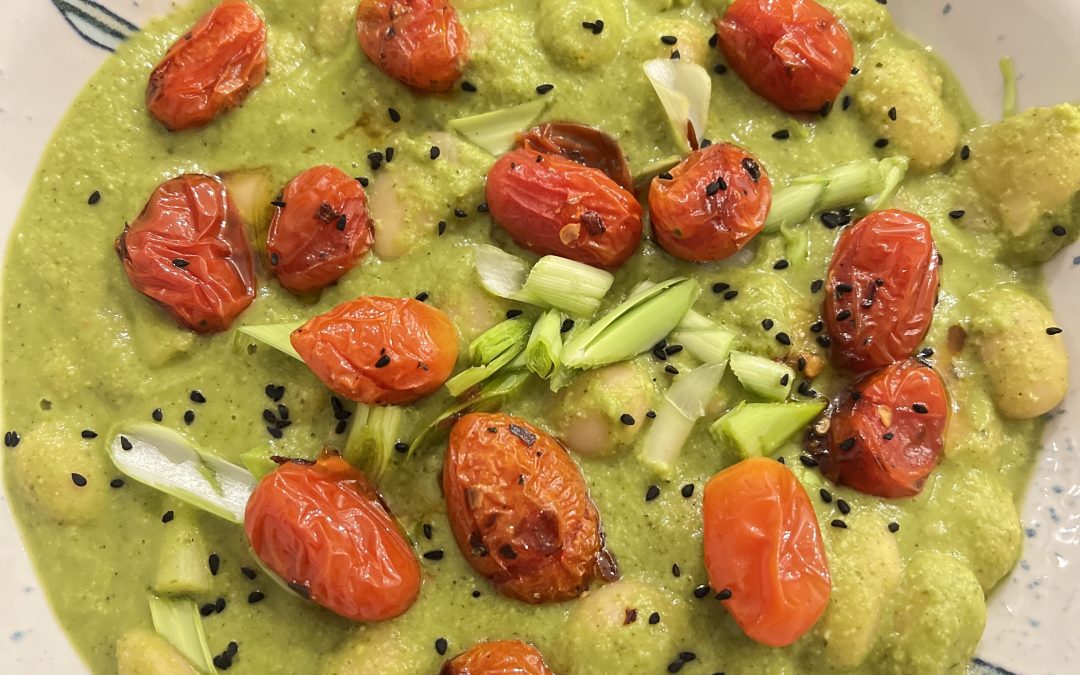
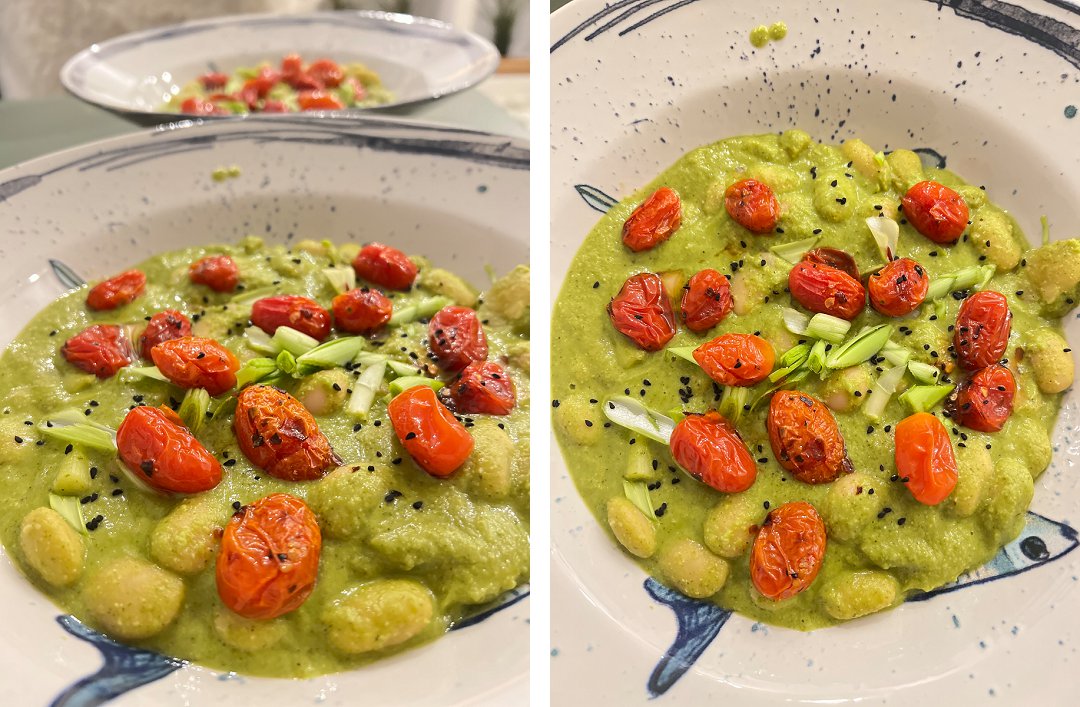
As winter takes hold, this is a super delicious winter warmer – Fresh Pea & Mint Pesto with Butter Beans & Roasted Tomatoes. And, as far as I can tell, it’s vegetarian and suitable vegans if the Greek yogurt is omitted and maybe an alternative used – although I do stand to be corrected on the vegan front.
what you need :
- Cherry Tomatoes
- Butter Beans (2 cans)
- Frozen Peas (about 300g)
- Fresh Mint
- Fresh Basil
- Garlic
- Spring Onions
- Cashew Nuts & Pine Nuts
- Lemon Juice
- Olive Oil
- Seasoning : Chilli Flakes, Salt & Pepper
what you need to do :
- Roast tomatoes with olive oil, chilli flakes, salt & pepper
- Soak the nuts in boiling water and leave until ready to add to blender
- Sauté the white of the spring onions with the garlic for 3-4 minutes
- Strain, rinse & add the butter beans and a smallish quantity of water and then crumble in a veggie stock cube
- While this is simmering, add the peas, mint, basil, nuts (strain water before adding), lemon juice, 2-3 tbsp of olive oil, a splash of water and salt & pepper to a blender & whizz. Add more water if consistency is too thick.
- Add to butter beans and simmer for about 15 mins
- To serve, scatter the chopped green parts of spring onions (tiny pieces so texture isn’t too rough – our slices could have been smaller), roasted tomatoes and seeds of your choice – we used nigella seeds & these gave it a bit of an oniony kick
- A dollop of Greek yoghurt & pitta bread, to mop it up, finished this off
It sounds a bit faffy but it’s honestly not – just do it in three parts : tomatoes, then butter beans, then minty pea pesto. It is absolutely delicious! The minty pesto is also a fantastic base sauce and I’m thinking next time, served over charred chicken breast or salmon. Seriously make this if you like fresh & healthy & tasty. It’s a winner.
by Helen | Nov 26, 2025 | Lifestyle
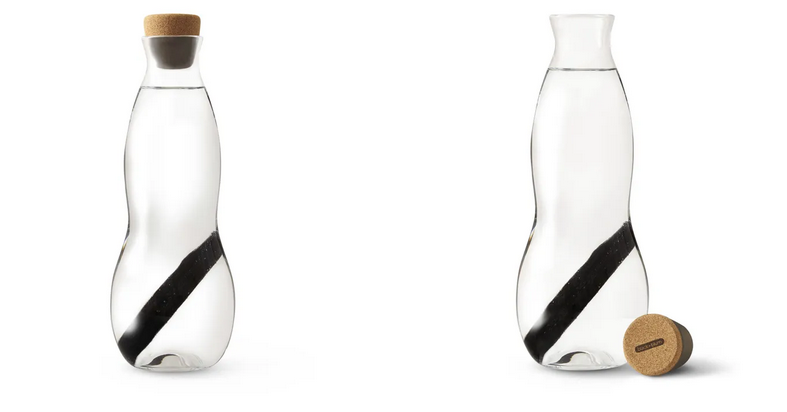
Over the years we’ve been finding that, especially over the summer, our use of plastic water bottles increases significantly. We always recycle plastics, but we were creating our own small mountain of bottles and often our plastics bin (which was only collected every two months) would be full to the brim and we’d end up taking excess plastic to the municipal waste. We’ve used filter jugs in the past, which have helped – but when family and friends came over to visit, these jugs just weren’t enough, and the plastic waste increased. One thing that we did find very effective – although only when it was only the two of us – was a Black and Blum water bottle with activated (specifically Binchotan) charcoal filters, which purified tap water by absorbing contaminants and releasing minerals, and resulting in cleaner, better tasting, water. The charcoal was replaced every couple of months, and the carafe style bottle was a good size to keep in the fridge door, keeping it cool. To make sure we always had purified water, we’d decant the water from the carafe into another jug, making sure the Black & Blum bottle was always full.
However, this still wasn’t ideal as often we would forget to re-fill and so plastic bottles were usually still bought as a back up, meaning we weren’t really tackling the problem. Our tap water in Istria wasn’t great and even though we had a filter fitted on the tap, we rarely drank water this way.
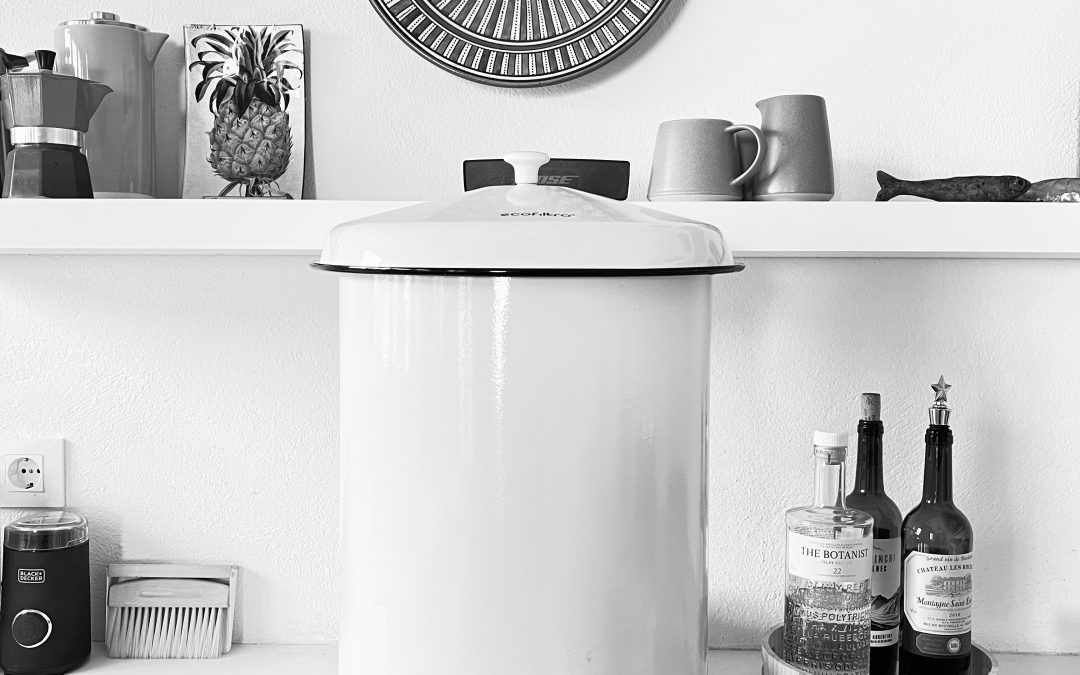
Now that we have moved to Andalucia, we have decided once and for all, to resolve this issue. Summers will be hotter than in Istria, and we want to ensure that both us and our visitors, have a regular supply of good drinking water but without the plastic waste. We know we won’t be able to eliminate it all, but we’re definitely going to reduce it, now that we have bought a wonderful Ecofiltro Water Filter – the self proclaimed 100% biodegradable sustainable water solution…
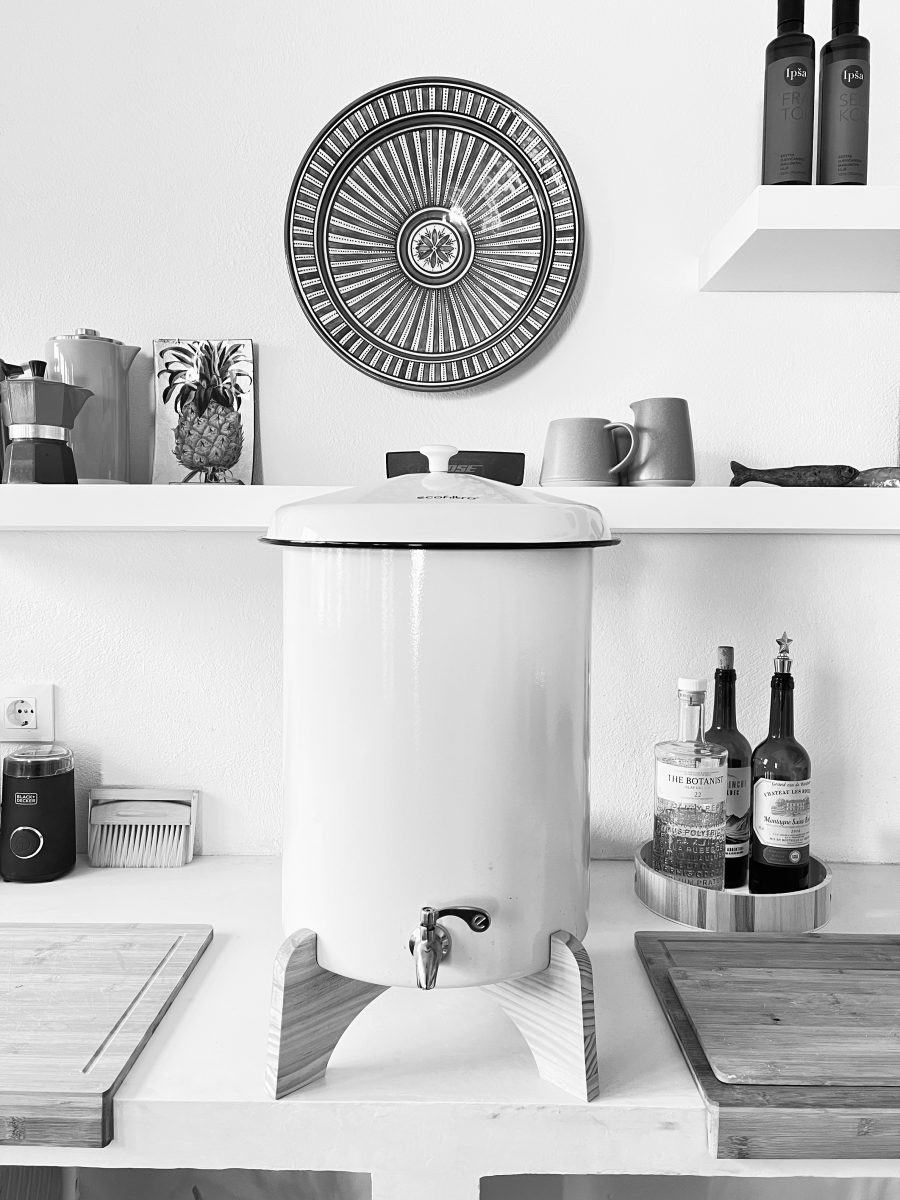
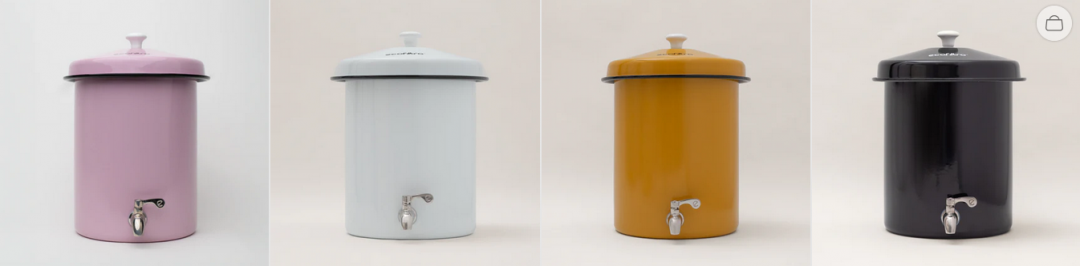
Not only do these look quite beautiful – and come in four colours (pink, mustard, white and matte black) – they also come in two sizes, 5 litres and 20 litres. We did a bit of working out, and quickly realised that if we bit the bullet and bought the more expensive 20 litre option, it would still have paid for itself in less than three months, if we looked at the amount of bottled water we get through. We opted for the white unit, and also bought the wooden stand – an expensive purchase, but one that is already, two months later, paying dividends.
The filter unit, which sits inside the white chamber, looks like a big terracotta plant pot. This is constructed from a composite material comprising three natural elements: clay, sawdust, and colloidal silver. The pot is filled with tap water, and slowly it starts to seep through the walls of the pot, into the chamber – initially, the filtration process is quite slow due to the pores of the ceramic material opening, and this does result in a clay-like taste in the water. It is recommended that this initial water is discarded – we filled it three times, before the clay taste really dissipated and now, the water tastes great. We do drink a lot of water, and we do keep it topped up – but if we’ve been away for a few days, we will empty it (great for watering plants), just so that we can fill with fresh water. As it’s getting warmer, too, we’re finding that adding ice, makes a difference.
So, would we recommend an Ecofiltro unit?
Yes, without hesitation – and, we are NOT being paid or sponsored to write this post or recommend this product. A 5 litre unit would certainly be more than enough for a couple and at €144 is a whole lot more affordable, especially if you forgo the stand (which retails at €26 for the 5 litre model). But, living where we are now, and with hopefully lots of summer visitors, we decided that the 20 litre option, with stand, was better for us. It was a bit painful hitting the “pay” button, but it’s done now, and we’ve bought no bottled water since our kitchen was fitted and we could fill from the tap. We don’t anticipate buying bottled water going forward, so for us, it was ultimately a good decision. It’s definitely a style statement, too, with its slightly off white colour and pale wood stand. It’s a very simple design, so although it is quite large, it doesn’t look bulky and over-bearing. The initial taste of clay has indeed worn off, and the water does have a very different taste – cleaner and fresher, would be how I would describe it. It is recommended that the filter unit (which should always be kept wet to maintain its effectiveness) be replaced every two years – and when you do replace, as long as it’s not damaged, you have yourself a plant pot.
by Helen | Nov 25, 2025 | Lifestyle
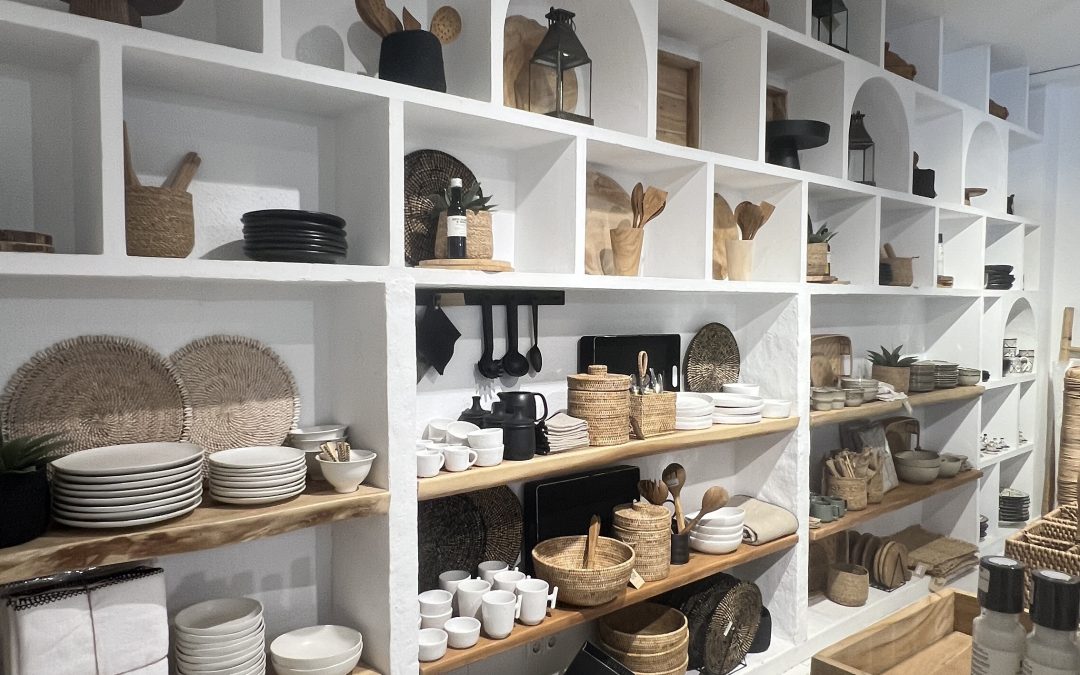
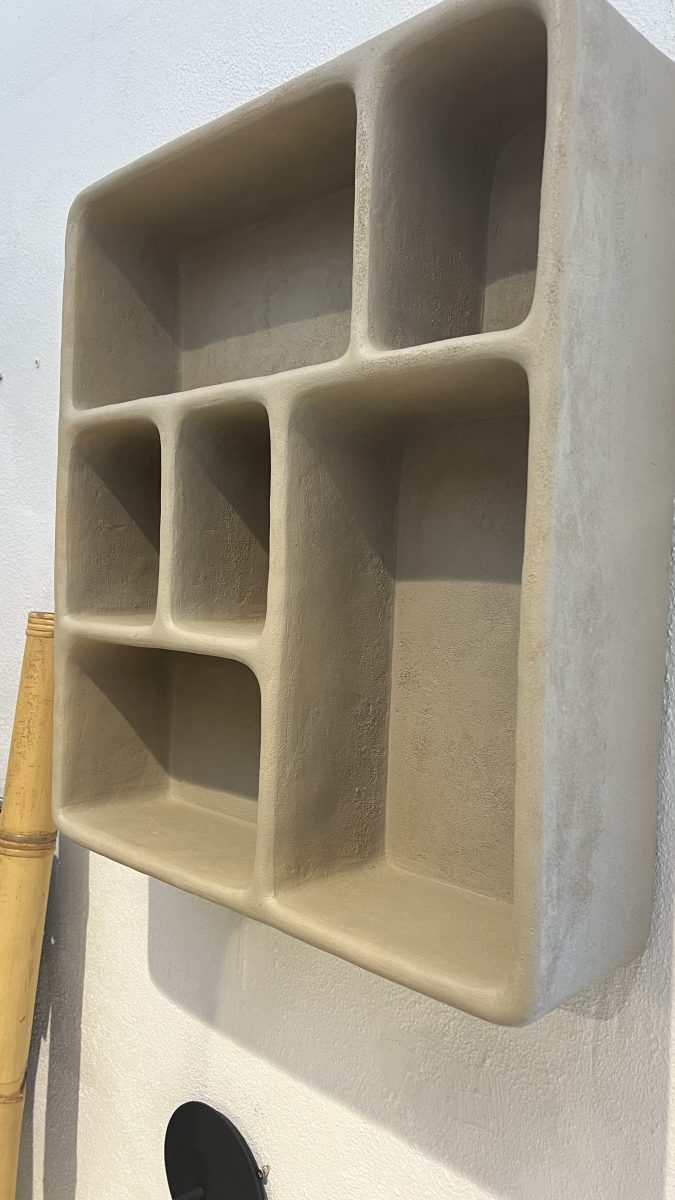
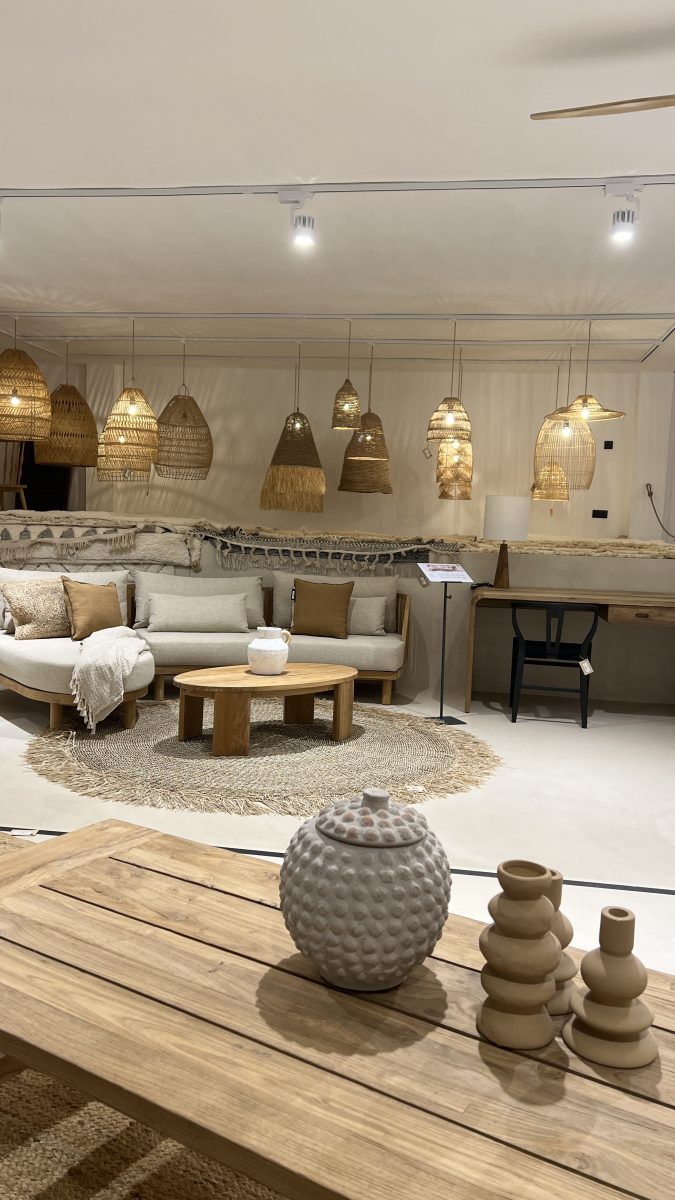
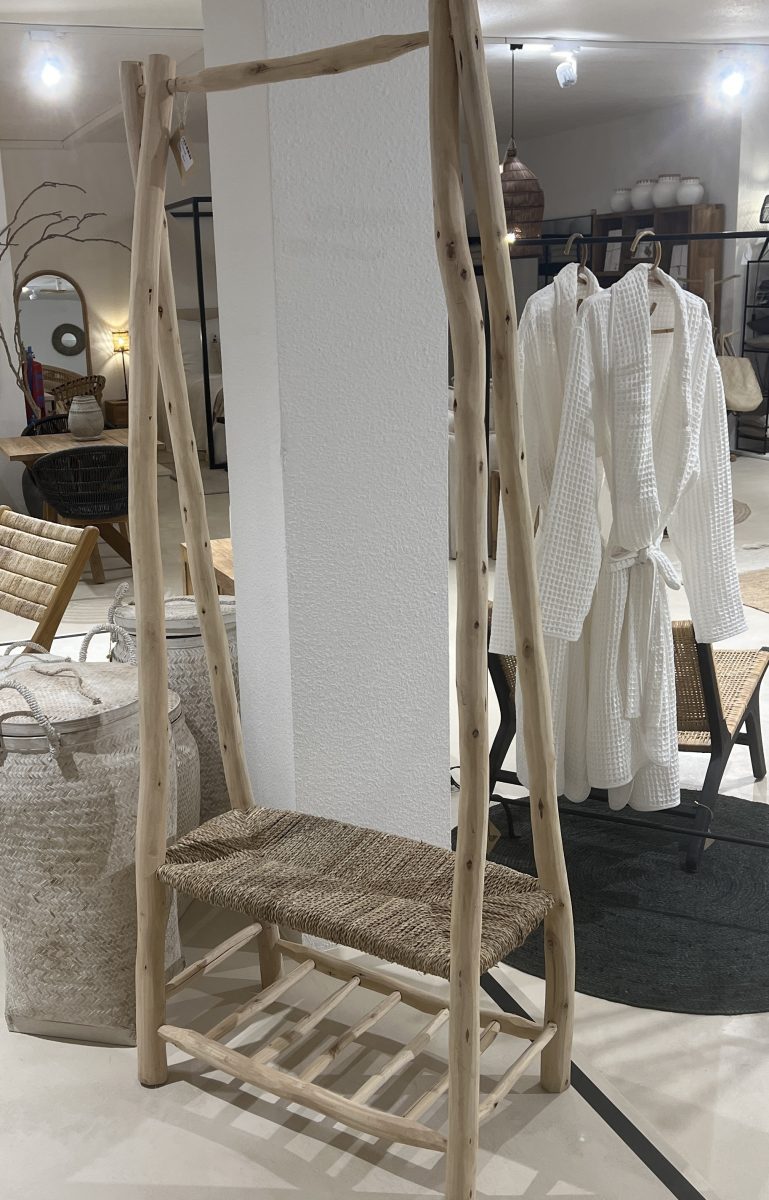
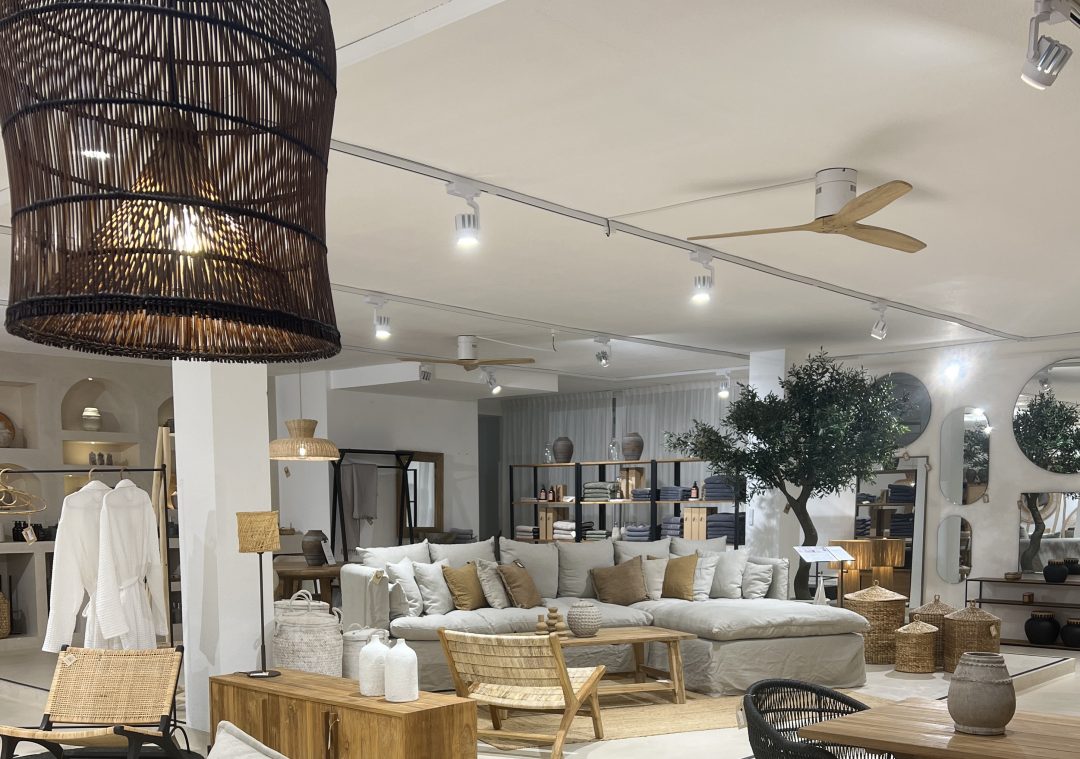
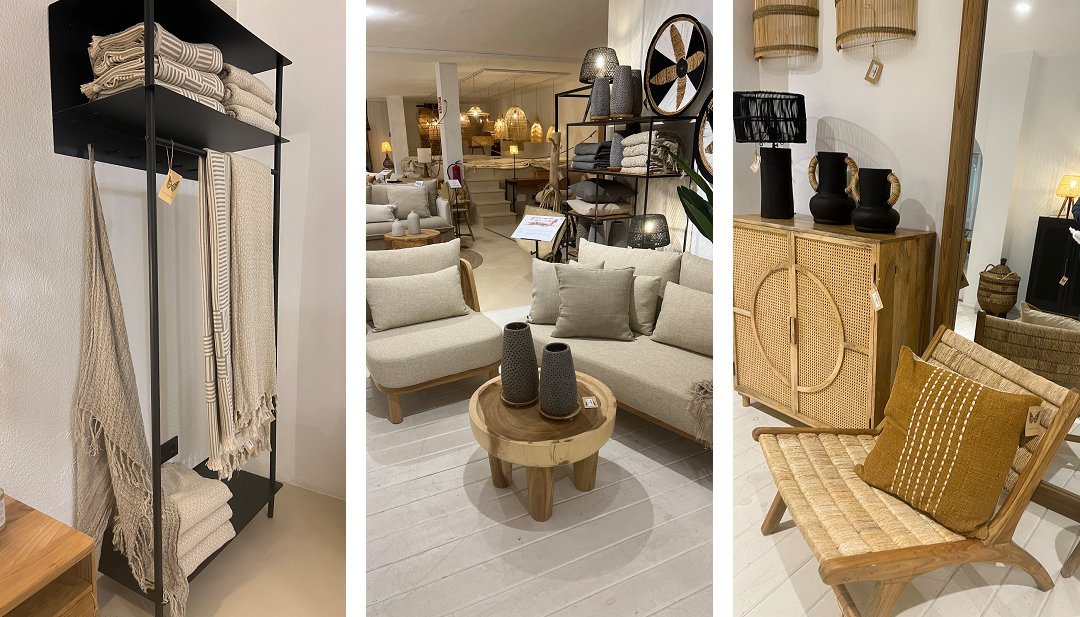
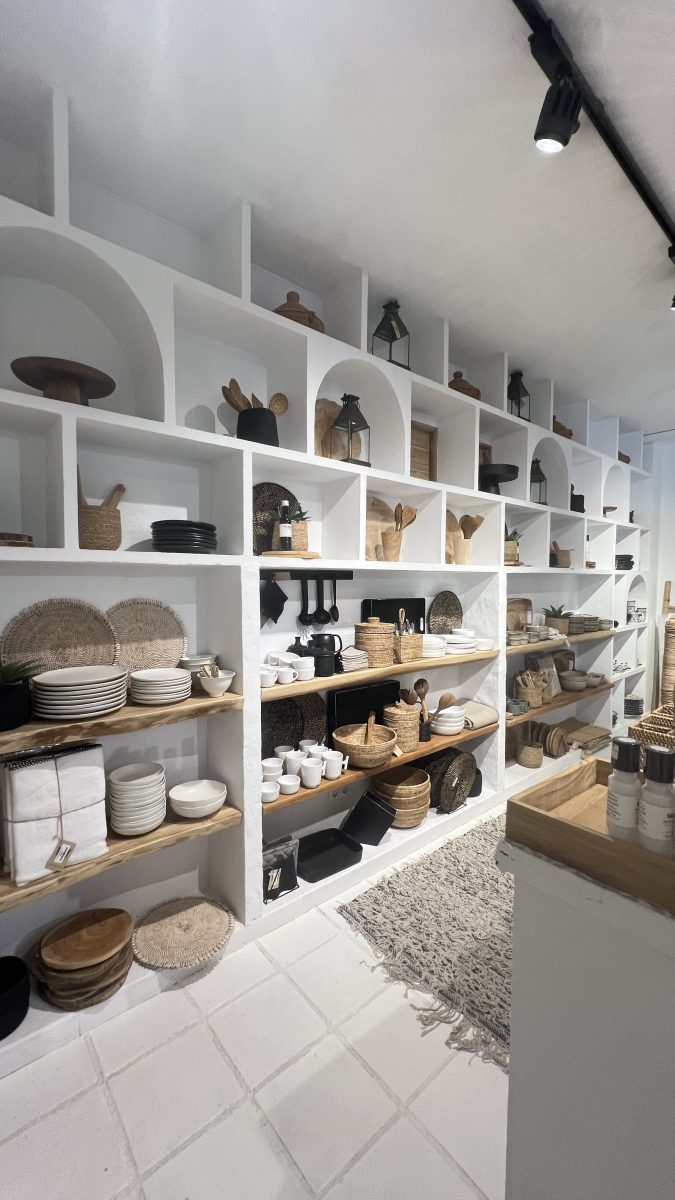
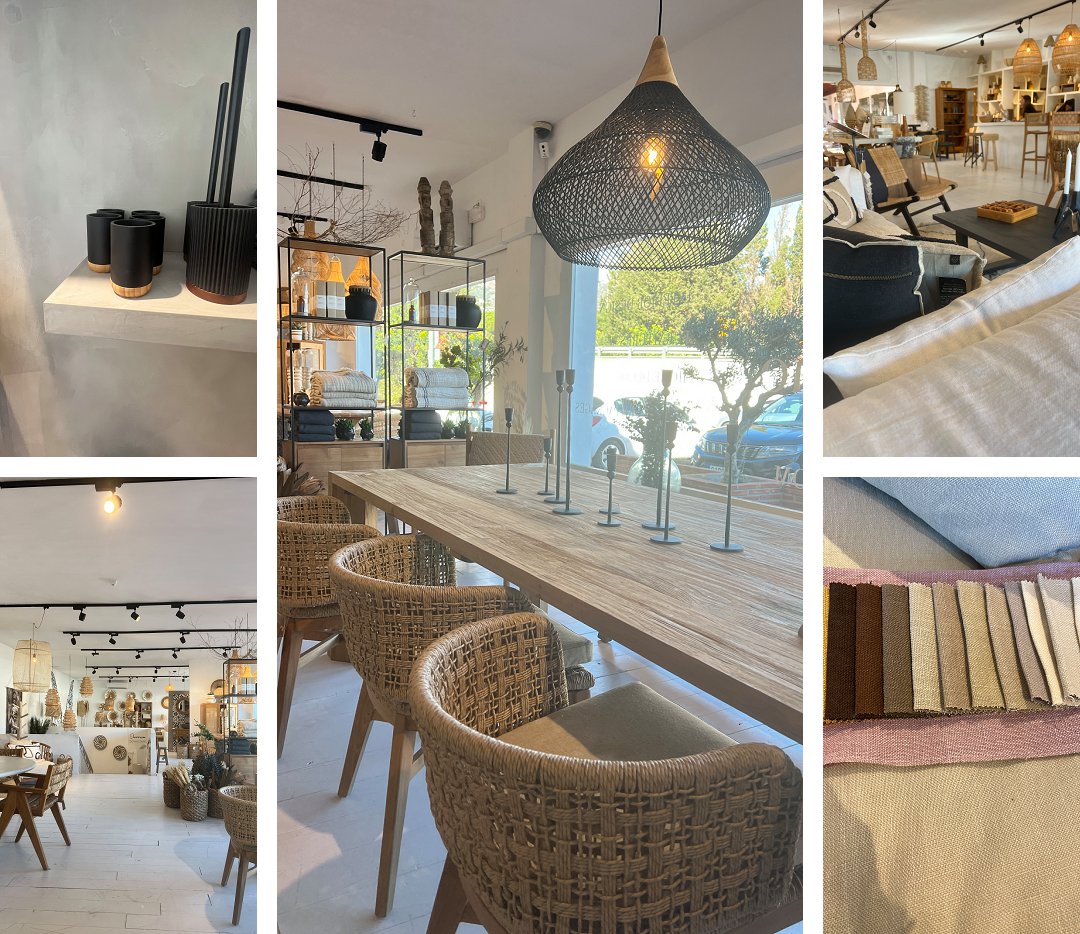
I’ve followed Zoco Home on Instagram for a while now, always drooling over their Andalucian/Ibizan/Mallorcan inspired furnishings and accessories. I’ve never really clocked where they are physically, until recently, and realised that they have two stores, very close to us – one just outside Marbella and one just outside Mijas. On a recent trip to Mijas Pueblo, we felt we were too close by, to not visit. And wow, it didn’t disappoint. A bit like Habitat, but with that Mediterranean sunshine feel.
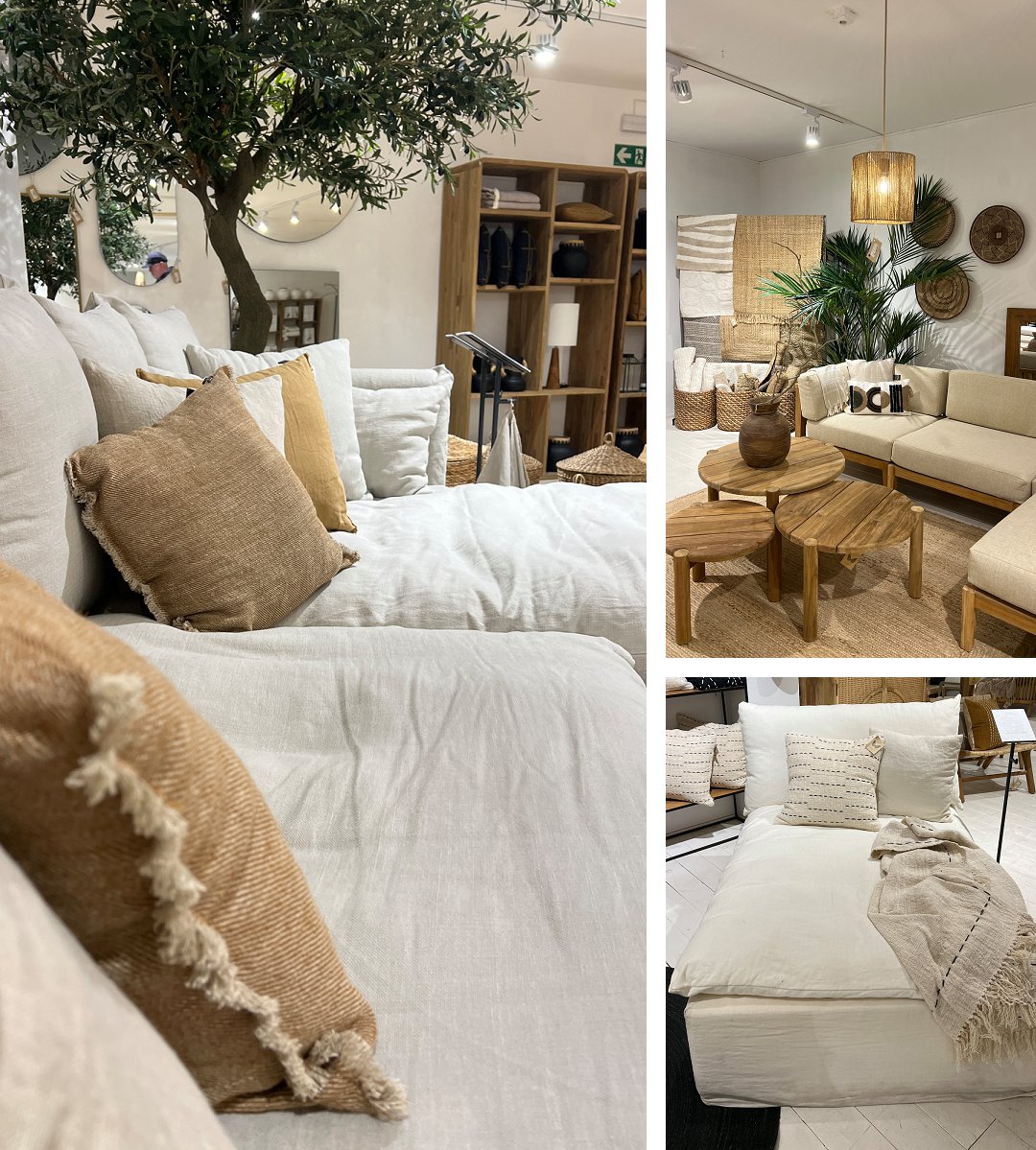
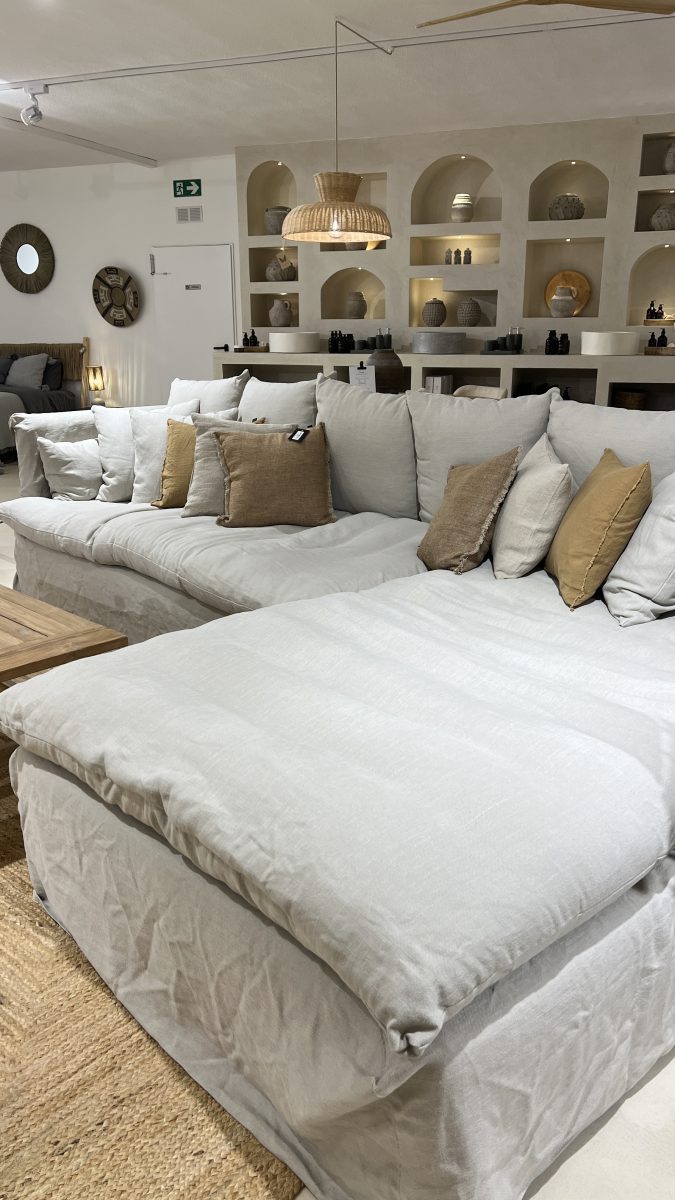
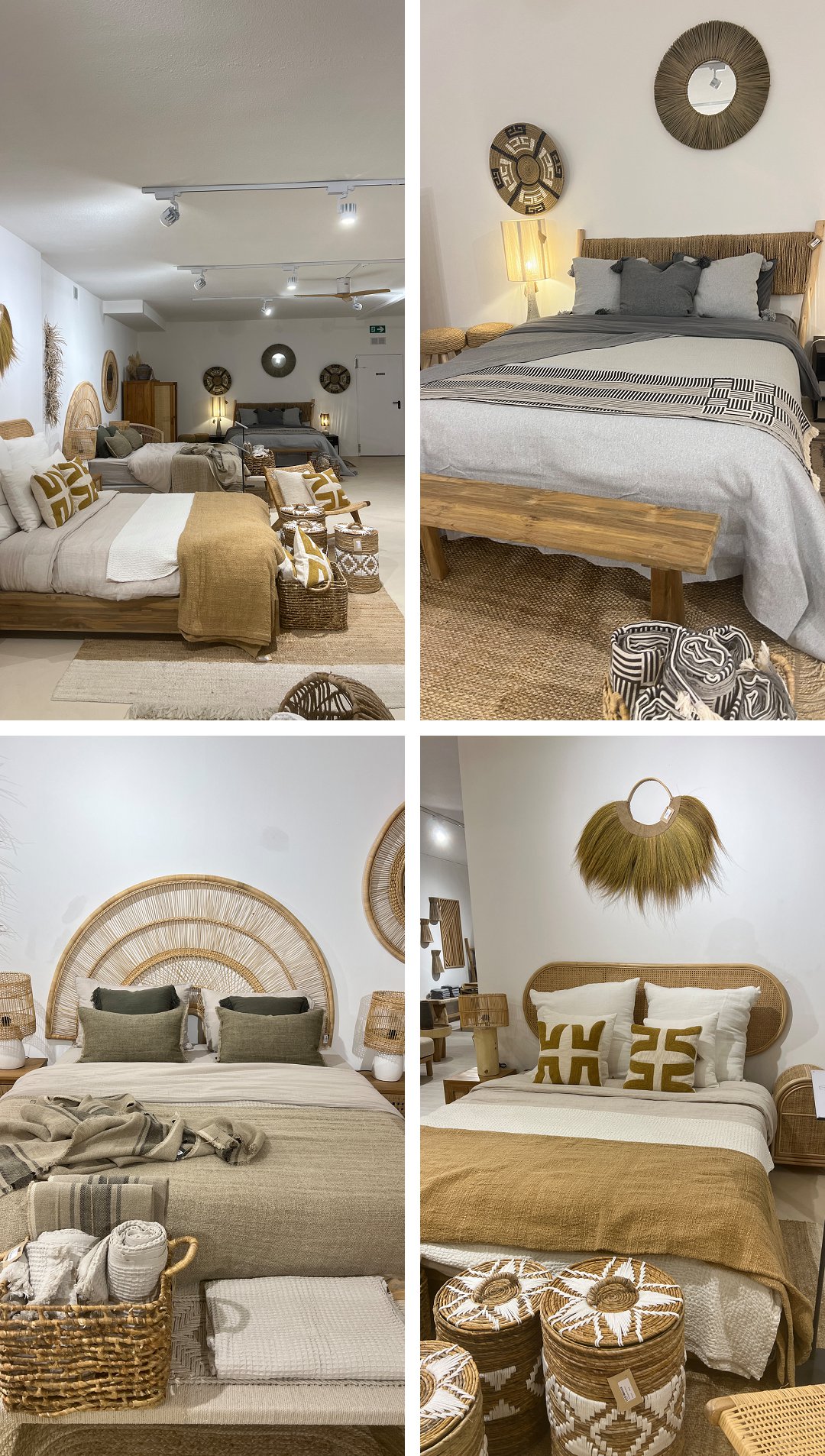
The showroom is large and spacious and beautifully arranged, with home zones so you can get a real feel for bedroom or living room or bathroom inspiration. I honestly could have spent a small fortune, but as we were mid renovation, and therefore mid huge spending on essentials, like building work, I had to rein myself in. I felt proud that I only left with a lovely Meraki after-sun lotion, rather than the huge cream linen L-shaped sofa, I had my eye on.
Everything is truly exquisite. The colour palette throughout is earthy and muted, with lots of linen and rattan and concrete. There’s nothing bling or overly bright. Everything feels calm and just being in the showroom, feels relaxing. There’s no apparent pressure to buy. Sales assistants are there if you need them, but they just left us, after acknowledging us, to take photos, and ooh and aah over everything. The store also has a small cafe/restaurant, which seemed to be very well used, not only by shoppers, but also office workers and builders. If we’d had a bit more time, I think we’d have tried it out, as the food we spotted on tables looked very “Zoco Home”, and definitely not your fast food caff variety.
Maybe one day we’ll have a house where we furnish it from Zoco, but in the meantime, here’s what caught our eyes…
by Helen | Nov 19, 2025 | Interiors
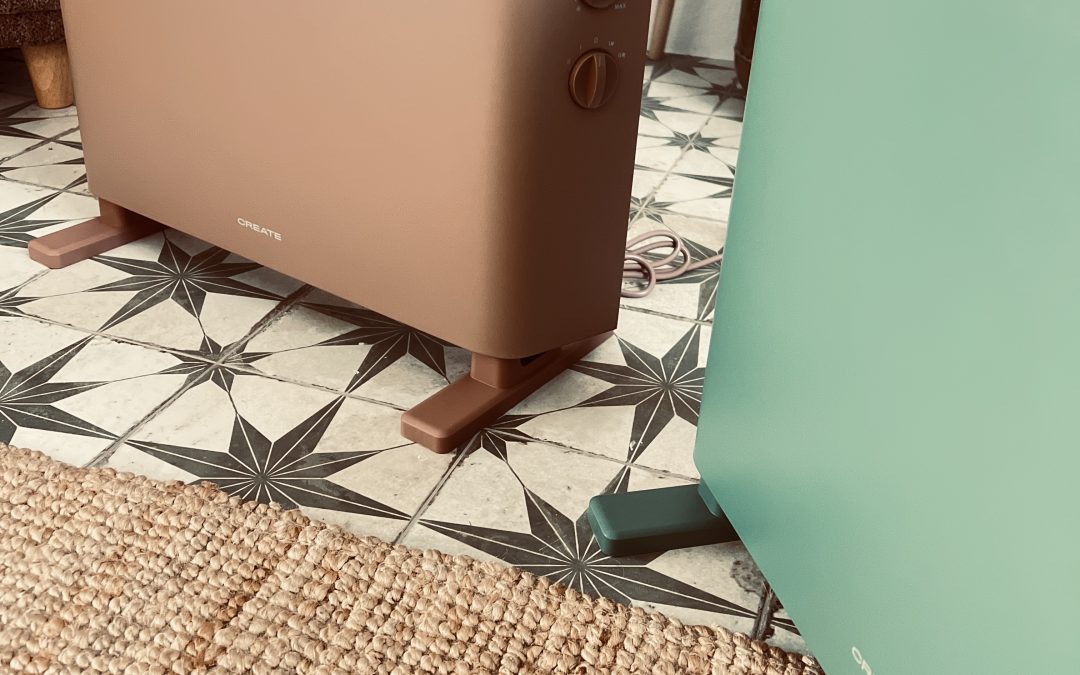
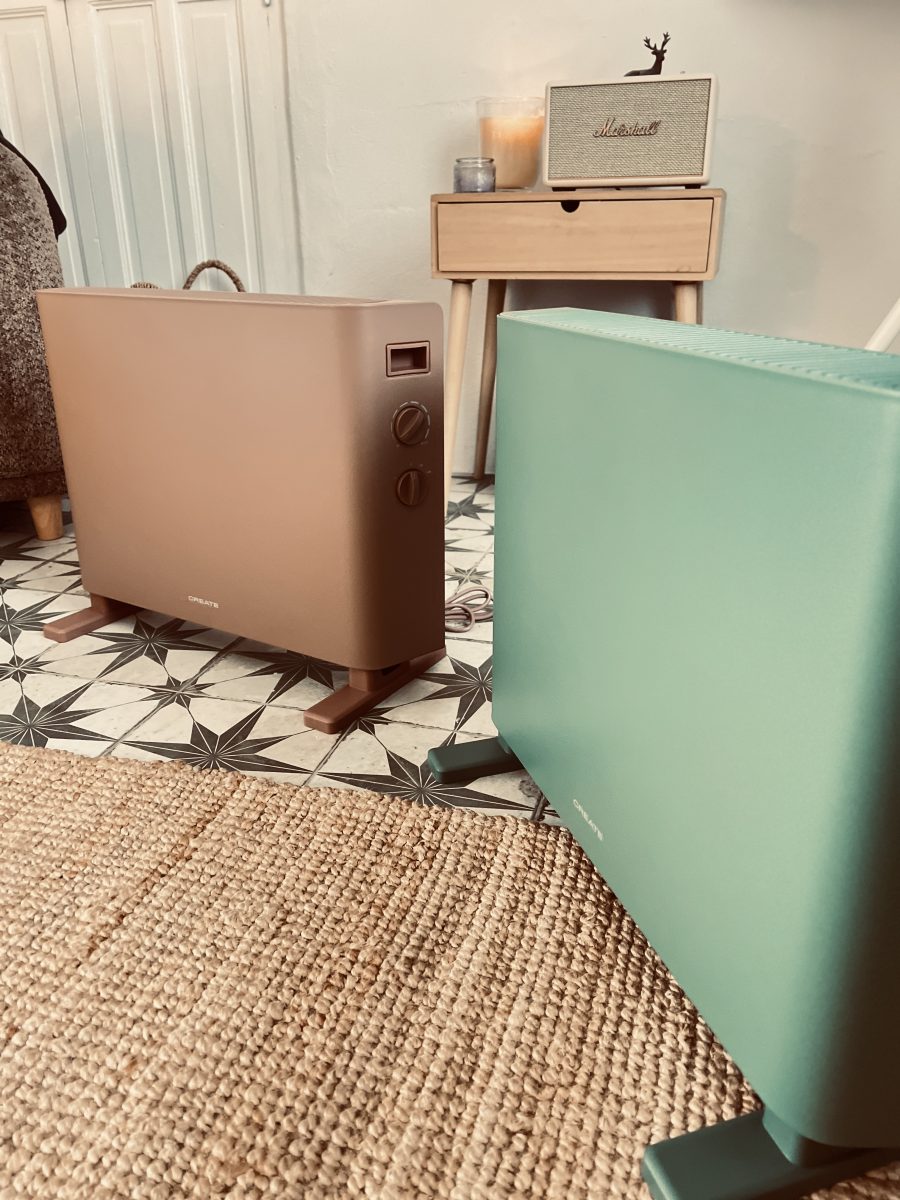
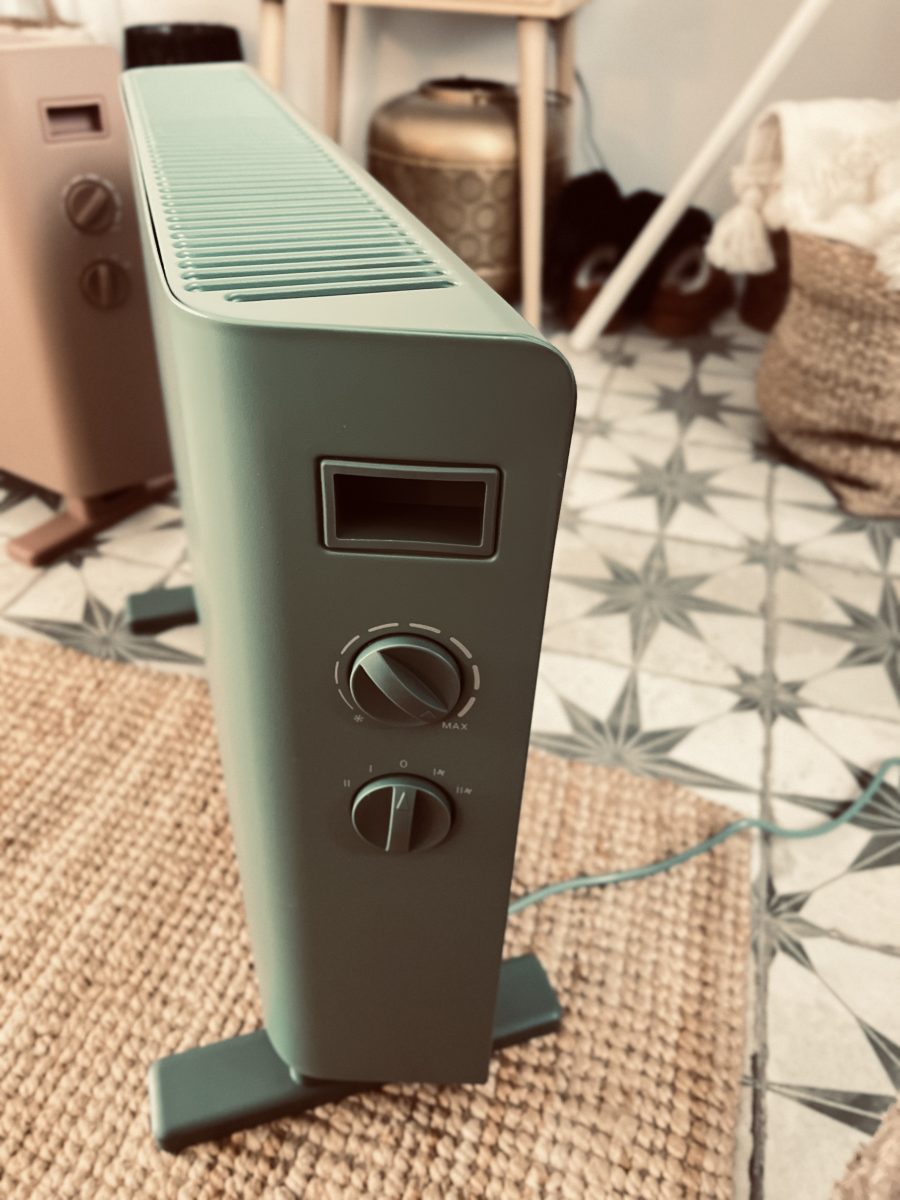
We have no central heating in the house. We could have had it installed when the renovation was happening, but having experienced how the heat is retained over the spring/summer/into autumn months, we decided against the expense. We also decided against air con, which could have been a dual system and therefore also provide heat, because we didn’t want a big external installation, nor did we want the units inside the house. So, we have our Dovre woodburner, which is due to be fitted by our builders, but there is a delay because the door glass was smashed somewhere in transit, and this is now on order. We also brought our portable heaters over from Istria – only one of these has made the final cut, because the others, which I’ve just sold on Facebook Marketplace, were no longer right for the house. Not at all pleasing to look at, and I’d never have been happy with them going forward, so they were sold. Luckily, we’d really looked after them, so did manage to get quite a good price for the four of them, so I didn’t feel at all guilty, when after realising I had just sold our only sources of heat, I ordered new heaters from Create-Spain. Two in sage green, which complement the floor tiles on the ground floor perfectly, and two in moca, for the first floor, where the tiles are patterned with a really lovely moca/rust red palette.
As with everything we’ve ordered from Create-Spain, the price was exceptionally good, the ordering process smooth and easy, and the delivery quick and efficient. By coincidence, they arrived on the day we sold the other heaters, so I think it was meant to be.
They are quite small in size (570mm x 430mm) but are seriously beautiful. Honestly, I have never been quite as delighted with a portable heater before. The colours are rich and gorgeous, and in a matte finish – and everything, just everything, on the heater is the same colour. No silver knobs and switches, or different coloured feet. All sage green or moca. And the best thing? The cables and plugs are the same colour! Not white (just about acceptable) or black (never acceptable, but so, so common), they are exactly the same colour as the heater. Cables are my pet hate and if I ever had my way, any in white or black that were too long, would all be consigned to Room 101. Up until now I haven’t know what to replace them with, meaning that there has been a flaw in my plan – but I now know. Coloured cables and sockets. If Create can do it, then ALL suppliers can.
Because it’s still not been quite chilly enough for additional heating – although I can feel that day is coming very soon – we’ve not been able to assess how effective they, apart from when we tested them, and the heat output seemed more than sufficient, at the time. A cold snap will tell, though. In the meantime, I am just enjoying looking at our delicious convection heaters…
by Helen | Nov 19, 2025 | Lifestyle
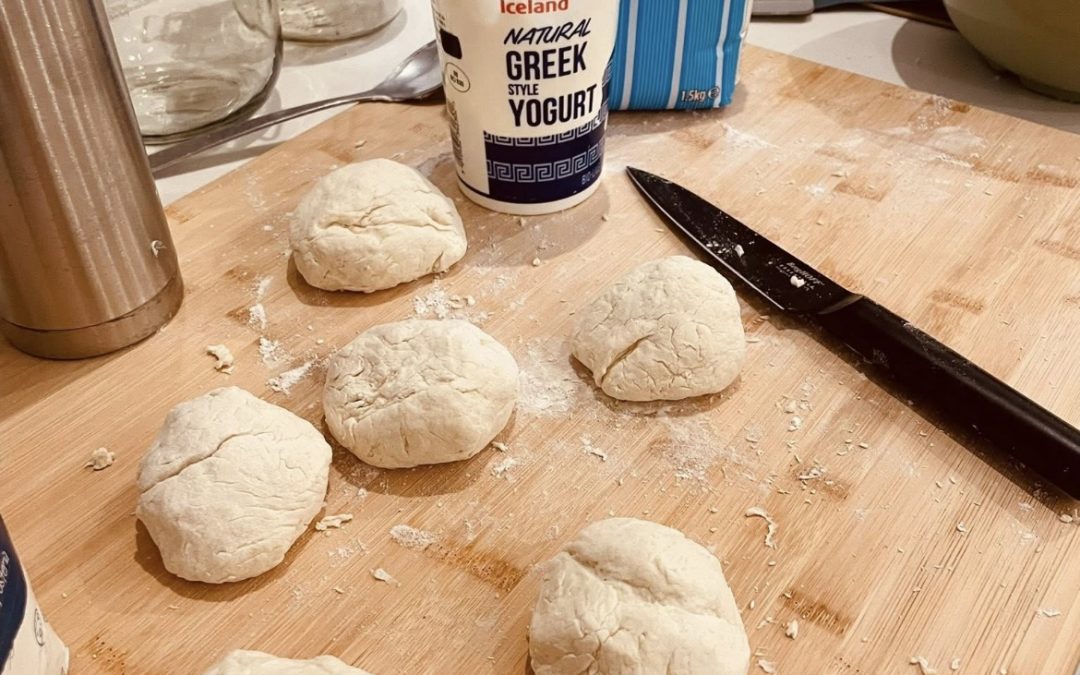
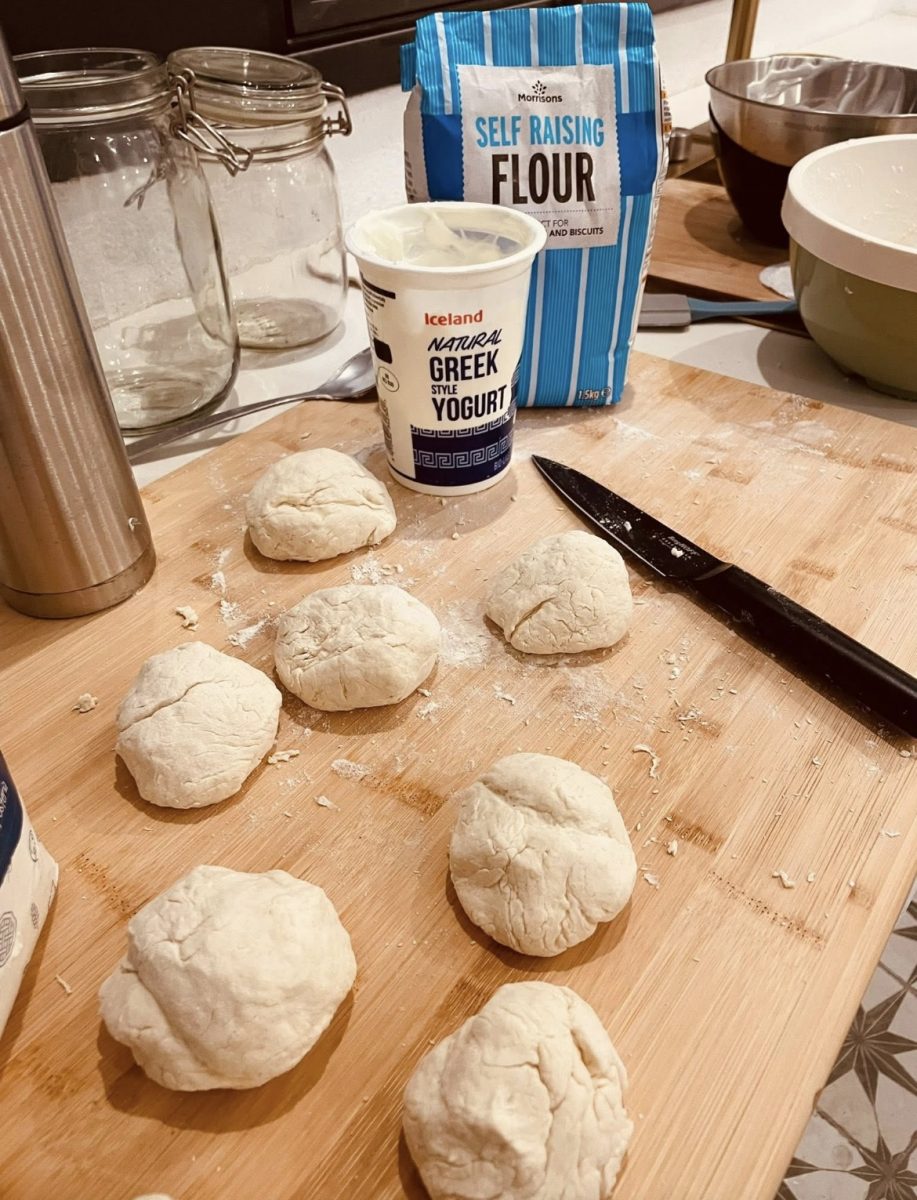
It’s been a while since we’ve made our favourite Irish soda bread – https://wearelifestyles.com/cheesy-irish-soda-bread/ – because we’ve not had our own oven for so long. But, we wanted to get back into making bread – and bread which we knew contained only good stuff. As we’ve been operating with just air fryers for a while now, I was all over a recipe I spotted on Instagram using just three main ingredients – self raising flour, Greek yogurt and egg wash – and cooked in the airfryer, so we gave it a whirl a few days ago. Suffice to say, we now make these rolls (or sometimes a loaf) nearly every day, instead of buying our bread in. It’s very quick to do – so much quicker than getting in the car and going out and buying bread. Like with the Irish soda bread, we’ve started experimenting and added other ingredients – obviously topped with parmesan and with cheddar kneaded into the dough, is an absolute winner in our house, but cranberries and nuts and seeds are also great additions. The only thing that we want to improve on, is getting organic self-raising flour. Sourcing self-raising is quite tricky here, but M&S apparently do a cracking organic one. And now that I have my residency sorted here, once I collect the actual card, getting over to Gibraltar – and therefore M&S – is no longer an issue. I’m counting down the days…
what you need to make 9-10 small rolls/one loaf
- 300g self raising flour
- 300g Greek yogurt
- egg wash
- salt & pepper
- toppings/additions to dough to your taste – sunflower seeds, chia seeds, crushed nuts, cranberries, cheese, chilli flakes etc
what you need to do
- heat airfryer to 180°
- mix the greek yogurt into the flour, with salt & pepper, according to taste, and any additional ingredients, until a dough is formed
- separate the dough into 9/10 bread roll shapes, or form a loaf
- brush with egg wash
- sprinkle with your chosen toppings
- cook in airfryer for 12-15 minutes (12 mins for individual rolls, about 15 mins for a denser loaf)
- try and resist until they have cooled down…
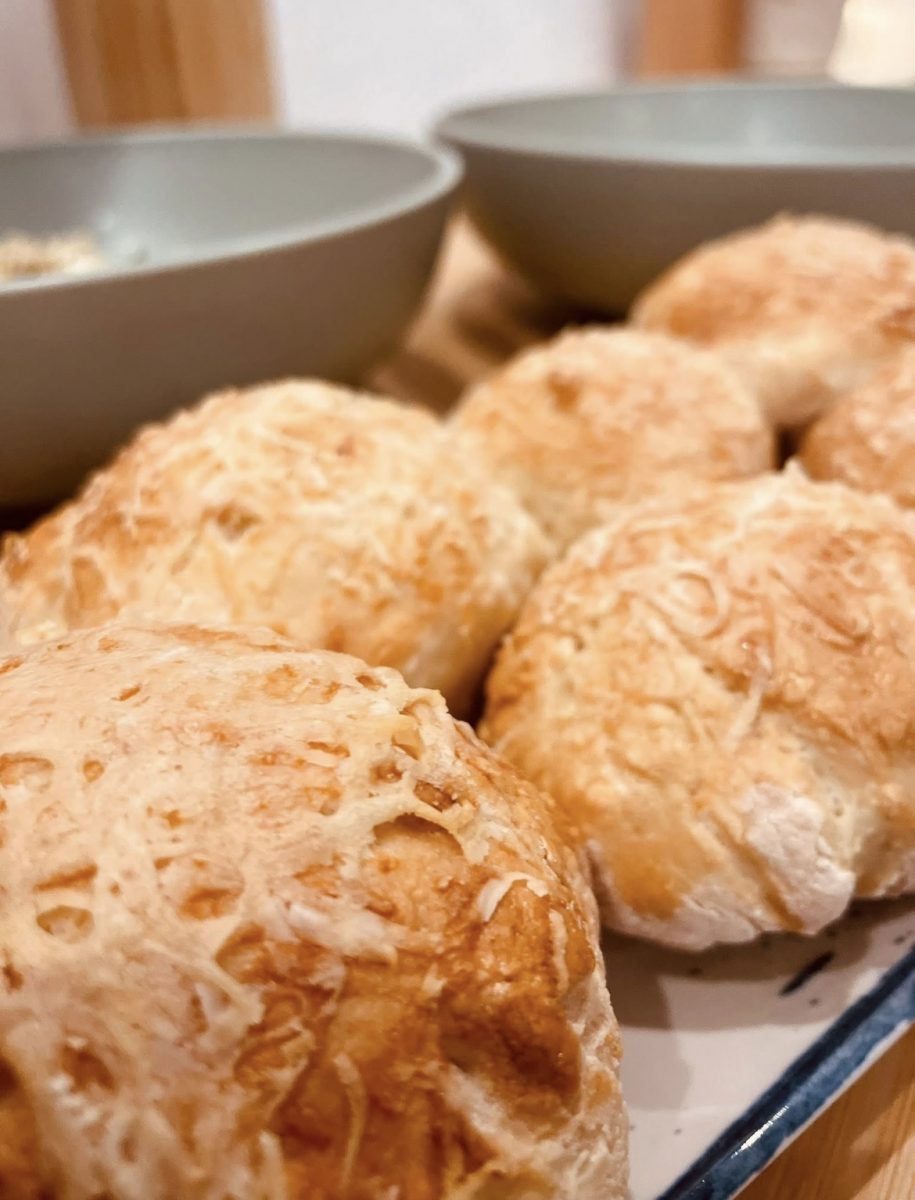
We’ve also switched the Greek yogurt for cottage cheese (same quantities) and the results are as good – with the added bonus this time, of hot bits of cottage cheese, in the middle. Because we can’t resist this home made goodness, and they don’t sit long enough to cool down…
by Helen | Nov 12, 2025 | Renovation
I’ve long dreamed of crittal doors in our house, but it’s never been a reality before. With hindsight, when we renovated our house in West Didsbury, we should have investigated these metal doors more thoroughly, because as much as we loved our hardwood French doors, I think crittal may have actually been less expensive. However, we went with the wood, and the bespoke design and they were lovely, but I just couldn’t get the black metal beauties out of my mind…
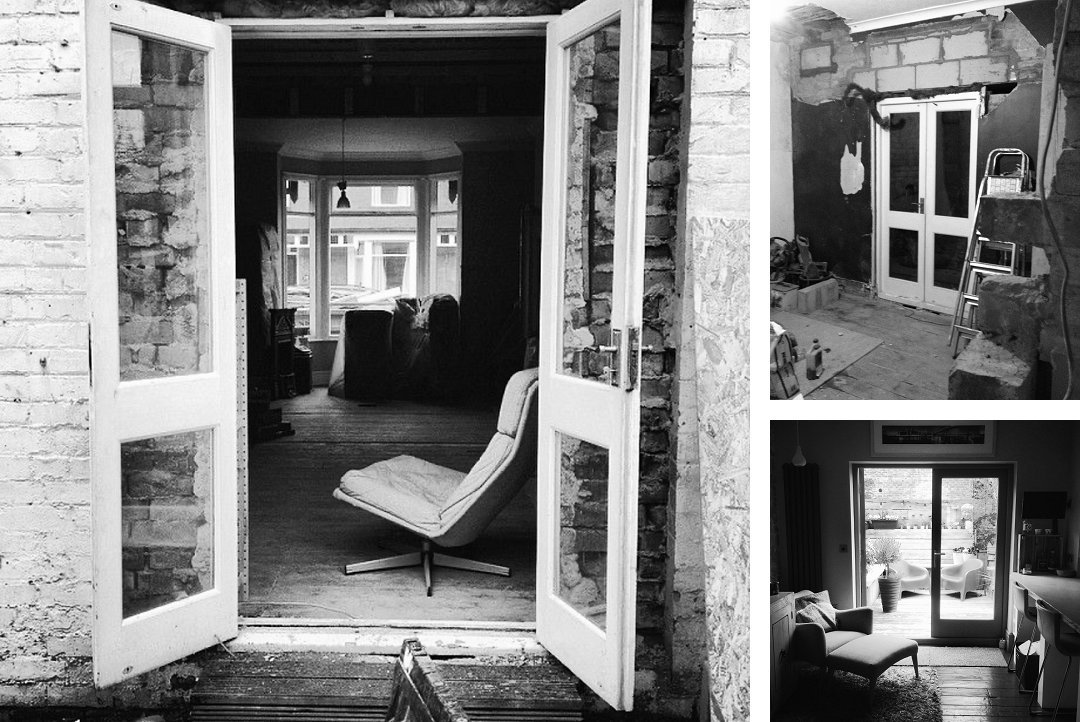
So, fast forward ten years, and we’ve sold up in West Didsbury – and Istria – and are now renovating in southern Andalucia, and this time, I’m not compromising on the crittal doors. They were a no-brainer from the moment we offered on the house, and we knew exactly where they would go.
The house originally had a number of small rooms on the ground floor. Some were just spaces though, with no real purpose apart from walking through them to reach another room. With a potentially beautiful internal courtyard – although definitely not beautiful when we bought the house – we knew we had to open up this floor and create a much more open living space. By doing this, we could potentially have two sides of the internal courtyard to play with, and if we were very brave and knocked out the main wall, we could have our crittal doors. Our builders came and assessed things, and yes, it could all be done – although with the caveat that there would be much demolition and much, much mess before we saw anything which might resemble the new structure of our ground floor, but they showed a photo of a project they had recently completed.
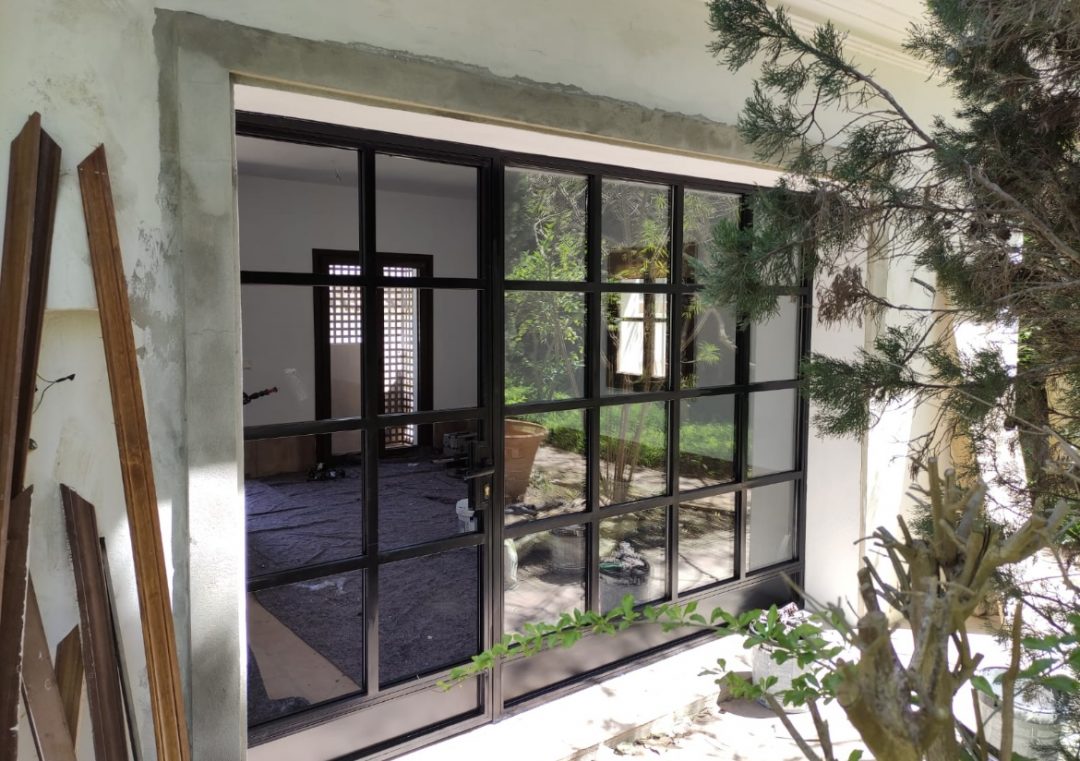
As these doors looked pretty much perfect, we gave them the go-ahead, thinking to ourselves, how bad could actually be? Well, bad, actually. This bad…
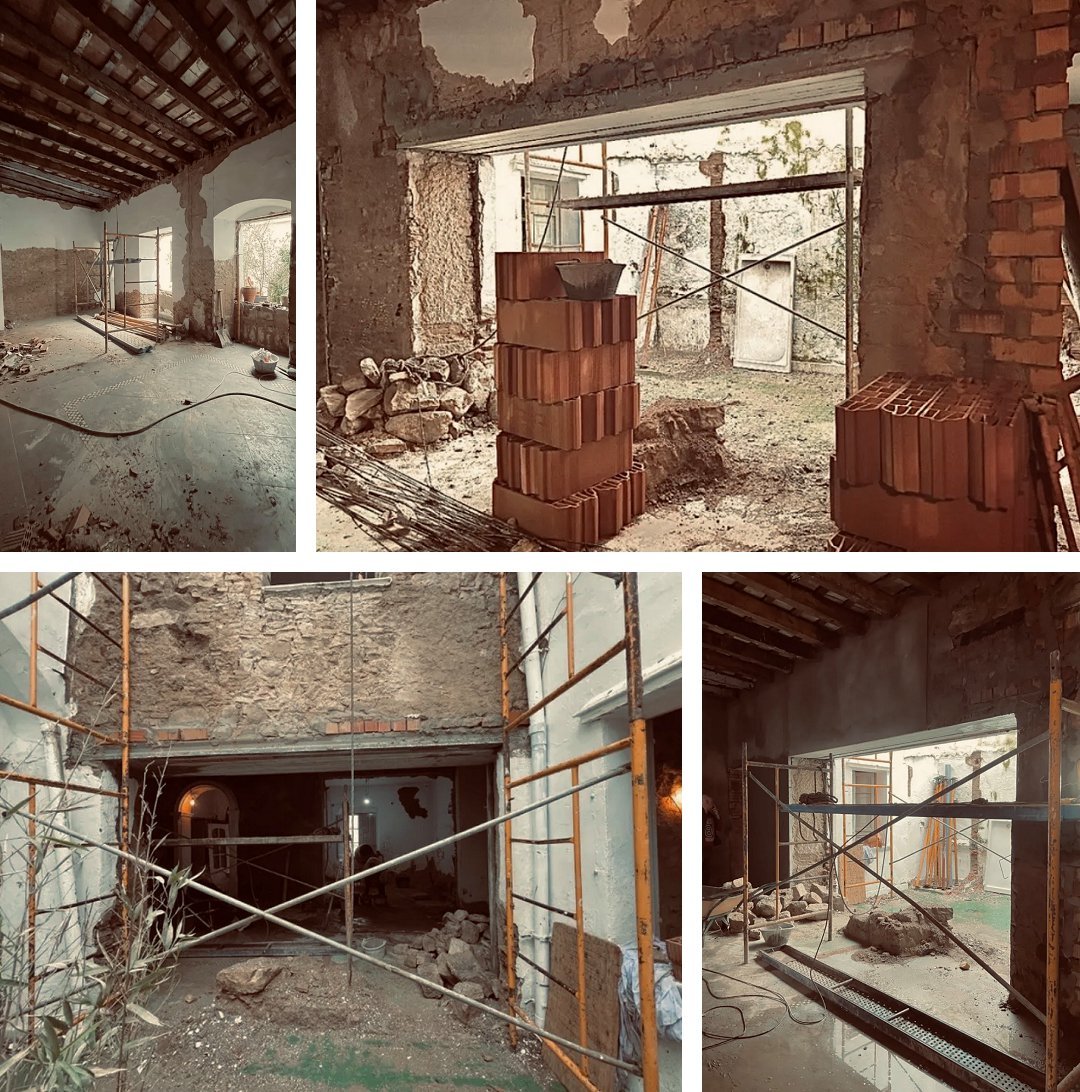
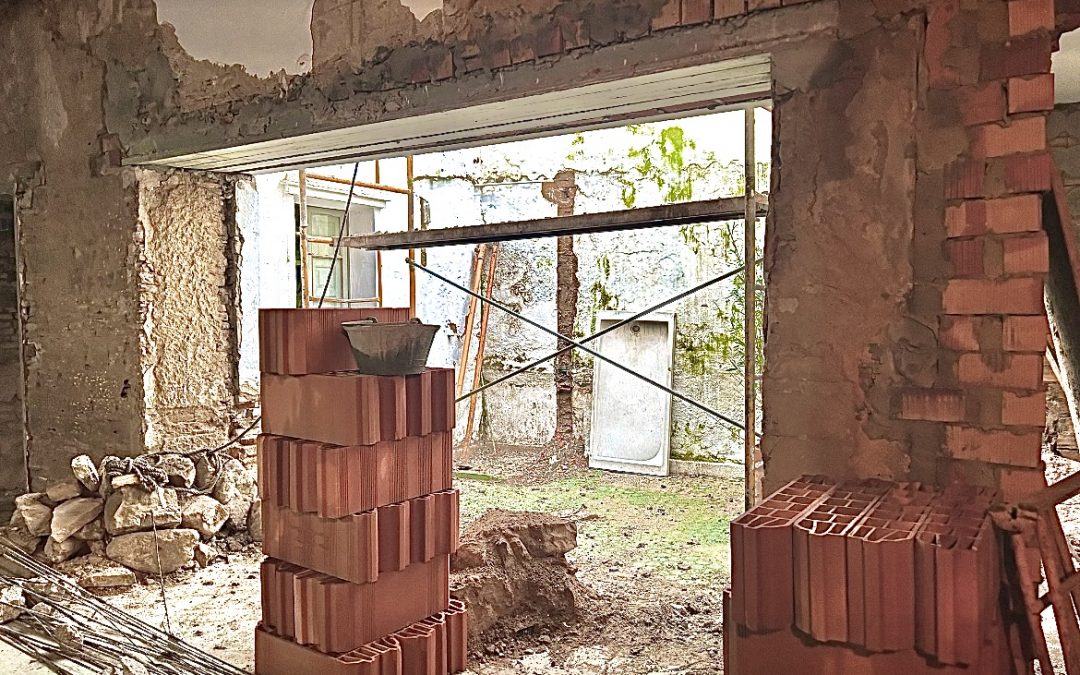
Even before the wall to the courtyard had been knocked out, there had been a fair bit of demolition. In between the two windows had been a dividing wall – one room was a small dining room and the other was one of those “spaces” that hadn’t seemed to function anything more than a way to access what was a downstairs bathroom. But once this dividing wall came down, it gave us an idea of how big these crittal doors would need to be, and at one point, for a very brief moment, we did wonder if we should keep the windows. This thought didn’t last too long though, as we knew that was our chance to create a house exactly as we really wanted, with few compromises. So, the big demolition started.
Although we were lucky and were renting elsewhere while this work was going on, we felt increasingly disheartened every time we visited, as it just seemed to get worse and there seemed to be less progress than the last time we’d seen it. The house – if you could call it that – was just filling up with concrete bags, concrete mixers, scaffolding, steel beams, bricks. And rainwater. Because when it rained, we were exposed to the elements. All we could do was keep the vision of what could be, in our heads.
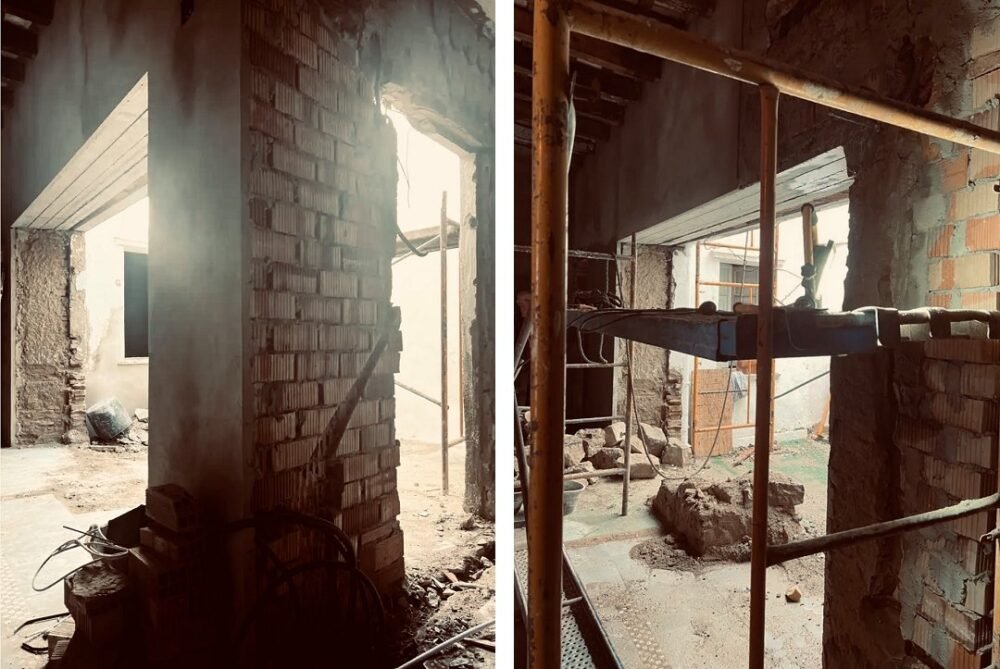
We weren’t just doing the big wall, though, we were also changing the door from the kitchen into the courtyard and the kitchen window, and so the whole ground floor was essentially a building site. (There are two living rooms to the front of the house and these were also being worked on, so chaos reigned for quite some time).
But, without us even realising it, things did start to improve and soon progress was more obvious, with each visit. The steel beams were installed, walls were starting to be plastered, cabling was installed and plumbing points were in place. And, the floor tiles were laid. We could definitely the shape of the house emerging – and that is a very good feeling, mid-renovation!
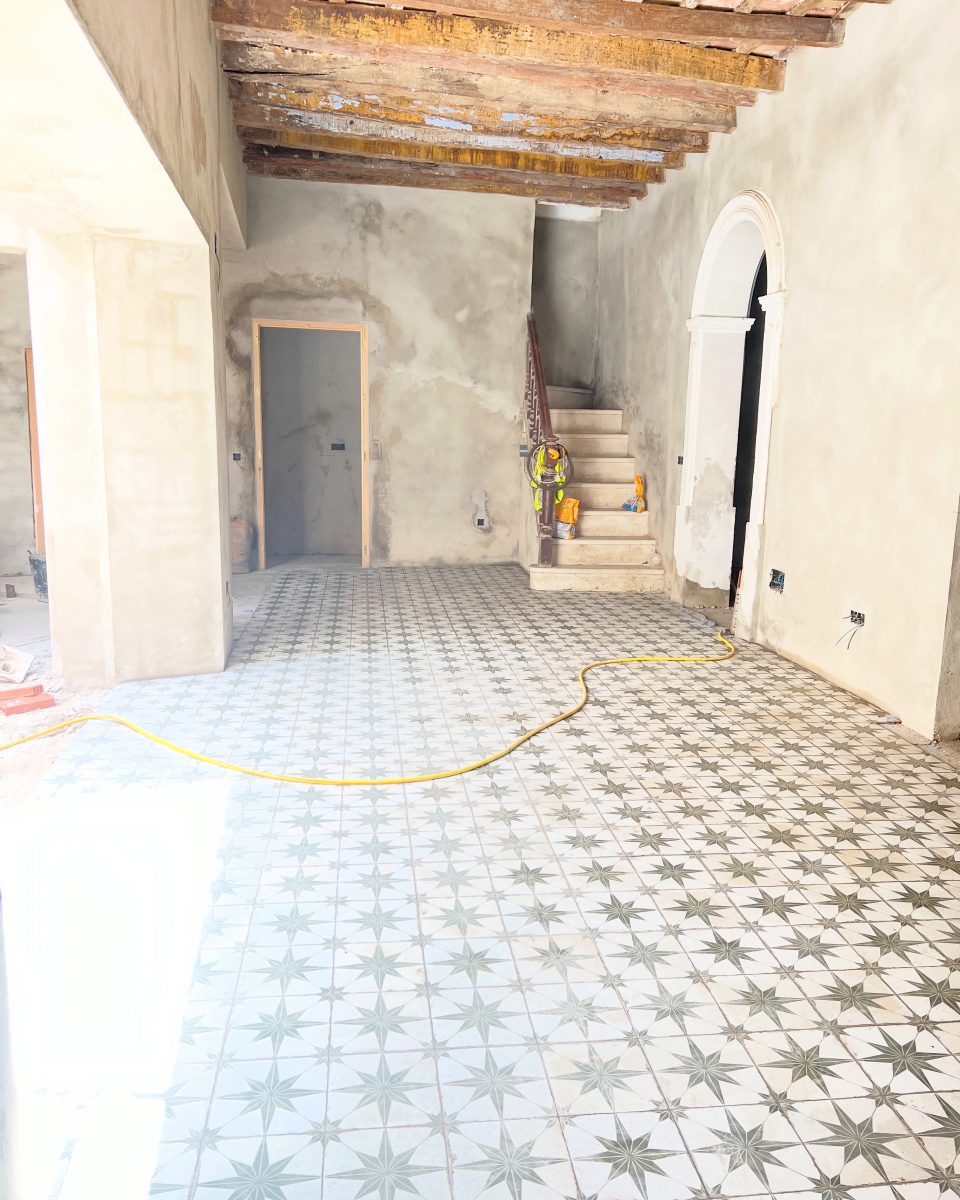
And then the really big day – the day the builder sent us a photo. The crittal doors and windows had been delivered and were standing in our house! The beautiful custom made windows were here! And yes, that is also the beginnings of a micro-cement kitchen. And finally, the installation started.
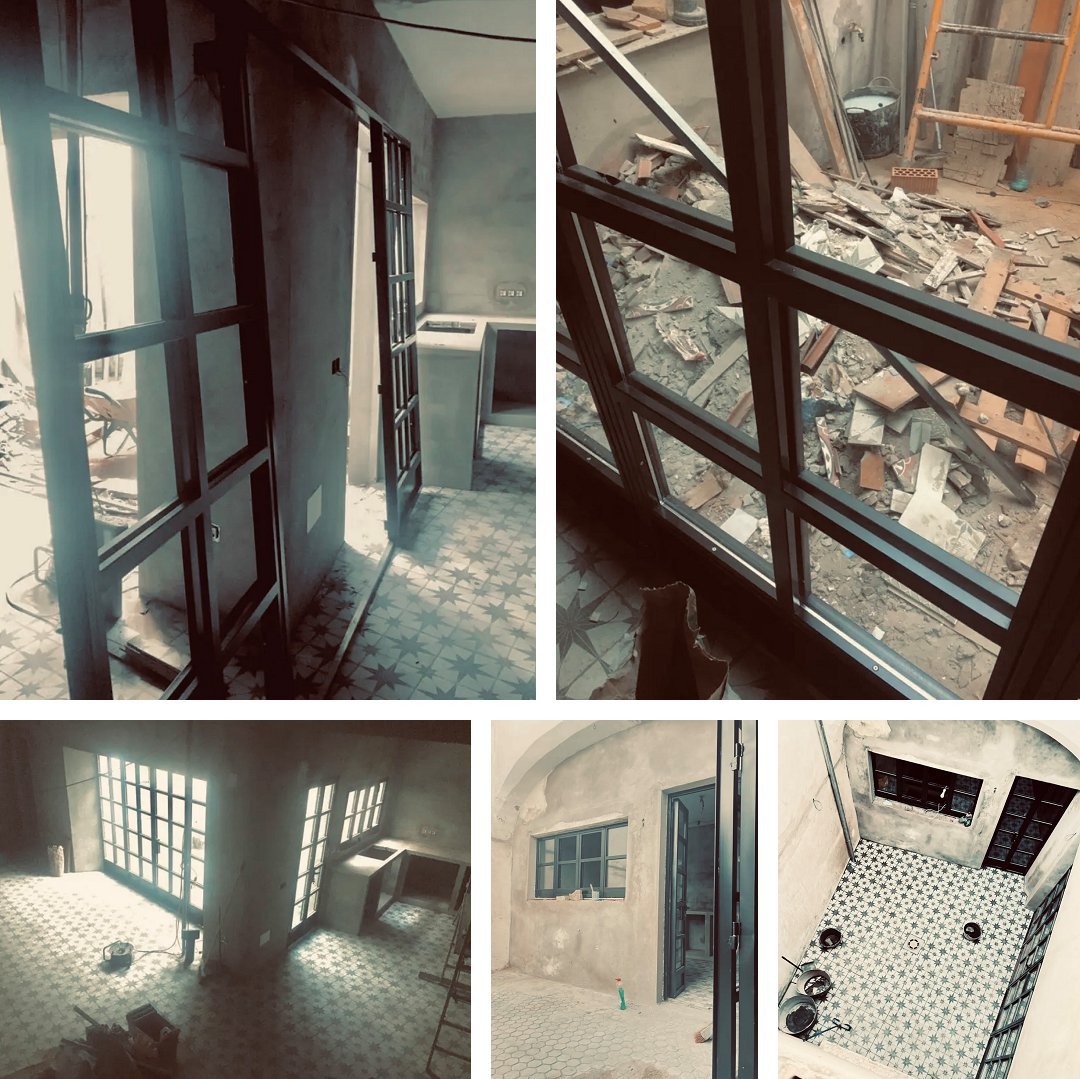
We could not be happier with the choice we made and the time it took from making the decision to installation has been forgotten. We have our beautiful, chunky, metal doors and windows and they have really surpassed our expectations. We’ve only just now started to close the doors in the evenings – it’s November – so for most of the year, we think they will be open, making the house even more spacious. They fold back on themselves and look utterly gorgeous, especially they now allow the internal courtyard to be a real part of the house. The kitchen window is fabulous and the door we replaced, just finishes off the whole picture. The ground floor flows so well and makes absolute sense, now that it is largely open plan, and now that there are no dark spaces and redundant rooms.
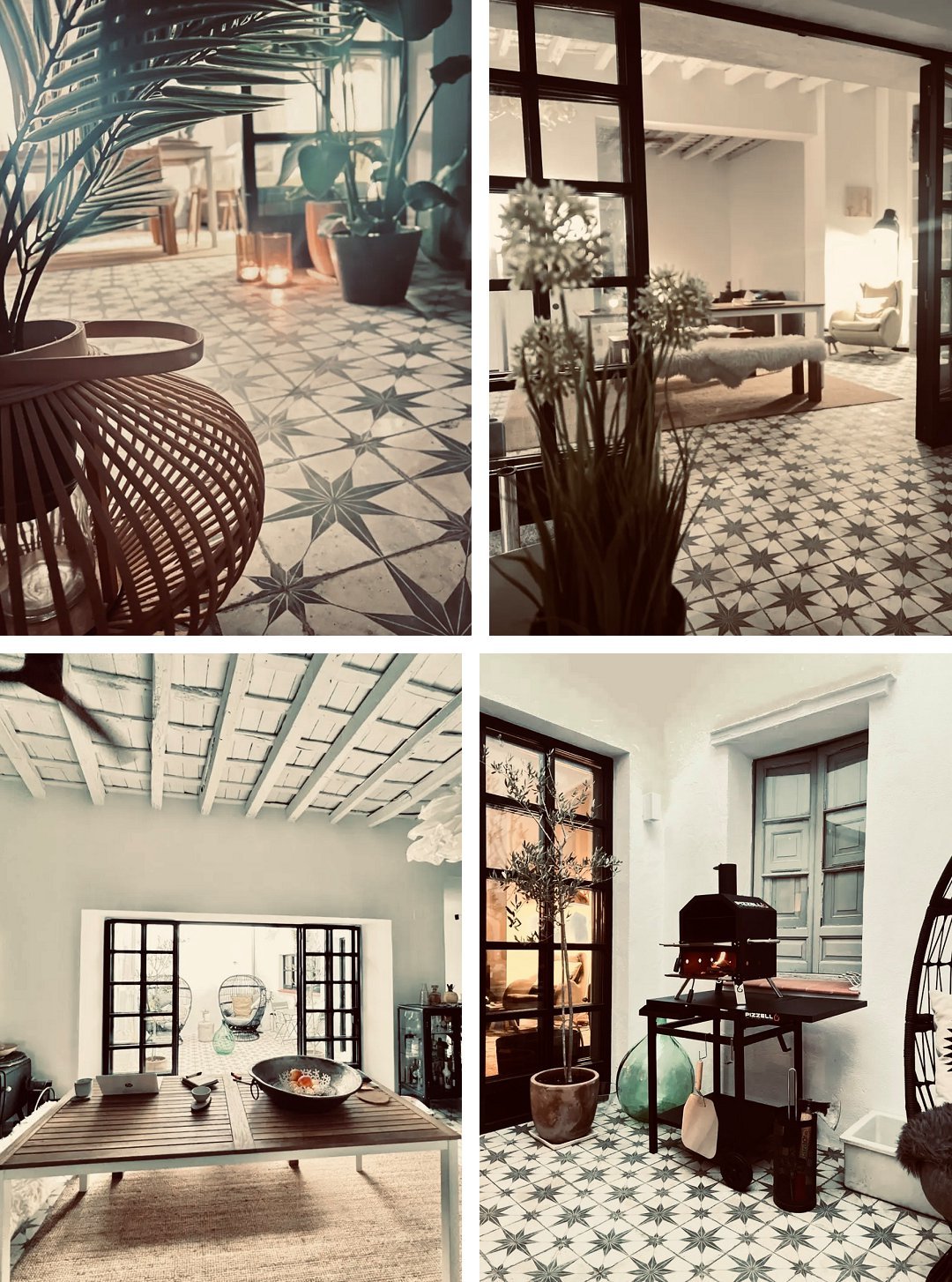
Our doors were made by a local firm of metal workers, and were made to our specific design. Everything about them is utterly perfect. They enhance the house so much and bring the outside in, a way much better than we hoped. I am so glad we held fast onto our dream as I now could not imagine anything else would have worked as well. They are a huge part of our house and a huge part of our design decisions, which will last for years to come.

by Helen | Nov 5, 2025 | Lifestyle
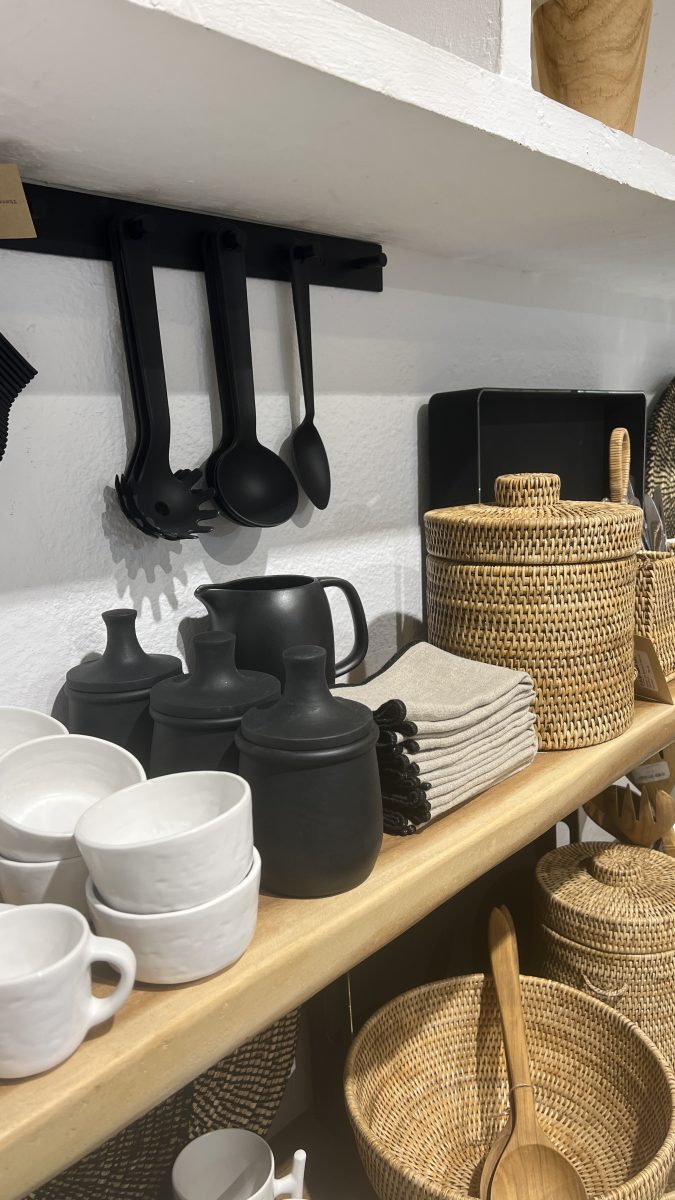
We have a Chinese Bazaar supermarket in our time, which is proving to be a bit of a treasure trove. We often find ourselves short of screws or nails, or can’t find the mallet or need a tiny bit more spray paint and with our nearest big DIY store being half an hour away, a short walk down the hill is just the ticket. Last week, we did find ourselves a couple of screws short when shelves were being put up in the bathroom and so off we headed. I could easily have stayed at home, but I’m not one to pass up a scouting opportunity in this shop. It’s packed to the rafters, mostly I have to say, with cheap tat. Which is fine, but that’s not what I’m interested in. Kitchen ware and ceramics are what caught my eye – and I came away with a nice haul, which wasn’t too costly, at all.
A visit to this shop always results in the purchase of a few terracotta tapas dishes, and a nice collection is developing. This time, I went for larger tagine size bowls – meaning we have to get our Moroccan cooking heads on, and develop our tagine skills. But I also spotted some very pretty fish embossed bowls and plates which, at the price, could not be resisted. Even though I was reminded that I had vowed not to buy any more plates and bowls because, in my own words, “we had more than enough”. Which to be fair we do, but I mean. Look at these…
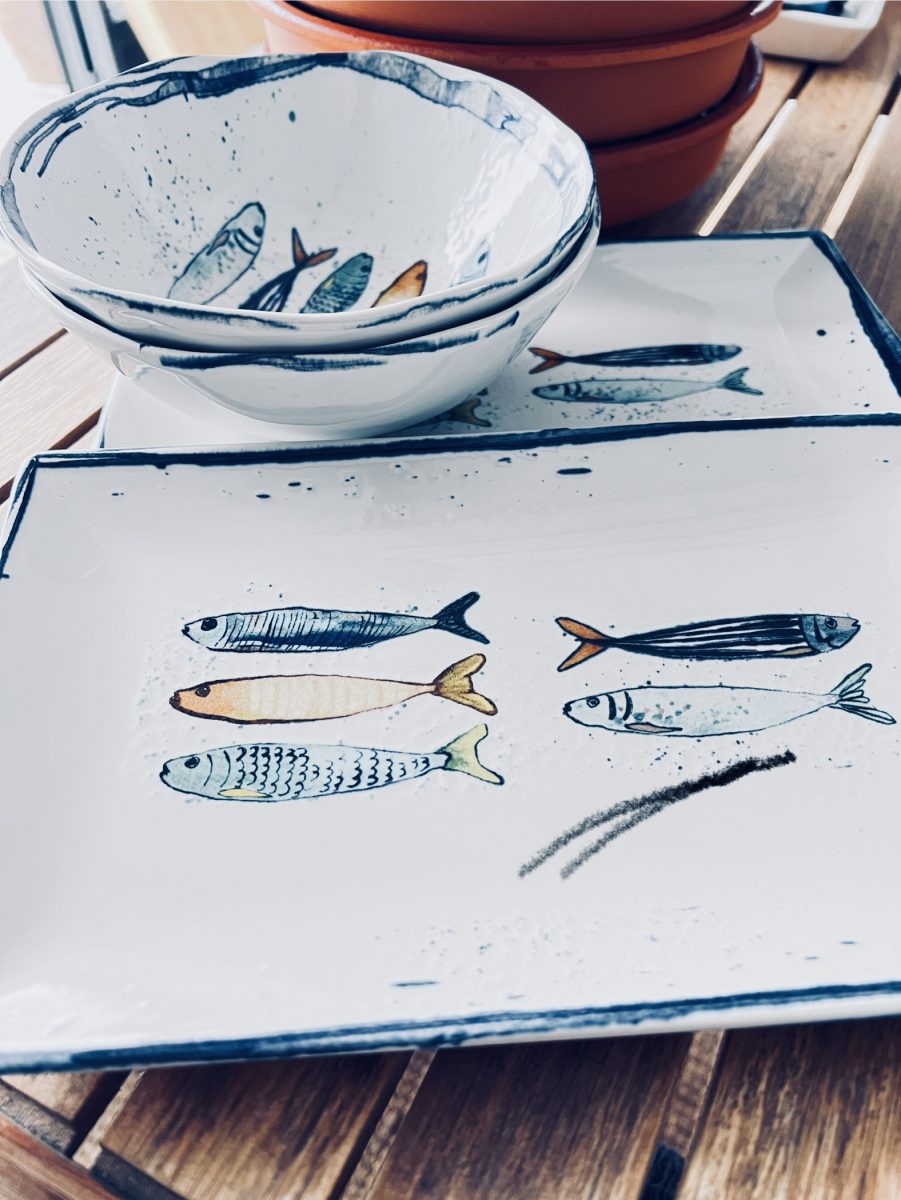
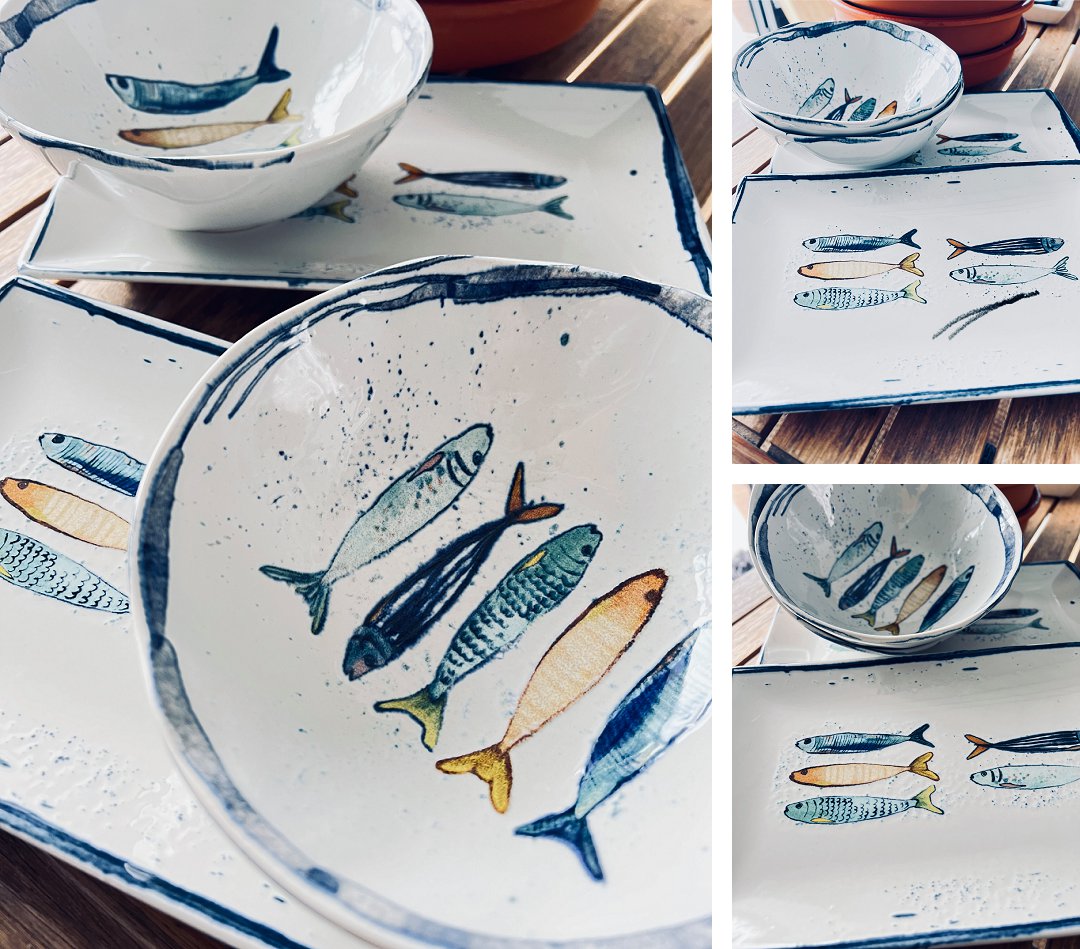
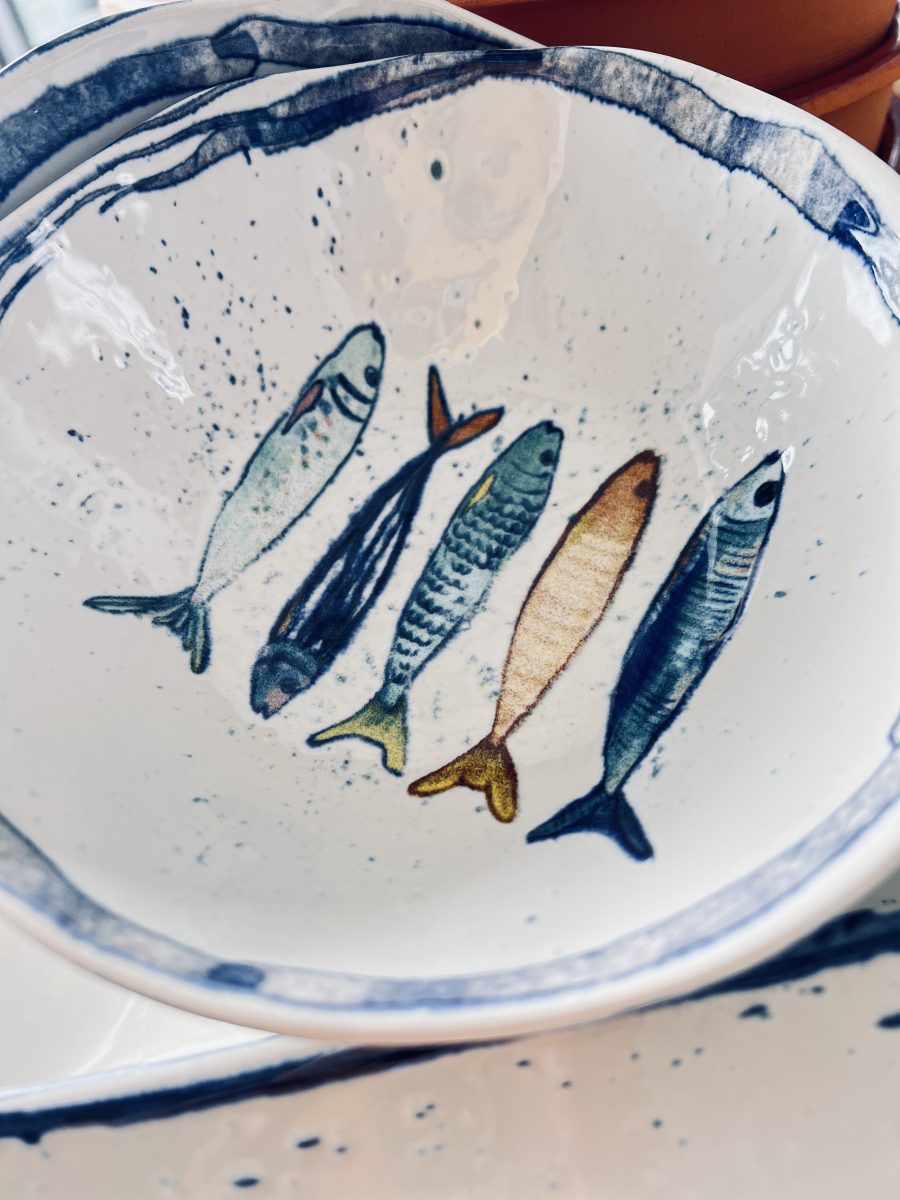
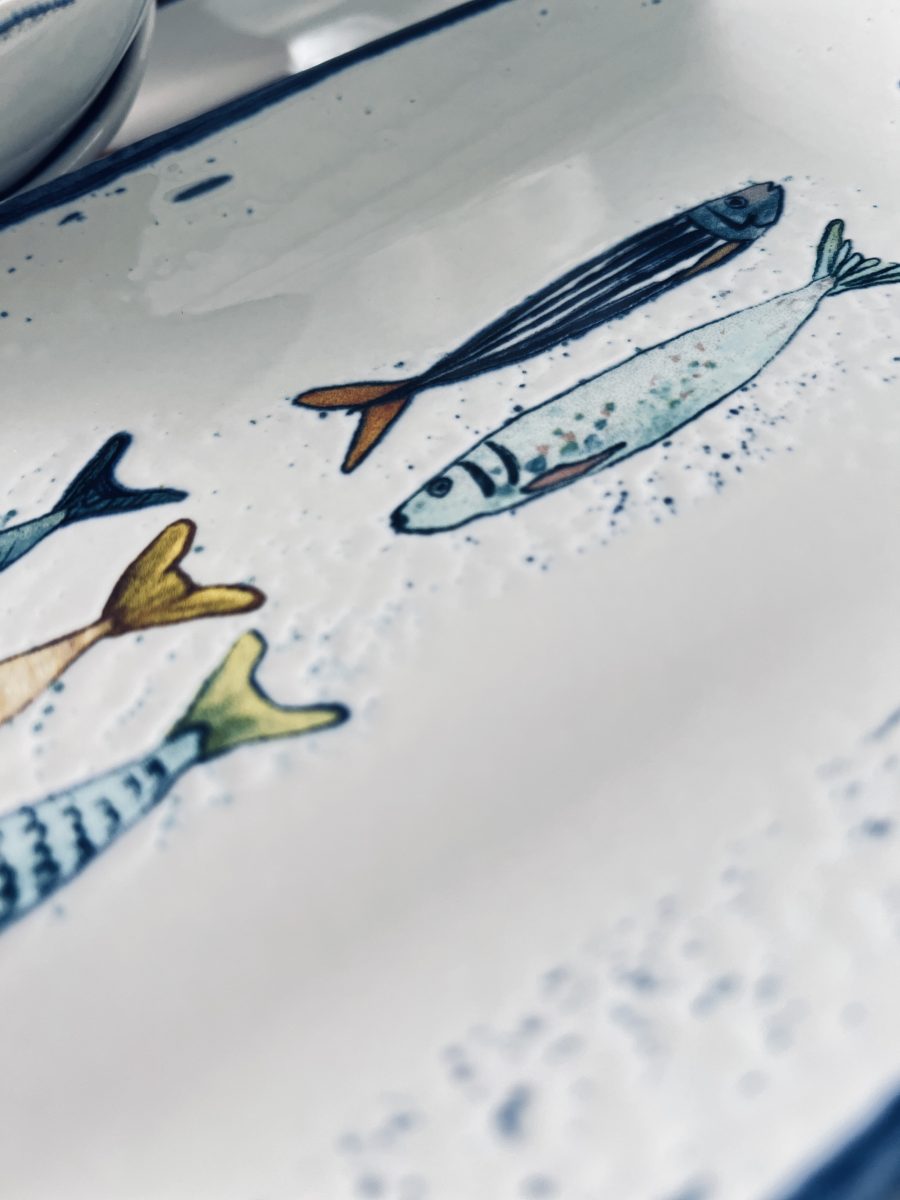
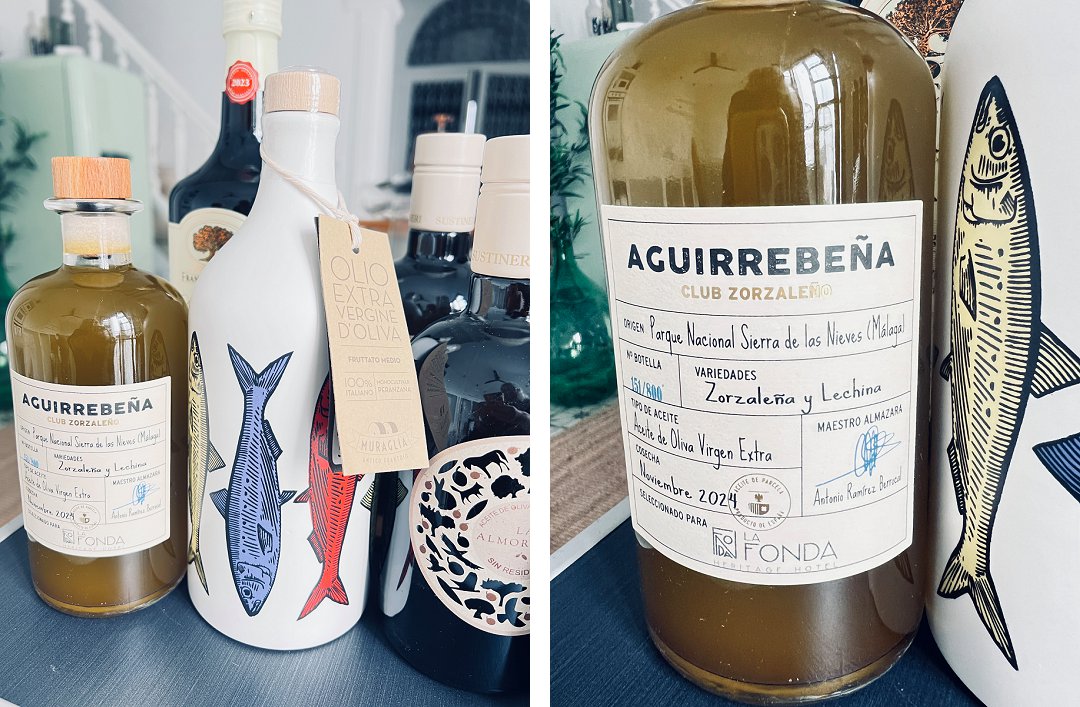
They are quite “rustic” with bumps and lumps and ridges in the ceramic and the fish designs have a playful feel to them, but they are very beautiful and exceptionally robust and well made. And, they complement very well the bottle of olive oil, which was bought months and months ago, in Eataly in Trieste, with its sardine adorned ceramic bottle…
by Helen | Oct 10, 2025 | Renovation
It’s been a while since I’ve done a post about our renovation journey, because we’ve so busy since actually moving into the house – at long last! – on 26th August. The builders finally departed a week later (but will be returning to finish the kitchen), so we’ve been able to crack on with the unpacking, sorting, building furniture, moving things, starting the painting jobs that we’re doing ourselves, and generally creating a home. But, let’s go back a few weeks and take stock, starting with the main bathroom.
In the last blog, the sanitary ware was starting to be fitted and the tiling had been started, with us waiting on the arrival of blue ceramic edging tiles, to finish of the half level tiles. We were also trying to source a cabinet for the sink to sit on, and a chandelier. Our previous bathrooms have all been tiny and so we’ve never been able to have anything on an even slightly grand scale, so a chandelier has always been on my wish-list. Fast forward to now, and this is where we are up to the main bathroom :
the cabinet
This was eventually sourced, but not after lots and lots of research online and visiting various shops. Absolutely nothing was ticking the boxes – always a problem when I have a very clear idea in my head as to what I want. I didn’t want anything over-fancy or anything too vintage. Because we have so much to do in the house, I also didn’t fancy anything which required a huge amount of work in terms of restoring and painting it. I was veering very much towards a kind of mid-century style cabinet, with glass doors – rippled glass if possible – on which would sit our brass sink and brass tap. And, as has happened quite a lot, one of favourite go-to Spanish websites delivered. Sklum is a superb online shop – think Habitat or Heals quality, just not quite as pricey – and we’ve found a lot of really lovely key pieces for the house, and this is where we found the perfect bathroom cabinet. The Massilia, made of beautiful acacia wood, with doors, with rippled glass. Oh, yes – rippled glass.
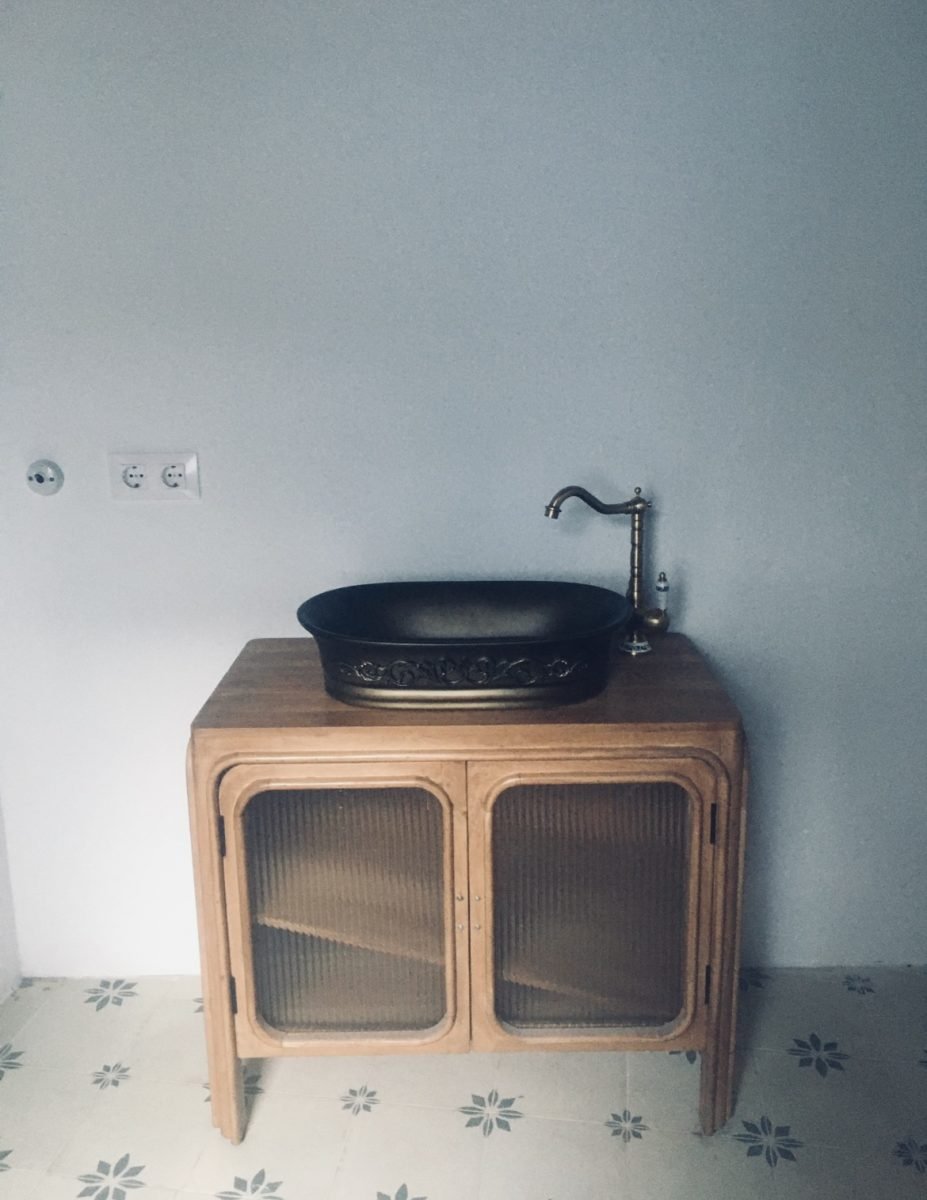
It took a bit of work by the carpenter to get it to the exact height needed and to fit the tap, which had to sit to the side of the sink. We bought the sink separate to the tap and separate to the cabinet – but somehow, they all work beautifully together. And you wouldn’t now know the additional work which had to be done to make sure everything was correct and fitted properly.
tiles
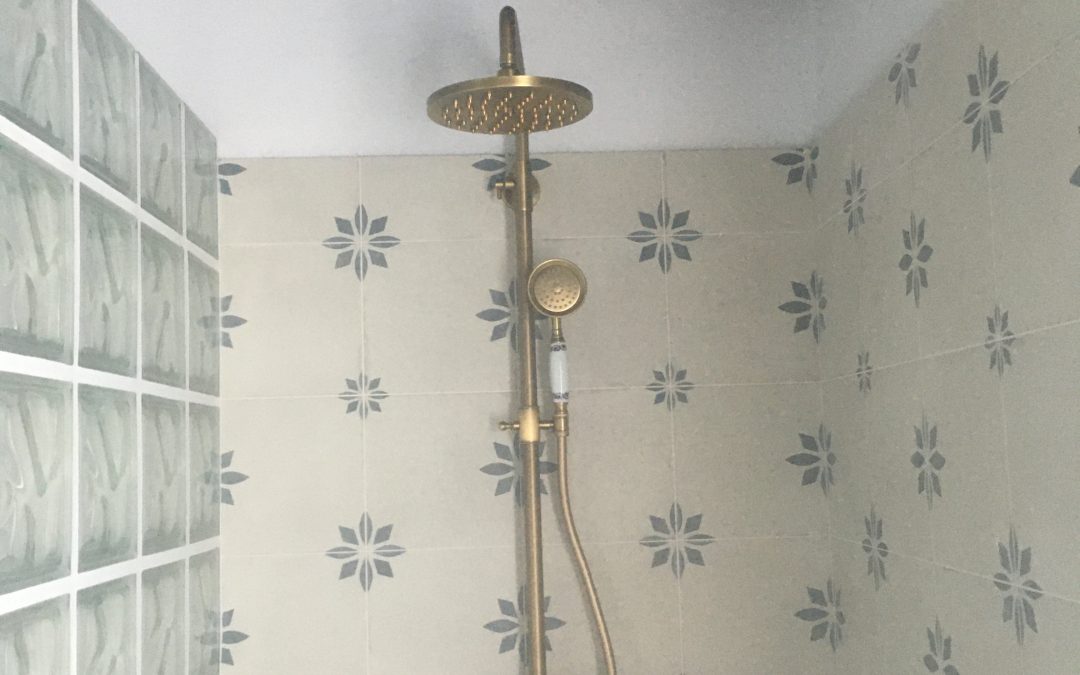
The wall tiles are lovely and we’re delighted with them. We decided that rather than tile the whole bathroom, we’d only have inside the shower cubicle and around the free-standing bath and sink, to half height. Because they stopped where you could see the top of the final line of tiles, our perfectionist project manager suggested that we perhaps look at having ceramic edging tiles to finish them off. However, because of the pattern on the tiles and the tiny ceramic tile inserts on the taps and shower, we wanted navy blue edging. Again, the hunt was on because no colour ever seemed quite right. But, because the tiling needed to be finished, we needed to make a decision and so ordered online. And, this was the first – and so far, only – mistake we’ve made. When they arrived, rather than the navy colour they had looked online, they were more of a washed out pale blue, which we really disliked. They had taken a long time arrive, so we didn’t want to send them back, so we thought we’d paint them white.
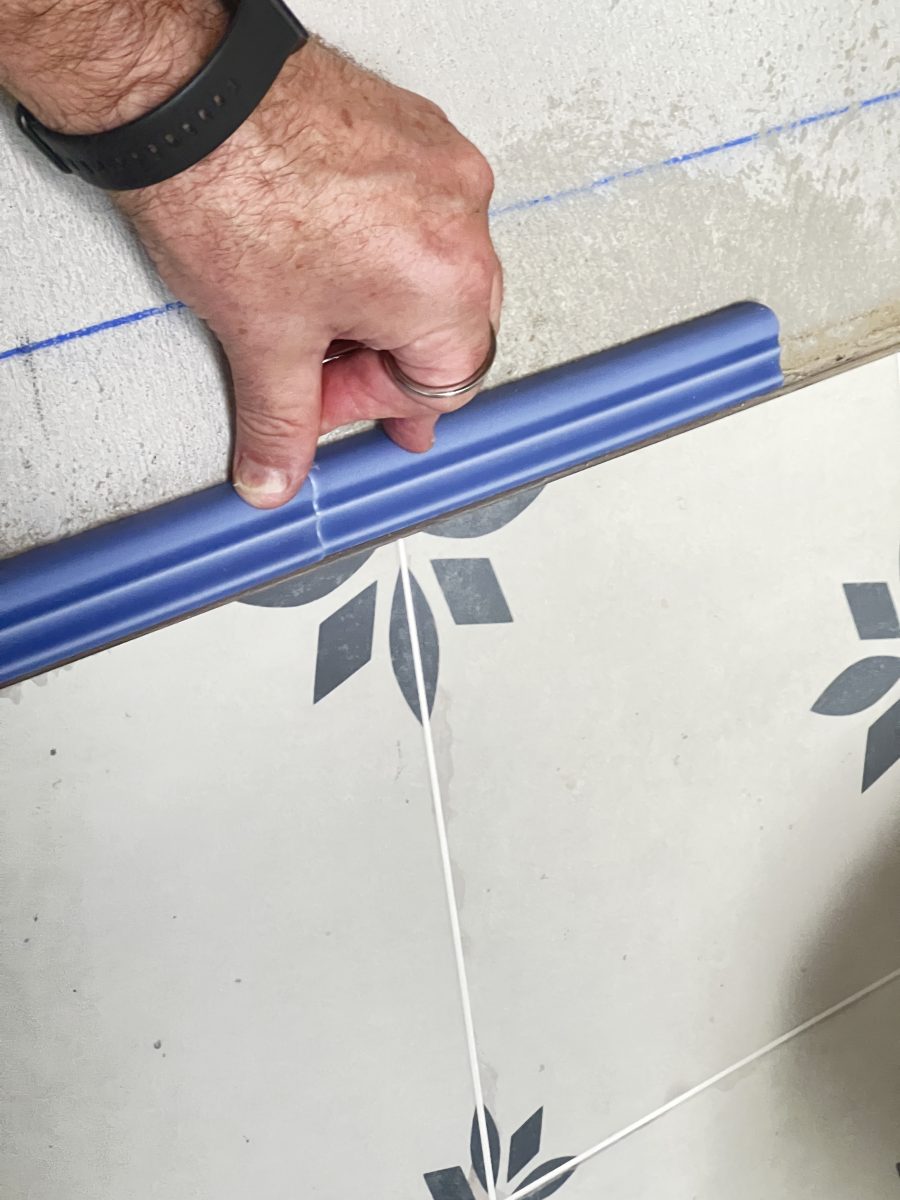
But taking a bit of time, with design decisions, however small they might be, does work – and ultimately we decided, once the walls were painted, we didn’t actually need the edging tiles. They’re now sitting in a box, somewhere in the house, possibly to be repurposed elsewhere in the future.
the window
We did originally have two windows in this bathroom – one small one where the shower cubicle now is, and a lovely French window, where we have now repositioned the toilet to – meaning a French window, however lovely, just became impractical. Although we’re not really overlooked, there are a couple of houses with balconies higher up the hill and they do face our bathroom, so we felt we needed to rethink the window situation. The smaller window was blocked up to give us a full extra wall to create the shower cubicle and we decided that the bottom half of the French door (which was a bit impractical and dangerous as it actually opened over the courtyard…) needed to be bricked up, leaving us with a smaller casement window, to the side of the toilet. This window was made by the carpenter to match the style of all of the other windows, with two frames and two shutters which opened internally, giving us the privacy we wanted. But, we pretty quickly realised, once we started actually using the bathroom, that closing the shutters, also made the room dark, and we didn’t want this during the day time. The solution was actually really easy – we had a mandala transfer, bought back back in Istria, for the princely sum of €3, and cut in half and attached to each frame, gave us the privacy we wanted, without blocking out the light.
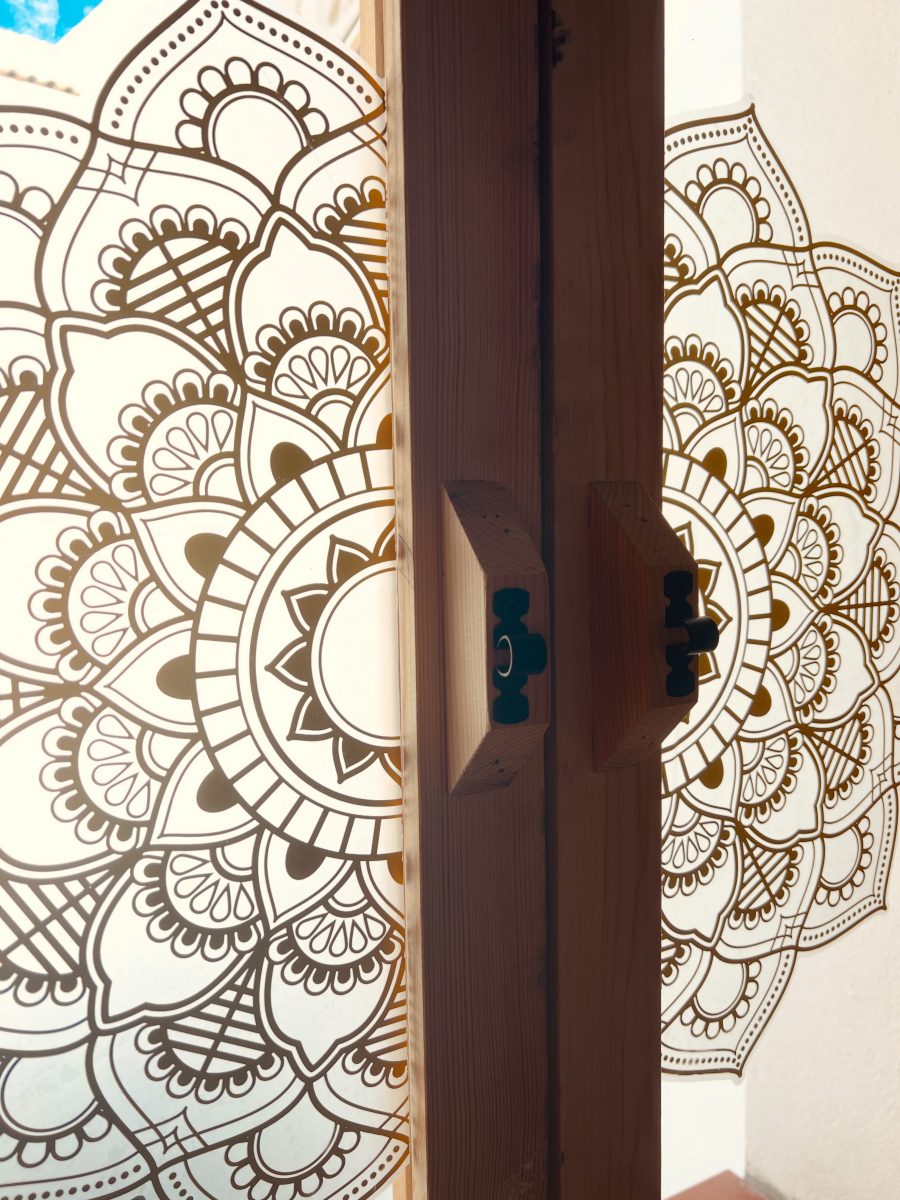
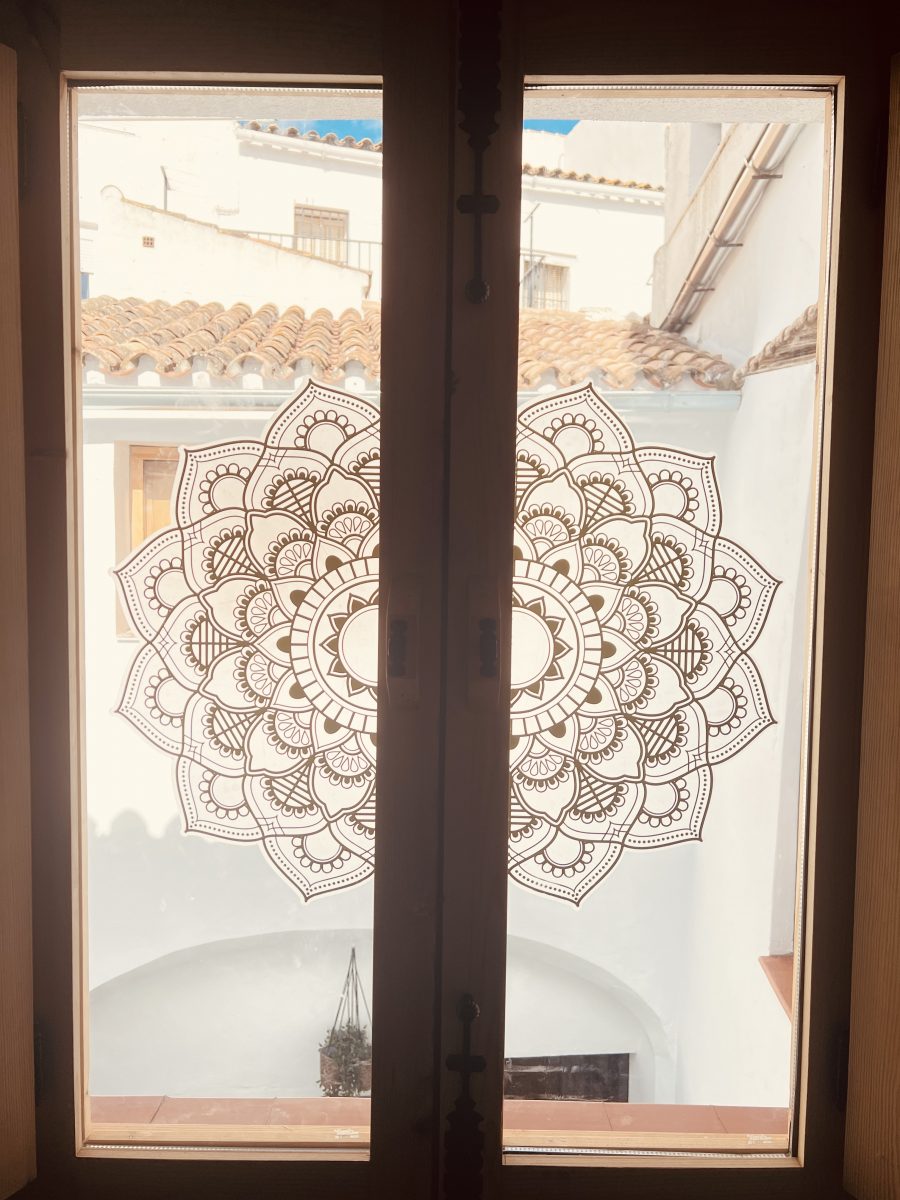
The frames are still be painted white, but for so long we had no window, that this feels like a luxury. White, we think, will make all of the difference, and will hopefully just finish off the bathroom, when we get round to tackling all of the paintwork on the first floor.
the shower
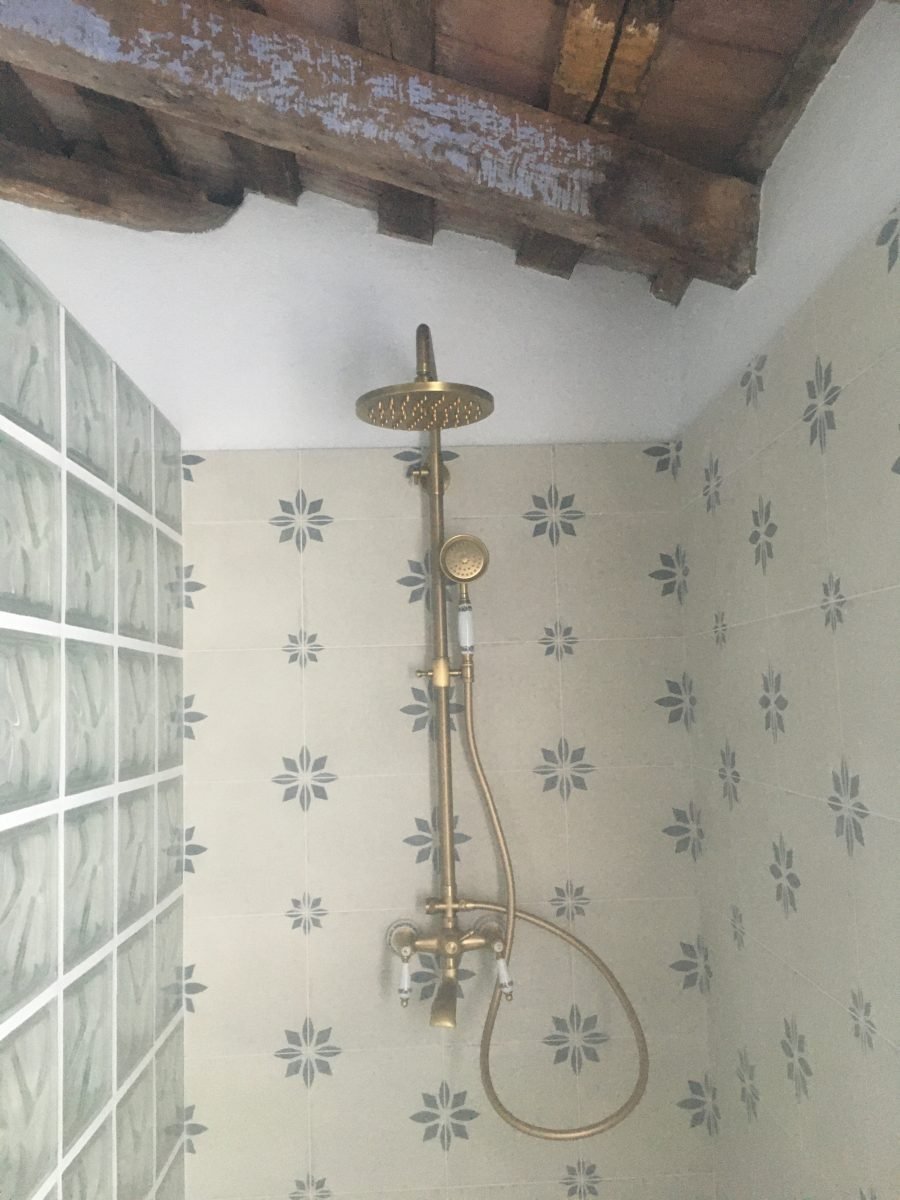
We have waited sooo long to have working showers! All of the various parts for the two showers have been boxed up for months, so to finally see them installed has been fantastic. However, as with most jobs in a renovation, there are still things that need to be done to make them perfect. Sometimes, when you are planning things from scratch, you only see, or realise, certain things in-situ and this has been the case with both showers. The main bathroom shower sits in the corner of the room, separated by a single glass brick wall from the bath. It’s a large enclosure which is great, and because of the colour of the brass shower fittings, we pushed the boat out and chose a brass coloured non-slip shower tray. A bit of an eye-watering price, but now it’s installed, and we’ve forgotten about the pain of payment, it was worth every cent. A good design decision! However, we think we may need to have a shower door installed as water does sometimes spray out of the cubicle. We did want it to be open, and it does look great with just the glass brick wall, but we don’t want to create a wet room. Currently, we just have a white shower curtain, which works well, so we think a white bi-fold shower door will work well. A shame, but needs must. And the joy of having a working shower cannot be underestimated.
the bath
The bath is an absolute joy. Despite the fact that it’s not yet plumbed in and the wall taps have not been fitted. So goodness know what it’ll be like when this has all been done. We’re not entirely sure why, at this stage, the taps have still not been fitted, so we’ll await the return of the builders to find out why. We think it’s to do with the fact that the drain pipe, which came with the bath, didn’t fit properly, so another one is being sourced. It is definitely a tiny bit frustrating having a beautiful slipper bath which we can’t use just yet, but we have our showers and so are just being patient. Good things come to those who wait…
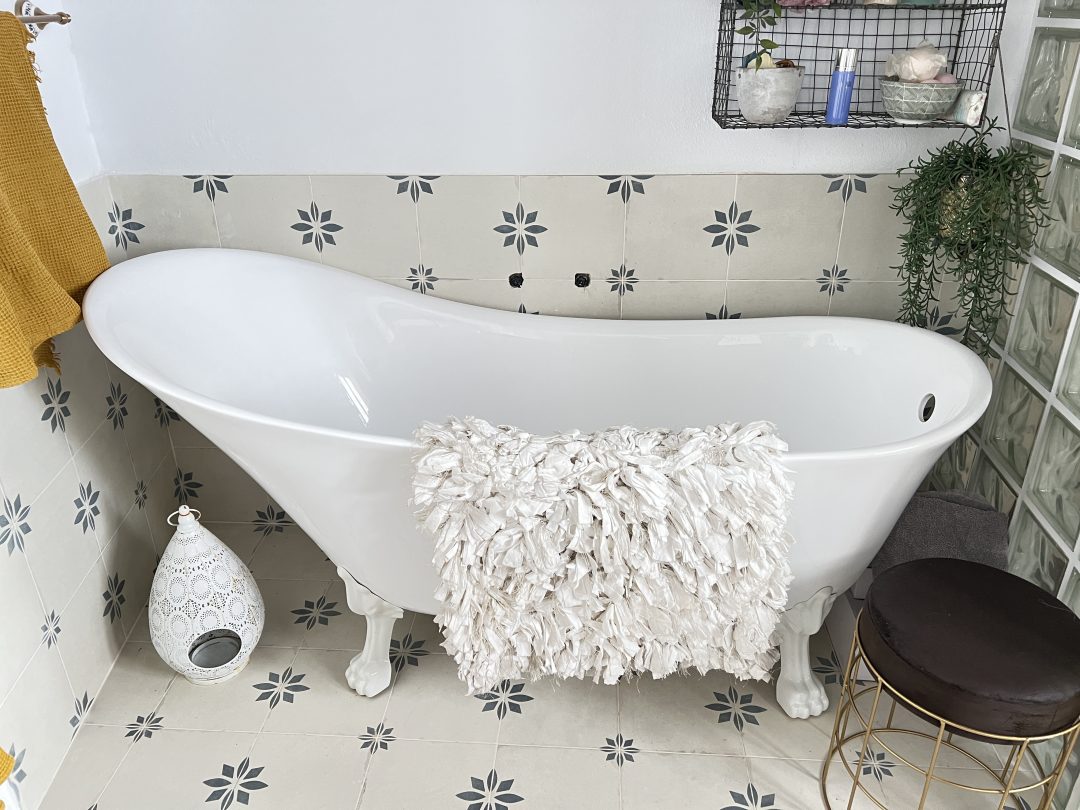
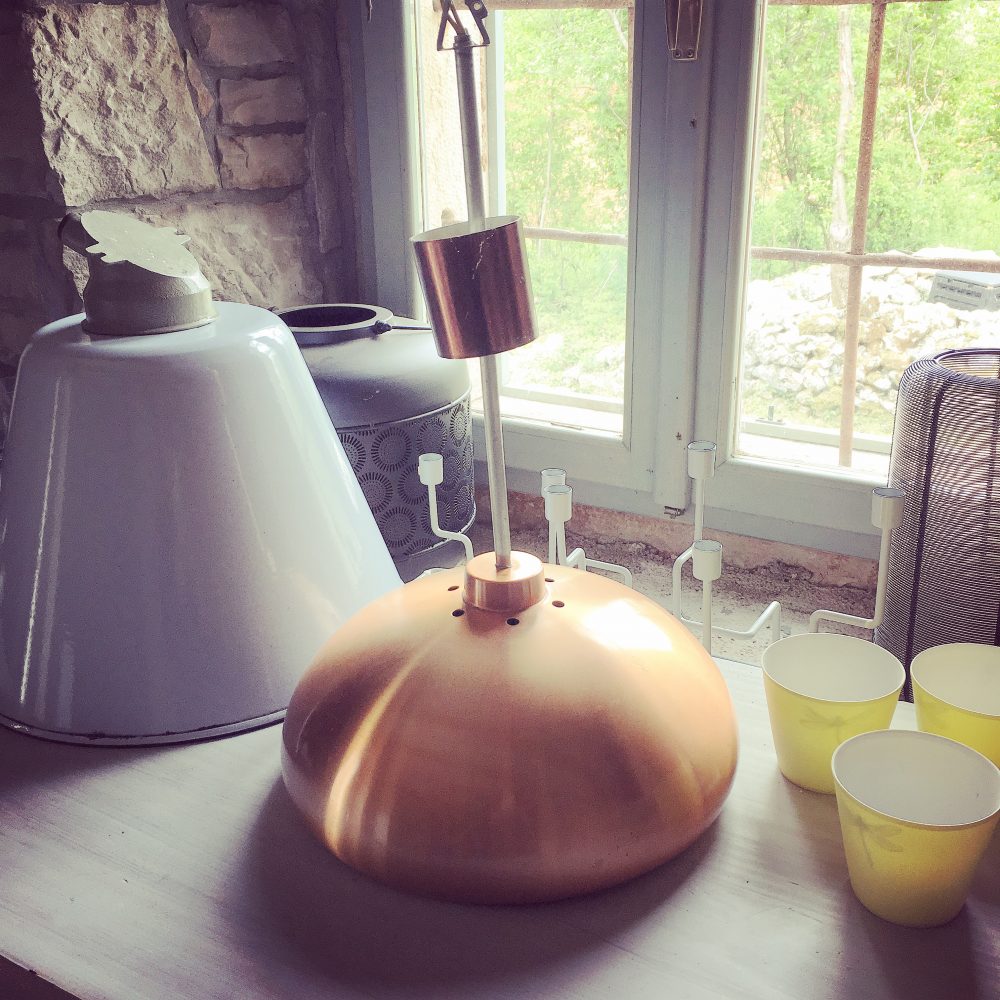
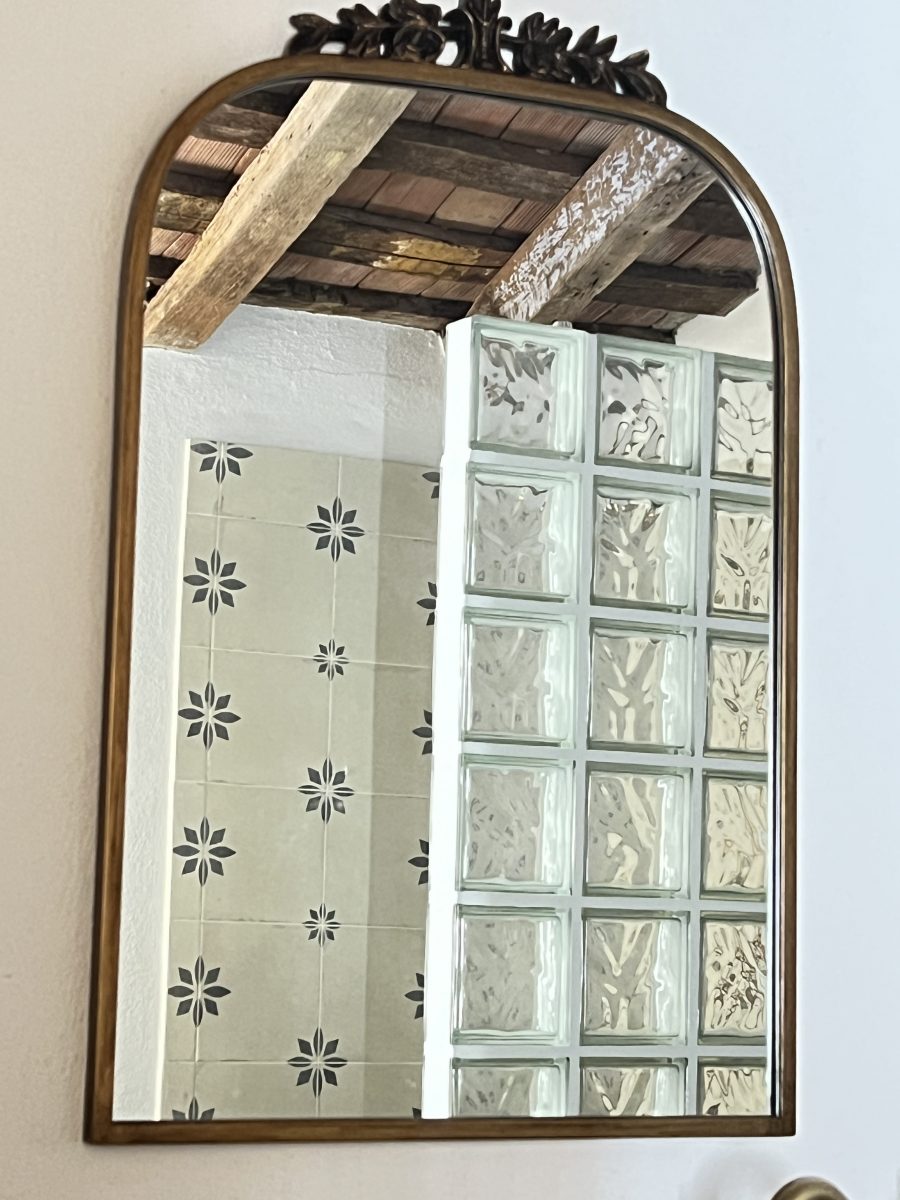
It’s been lovely to unearth bathroom accessories which have been packed away for well over a year. Shelving has gone up, meaning that we’ve been able to start creating the bathroom we’ve always wanted. I managed, by sheer luck, to find a mirror online, which almost identically matched the sink and so there’s a feeling of real cohesion in the room. And, as the ceiling has the exposed beams and bricks, we’ve also been able to make use of our very realistic looking vines again. The hunt for perfect chandelier has proved almost impossible – they were either too expensive (all of teh ones I liked!), too bling, too small, not bathroom-y enough, and just not right in too many ways. So, a vintage copper light pendant, which we bought in Istria and never found the right place for, is awaiting the return of the workers, so that it can be finally fitted. We’re so nearly there with this room and from how it started, we couldn’t be more delighted with how it’s turning out.

by Helen | Oct 5, 2025 | Lifestyle
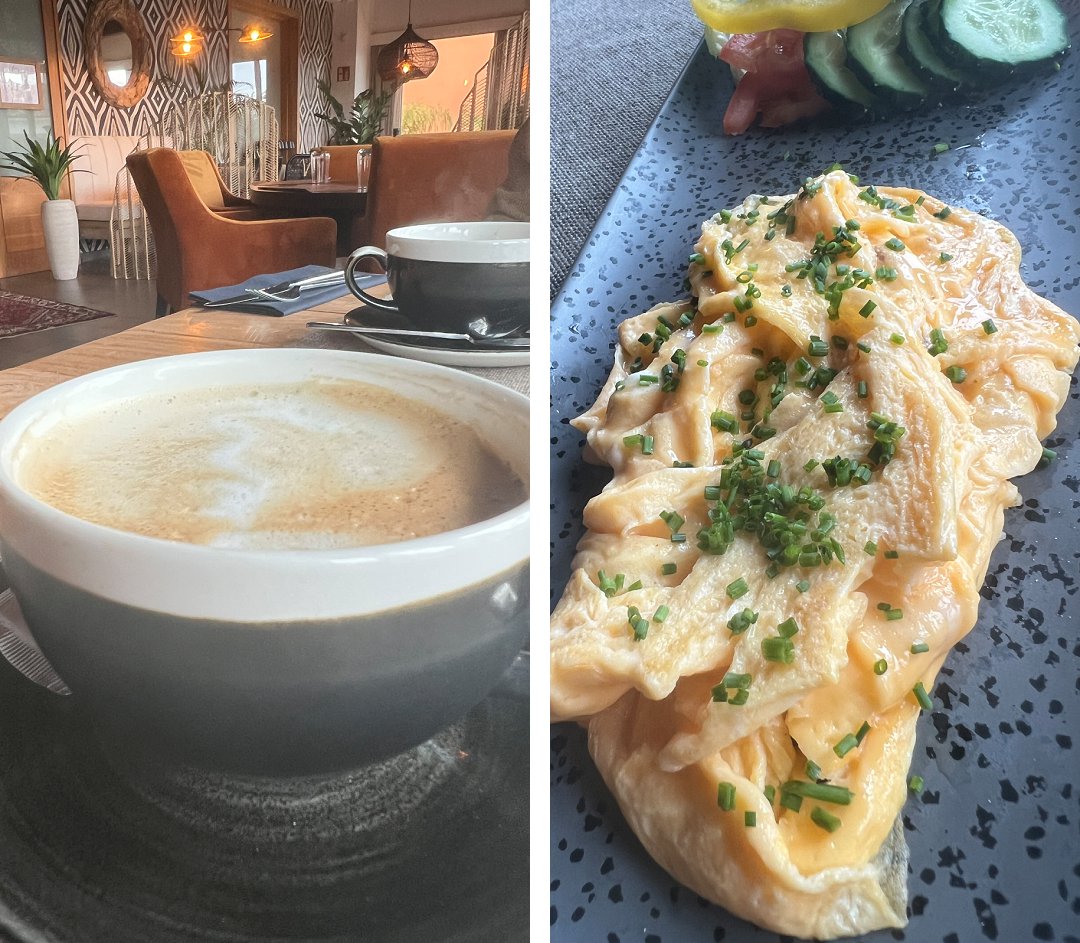
We love our new lives in Andalucia and are immersing ourselves as much as we possibly can, mid-renovation. Sometimes though, especially in the cooler months – and this is why my thoughts are turning to this now, as we enter October – we crave certain things that were just kind of tap, back in the UK. Pizza Express pizzas, for one. Which we can luckily, by a sheer geographical coincidence, get out here. And, nwe did find ourselves, last winter, at times, definitely definitely craving a good old Sunday roast. We did make our own a few times, inlcuding knocking out a stand out Christmas dinner, with turkey, ham and ALL the trimmings. But DIY is a real faff, not to mention the washing up. So, imagine our delight when we saw that one of our favourite hotels – Boutique Hotel Alcaidesa – would be offering Sunday Roasts (including veggie options) throughout the winter to residents and non-residents.
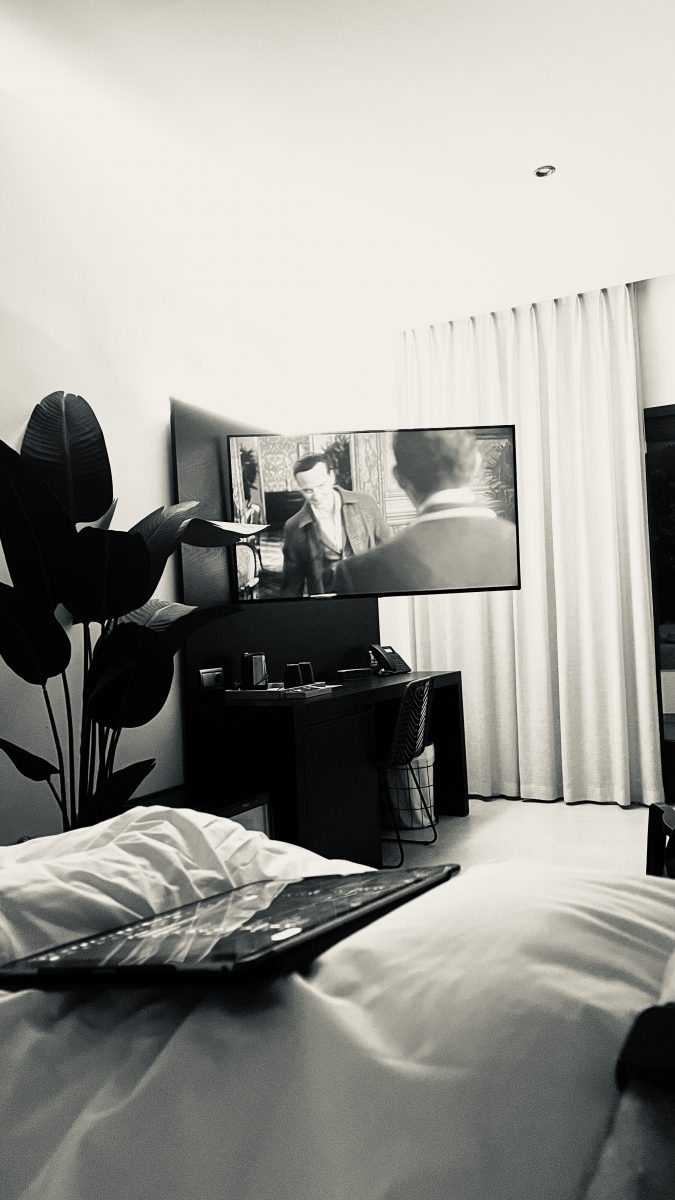
Last winter we were renting an apartment in Sanlucar de Barrameda, on the Costa de la Luz, a good two hour drive away, so we decided to make a night of it, and we booked accommodation on the Sunday evening. Which, in hindsight, was a pretty good idea, as we were so full after our meal, that all we could was get to the room, and crash out, watching the wonderful Ripley series on Netflix.
We knew the food would be good, as we had previous experience of the hotel and had eaten in the evening and at breakfast, and both times, the food was outstandingly good. Owned by a Norwegian/English family, and run by a very international team, the food is interesting to say the least. Attention to detail is absolutely spot on, and the choice offered is amazing. So, we knew we were in for a Sunday afternoon treat…
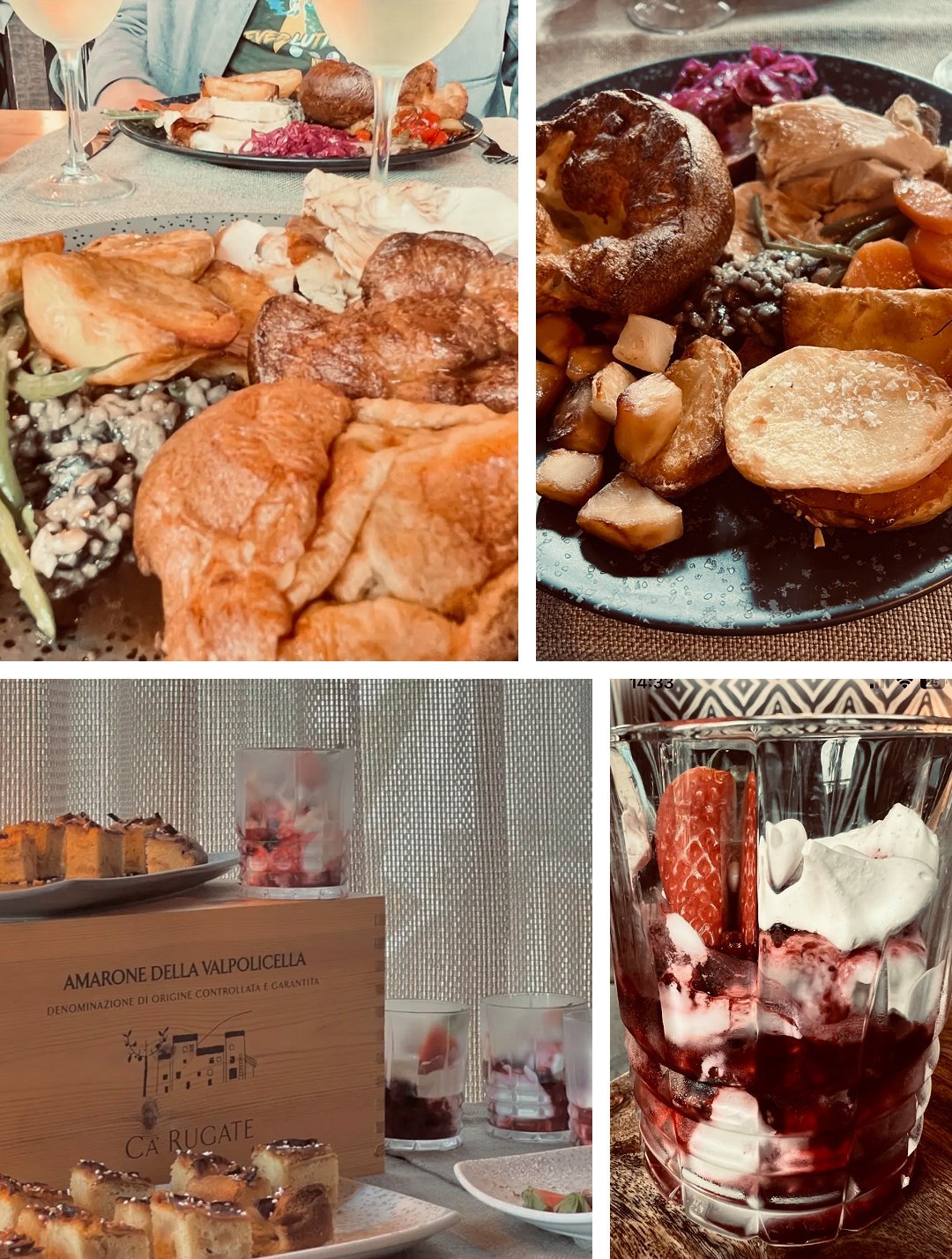
The food is served buffet style, but a team of chefs keep it fresh and at the right temperature, visibly taking away food which may have sat for a little too long and replacing with obvious new platters of food. The carvery oois skillfully manned by one of the chefs, and even though it’s buffet style, you are usually served your choices. And the choices are vast – we had a variety of meats and veggie options. The two standouts when we have been visited have been the nut roast and the mushroom risotto – both perfect if you don’t want meat. There’s also a veggie gravy option, although if you are a strict vegetarian or vegan, it’s probably worth discussing your choices beforehand – I’m sure this lovely, professional set up would accommodate your wishes. The array of vegetables and sides is staggering – and the roast potatoes and Yorkshire puddings were swoon-worthy. Starters are available and look gorgeous, but our advice would be to pass on these and go straight to the roast. As you can return as many times as you desire, and you will definitely go back once, you don’t want to fill up too much and miss out on the main course deliciousness.
Oh, and do try and a little room for dessert. I was fit to burst, as the little pots of Eton Mess kept on being replenished, I could not resist. But strawberries are very much OK, aren’t they? Maybe not the smashed creamy meringues and the cream itself and the coulis, but strawberries. Fitness food.
And, after fabulous food and excellent wine, the very comfy bed called and an evening of “Ripley”, before a good night’s sleep to ready ourselves for breakfast the next morning.
by Helen | Oct 4, 2025 | Lifestyle
*This is NOT a sponsored blog post. We paid in full for all food and drink.*
Living in Andalucia, we are certainly not short of excellent food options. Obviously tapas restaurants abound, and we’ve yet to find one that isn’t really good quality, most being pretty superb. Even the most basic offer food which is of high quality and excellent value. In the larger towns we can easily satiate our cravings for spicy – especially Indian and Thai – food, and in our town we have a fantastic restaurant which does focus on Andalucian cuisine but also offers lots of Moroccan inspired dishes. Heaven. Italian restaurants are also in abundance, but we have missed Pizza Express since leaving the UK. We know that we can get better, and much more authentic pizzas in Italian restaurants, and we do seek these out, but there’s just something that is so comforting and familiar about Pizza Express. And an idle, online search one day turned up Spain’s only two branches of Pizza Express – one in Gibraltar and one in Alcaidesa.
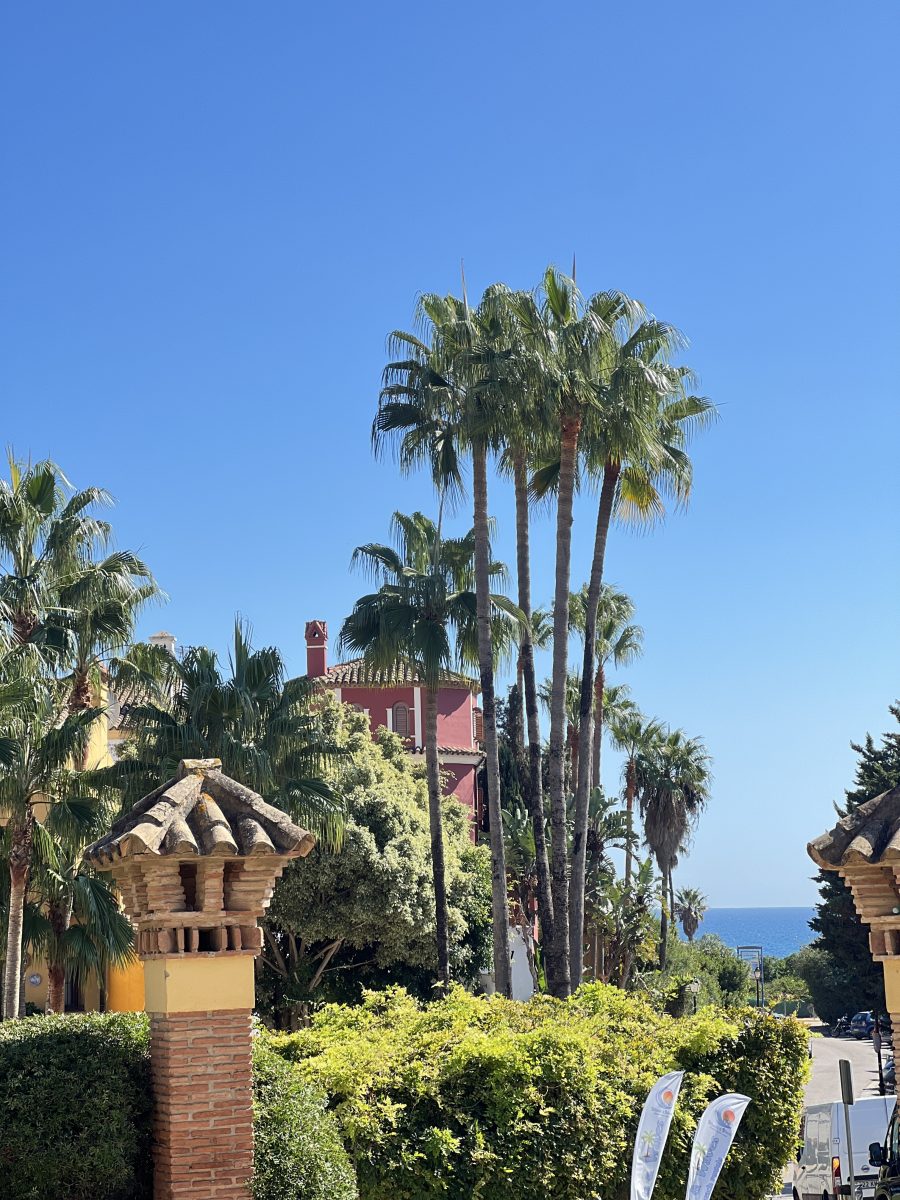
Gibraltar would be close enough, but until very recently, my residency was still under consideration, so I did not want to leave the EU and enter Gibraltar as this could potentially have thrown up many complications. And then, I found a branch in Alcaidesa, a beautiful town about 30 minutes from our house, right on the coast, with views across towards Malaga in one direction and the Rock of Gibraltar in the other, and out to sea, across to the mountains of Morocco. An absolute result.
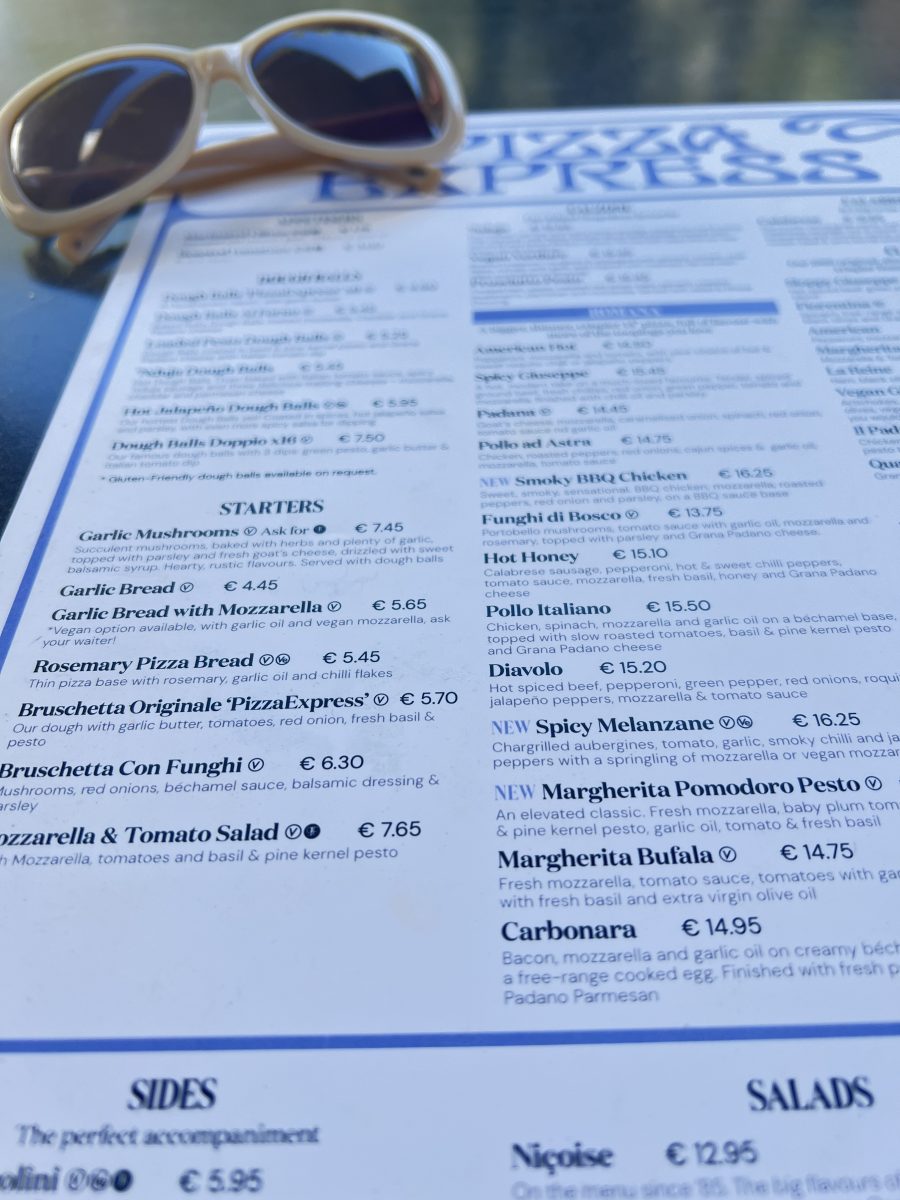
We don’t go all the time, although it’s tempting, so when we do it’s a bit of a treat. We decided to pay a visit this week, on a hot, sunny early October afternoon to celebrate my residency being granted and actually finally being in the house. We haven’t moved to Spain to live the life of replicating what we had in the UK, but in the sunshine. However, the familiarity of Pizza Express is quite lovely. The same menus – both in style and what is offered. Everything is reassuringly the same. Which is good, as ordering is quick, as we always know exactly what we want. One day, we’ll veer away from our faves, but for the moment, we have a stock list that we’re still savouring. Only this time in the Andalucian sunshine, rather than the Lapwing Lane drizzle!
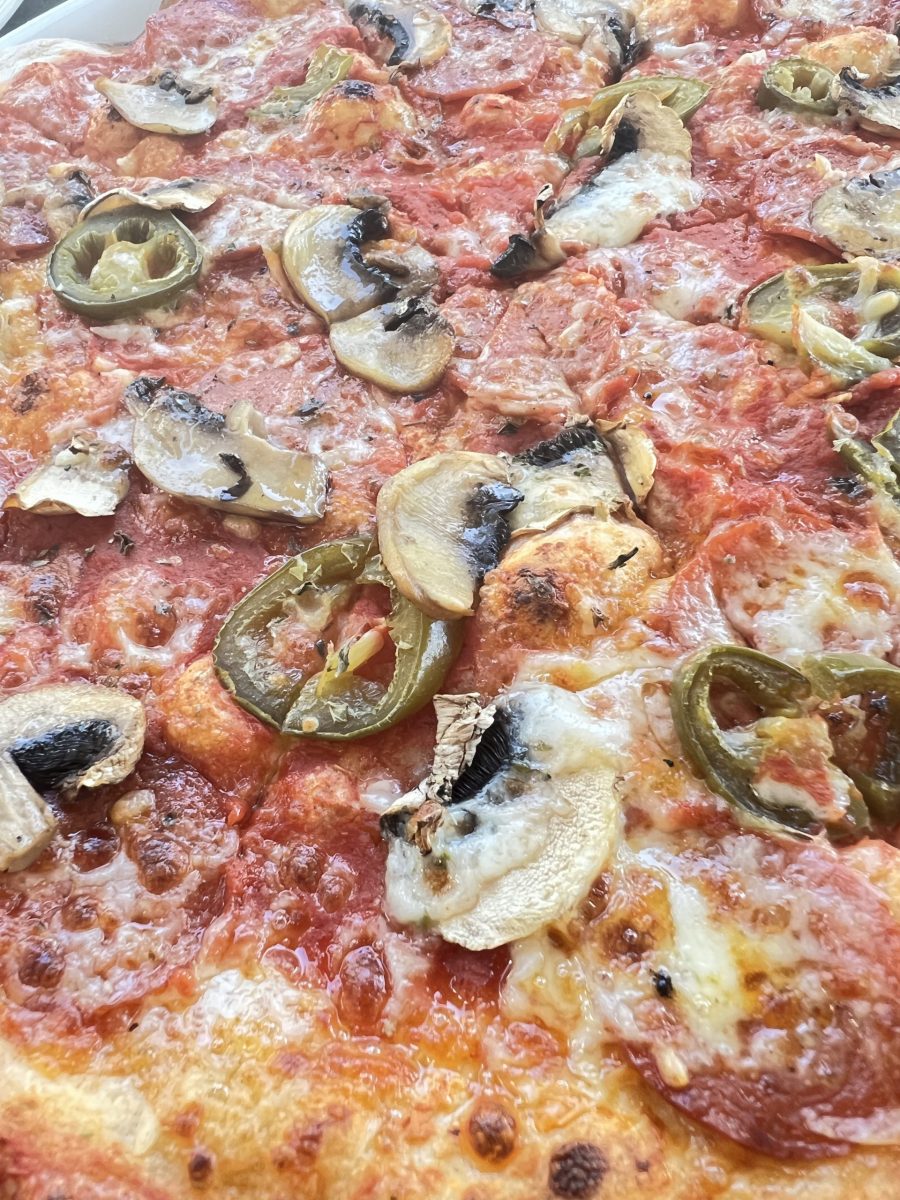

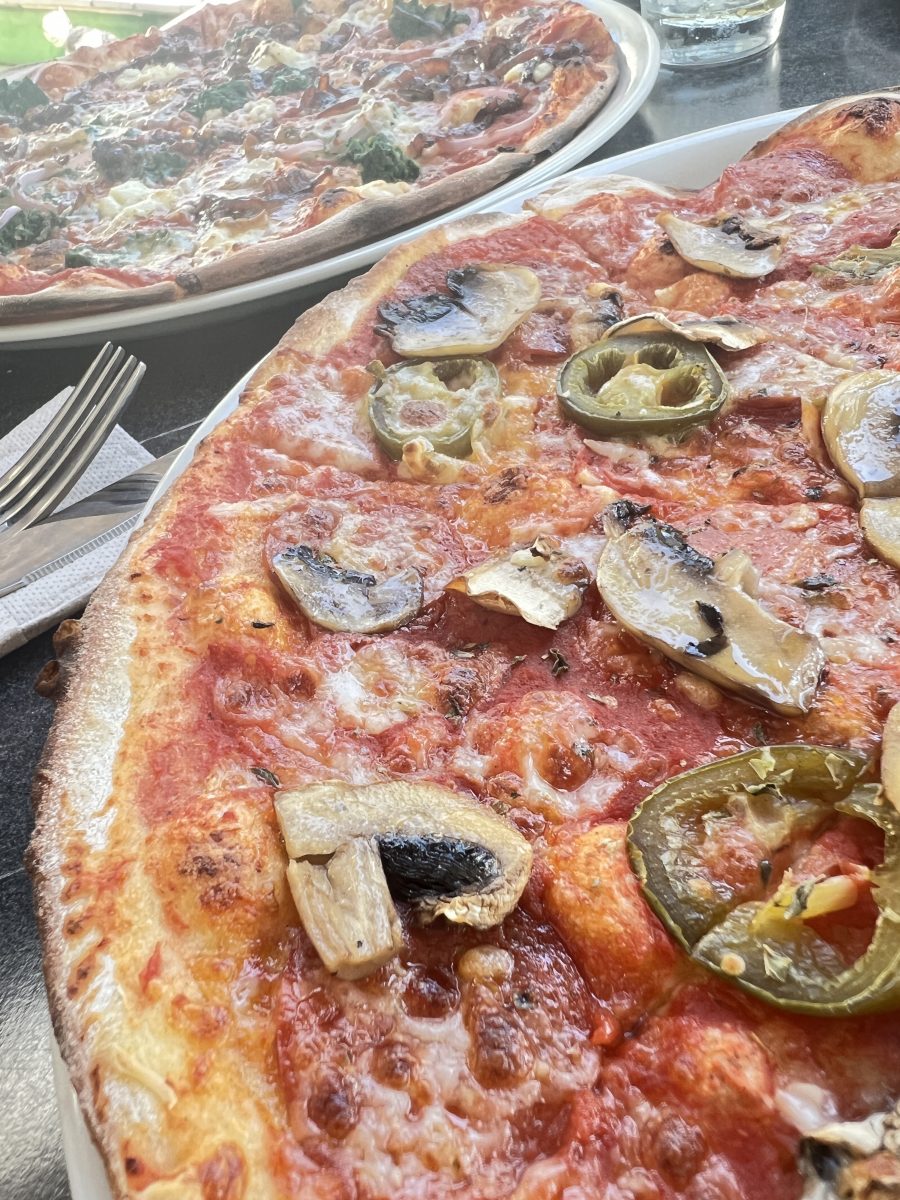
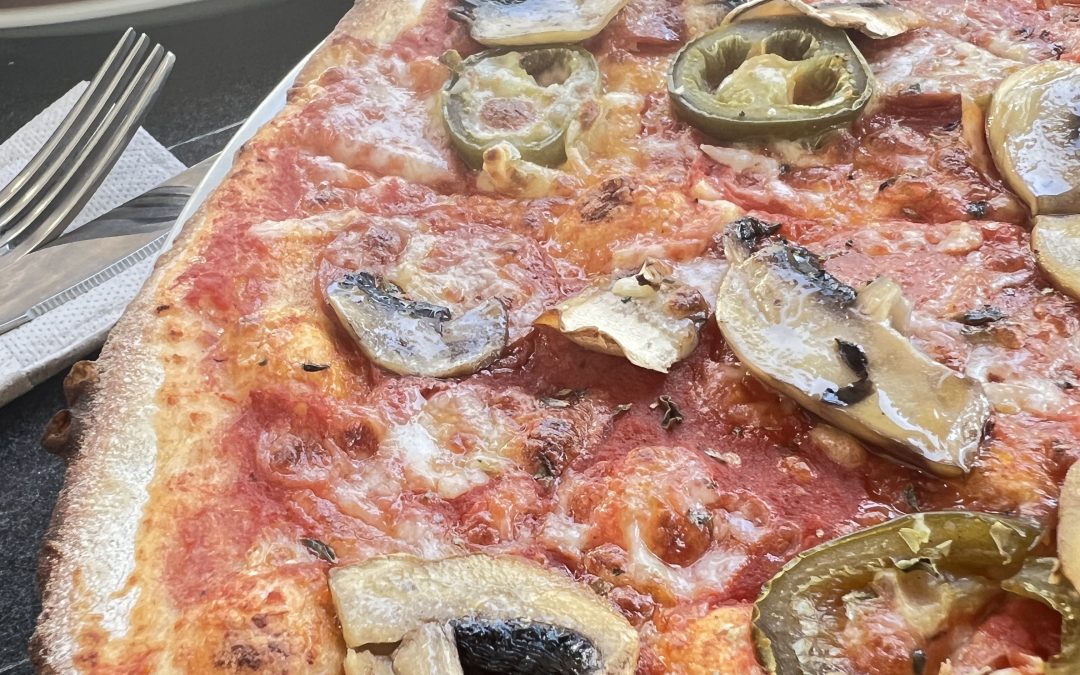
The very thin, stretched Romana bases are perfect – much less doughy and much less filling. Topped to perfection, too – American Hot (the jalapenos did have quite the kick!) with extra mushrooms and a Padana were just what we needed, along with a vino and a cold beer. I think we’re maybe just far away for home delivery, but I don’t think we can really complain when get to enjoy pizzas in the sunshine, like this.